
How to Use a Medication Log to Prevent Overdose Errors

Every year, thousands of people accidentally take too much of a medication - not because they’re trying to get high, but because they lost track of what they took, when, and how much. It happens with opioids, benzodiazepines, sleep aids, even over-the-counter painkillers. One extra pill, a missed dose, or mixing meds with alcohol can turn a routine habit into a life-threatening mistake. The good news? You can stop this before it starts - with a simple medication log.
Why a Medication Log Works Better Than Memory
Your brain isn’t built to remember every pill you swallow. Stress, fatigue, chronic pain, or substance use can make it worse. You might think, “I took my 10mg at 8 a.m.” - but was it yesterday? Was it 5mg? Did you take another at 3 p.m. because you didn’t feel it working? Without a record, you’re guessing. And guessing with meds can kill. A medication log isn’t just for doctors. It’s your personal safety net. It gives you a clear, timestamped history of every dose, so you never double-dose by accident. It helps you spot patterns - like how often you’re reaching for a pill because you’re anxious, not in pain. It turns guesswork into control.What to Write in Your Medication Log
A good log doesn’t need to be fancy. Just five key pieces of info per entry:- Medication name - Use the brand or generic name you know. Don’t write “the blue pill.” Write “oxycodone 10mg” or “alprazolam 0.5mg.”
- Dose taken - Exact amount. If you split a pill, write “5mg” not “half.”
- Time taken - Use a 24-hour clock if you can: 14:30 instead of 2:30 p.m. This avoids confusion.
- Reason for taking it - “Back pain,” “anxiety,” “trouble sleeping.” This helps you see if you’re using it for the right reasons.
- Other substances used - Alcohol, marijuana, benzodiazepines, sleep meds, even cough syrup. Mixing opioids with any depressant raises overdose risk by up to 70%.
Optional but powerful: note how you felt 30-60 minutes after taking it. “Drowsy,” “no relief,” “nauseous,” “calm.” This helps you and your doctor adjust safely.
How to Track Administration Method
How you take a drug changes how dangerous it is. Swallowing a pill is safer than crushing, snorting, or injecting it. The CDC says these methods can make doses unpredictable - especially with pills laced with fentanyl. If you’re taking pills, write down how you took them:- Swallowed whole
- Crushed and snorted
- Dissolved and injected
- Smoked
Why? Because if you’re crushing pills to get faster relief, you’re risking a deadly spike in blood levels. Your log becomes a mirror - showing you when you’re slipping into riskier habits. That’s the first step to changing them.
Use Test Strips - And Record the Results
Fentanyl is in nearly 7 out of 10 counterfeit pills sold on the street. You can’t see it, smell it, or taste it. But test strips can detect it - and they’re cheap and easy to use. If you’re using pills you didn’t get from a pharmacy, test them before taking. Put a tiny bit in water, dip the strip, wait 1-5 minutes. If it shows fentanyl, don’t take it. Or if you do, take half the usual dose - and never alone. Add this to your log: “Tested oxycodone pill - positive for fentanyl. Took 5mg instead of 10mg.” This keeps you honest. It turns a blind gamble into a calculated choice.Log It Daily - Even on Days You Don’t Take Anything
Consistency beats perfection. Don’t wait until you feel like it. Set a daily reminder on your phone: “Med log - 8 p.m.” On days you take nothing? Write: “No meds today.” This prevents the “Did I take it?” panic later. It also helps you notice gaps - like if you skip meds for three days, then take two at once to catch up. That’s a common overdose trigger. Paper logs work fine. Use a notebook, a printed template, or even sticky notes taped to your mirror. Digital apps like Medisafe or MyTherapy offer reminders and shareable reports - but only if you’ll actually use them. Pick the method you’ll stick with.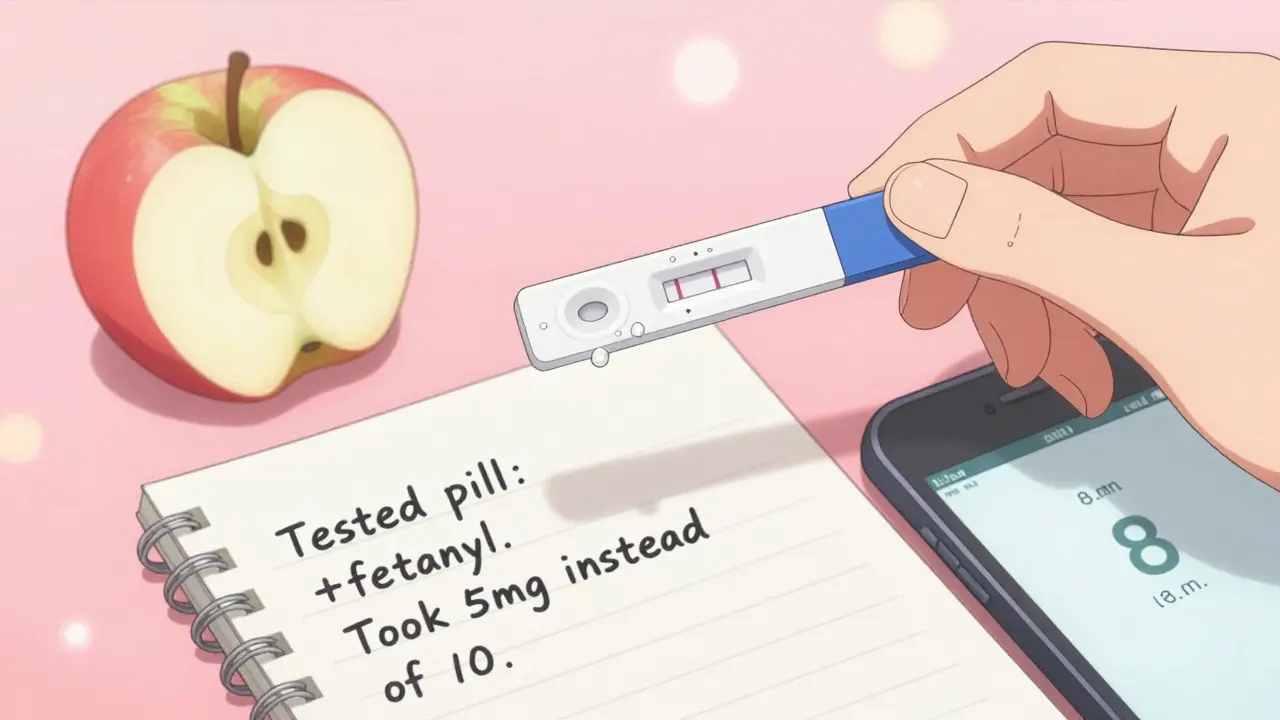
Share Your Log - With a Trusted Person
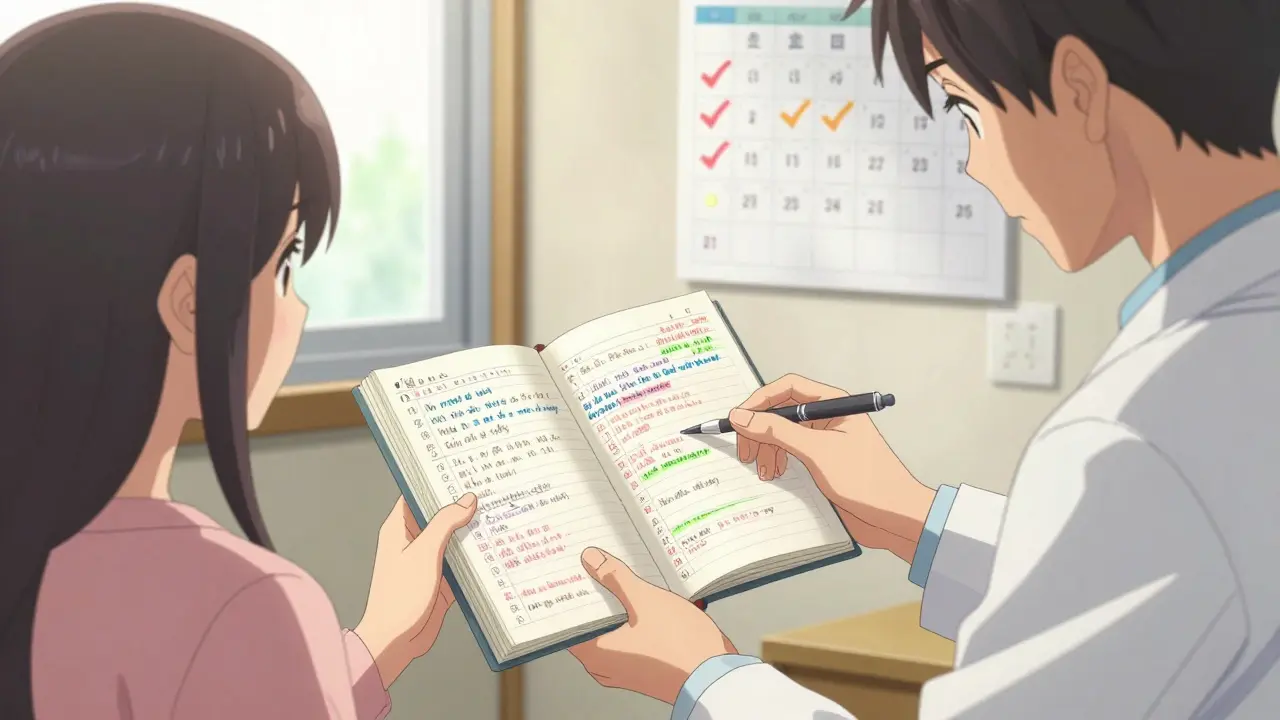
SAMHSA’s overdose prevention toolkit says: “Never use alone.” That’s not just about having someone nearby. It’s about having someone who knows what you took. Give a copy of your log - or just your daily summary - to someone you trust. A friend, family member, or peer support worker. When you’re feeling too drowsy to respond, they can look at your log and tell EMS: “He took 10mg oxycodone at 7 a.m. and 5mg at 3 p.m. - and drank two beers.” That saves time. That saves lives. You don’t need to explain your whole history. Just say: “I’m tracking my meds to stay safe. Can you check this every night?” Most people will say yes.Use Your Log to Talk to Your Doctor
Doctors don’t always know what you’re really taking. You might not mention your occasional Xanax, or the painkiller you got from a friend. But your log? It tells the truth. Bring your log to your next appointment. Don’t wait for them to ask. Say: “Here’s what I’ve been taking for the last month.” You’ll get better care. You might avoid unnecessary prescriptions. You might be offered alternatives - like physical therapy or counseling - instead of more pills. Your log isn’t a confession. It’s a tool. It shows you’re serious about safety.What to Do If You Notice a Pattern
After a few weeks, look back. Ask yourself:- Am I taking more than prescribed?
- Am I taking it at odd hours - like 3 a.m. - because I’m anxious, not in pain?
- Do I take it before social events to feel normal?
- Have I started mixing it with alcohol or sleep aids?
If you see a red flag, don’t panic. Use your log to make a plan. Maybe you need:
- A lower dose
- A different medication
- Therapy for anxiety or insomnia
- Access to naloxone
Your log doesn’t just prevent overdose. It helps you take back control.
Common Mistakes - And How to Avoid Them
- “I’ll remember.” - You won’t. Write it down.
- “I only take it once a week.” - Even occasional use can be dangerous if mixed with other depressants.
- Using vague terms. - “A pill” isn’t enough. Name it. Dose it.
- Only logging when you take meds. - Log no-dose days too. It builds discipline.
- Ignoring side effects. - Dizziness, confusion, slowed breathing? Write it. It’s a warning sign.
There’s no shame in needing help. The people who survive overdose are often the ones who kept a log - and then acted on it.
Where to Get a Free Medication Log Template
You don’t need to design one from scratch. The CDC and SAMHSA offer free printable templates online. Search “CDC medication log template” or “SAMHSA overdose prevention tools.” Many community health centers and harm reduction groups hand them out for free - even if you don’t have insurance. Or just use a notebook. Pen and paper are more reliable than apps that crash or require passwords. Keep it where you keep your meds - next to your pill organizer, on your nightstand, or taped to your bathroom mirror.It’s Not Just for Opioids
Overdose isn’t just about heroin or oxycodone. It’s also about:- Combining sleeping pills with alcohol
- Taking too much acetaminophen (Tylenol) with other painkillers
- Mixing benzodiazepines with muscle relaxers
- Using ADHD meds to stay awake - then doubling up later
If you’re taking any drug regularly - prescription, OTC, or not - a log protects you. It’s not about addiction. It’s about awareness.
Final Thought: This Is How People Survive
The people who survive accidental overdoses often say the same thing: “I didn’t realize how much I’d taken.” A medication log doesn’t guarantee safety. But it gives you the facts. And with facts, you can make better choices. You can slow down. You can ask for help. You can avoid the moment when it’s too late. Start today. Write down what you took right now. Just one line. That’s all it takes to begin.Do I need a fancy app to keep a medication log?
No. A simple notebook, sticky notes, or even a notes app on your phone work fine. The most important thing is consistency - not technology. Many people find paper logs easier to use because they’re always visible and don’t need charging or passwords.
What if I forget to log a dose?
Don’t stress. Just log it as soon as you remember, and note the time you actually took it. For example: “Took 10mg oxycodone at 2 p.m. - logged at 8 p.m.” Over time, you’ll build the habit. Missing one entry doesn’t ruin the system - skipping it for weeks does.
Can a medication log help if I’m not on opioids?
Yes. Overdose can happen with any central nervous system depressant - including sleep aids, anti-anxiety meds, muscle relaxers, and even high doses of acetaminophen. Mixing these with alcohol or other drugs is especially risky. A log helps you track combinations you might not realize are dangerous.
Should I show my log to my doctor?
Absolutely. Doctors often don’t know what you’re taking outside their prescriptions. Your log gives them the full picture - which helps them avoid dangerous interactions, reduce unnecessary prescriptions, and suggest safer alternatives. It’s not a confession; it’s a partnership.
How long should I keep my medication log?
Keep it for at least 30 days to spot patterns. After that, continue as long as you’re taking any medication regularly. Many people keep logs for years - not because they’re addicted, but because it’s a habit that keeps them safe. Think of it like checking your blood pressure or tracking your steps.
Can I share my log with a friend or family member?
Yes - and you should. If you’re using medications that can cause drowsiness or confusion, having someone who knows what you took can be life-saving. You don’t need to share every detail - just the date, time, and dose. This helps them respond faster if something goes wrong.
What if I’m using illegal drugs? Can a log still help?
Yes. Even if you’re not using prescribed meds, tracking what you take - and when - reduces risk. Many people who use street drugs keep logs to avoid overdosing, especially when fentanyl is involved. Logging test strip results, dose, and method helps you make smarter choices. Harm reduction isn’t about quitting - it’s about staying alive while you decide what’s next.
Next Steps: Start Small, Stay Safe
Right now, grab a pen and a piece of paper. Write down:- The name of the medication you took today
- The exact dose
- The time you took it
- What else you used with it (if anything)
That’s it. You’ve started.
Tomorrow, do it again. And the next day. In a week, you’ll look back and realize you’ve done something powerful: you’ve taken back control - one entry at a time.


swarnima singh
January 16, 2026 AT 10:51Isabella Reid
January 17, 2026 AT 01:53Jody Fahrenkrug
January 18, 2026 AT 12:11Kasey Summerer
January 18, 2026 AT 13:47kanchan tiwari
January 19, 2026 AT 00:23Bobbi-Marie Nova
January 19, 2026 AT 02:16Allen Davidson
January 20, 2026 AT 02:41john Mccoskey
January 21, 2026 AT 21:30