
Generational Differences: How Age Shapes Attitudes Toward Generic Medications

By 2025, nearly 9 out of 10 prescriptions filled in the U.S. are for generic drugs. Yet, if you ask someone over 60 if they’d switch from their brand-name pill to a cheaper version, many will say no-even if their doctor says it’s the same thing. Meanwhile, a 25-year-old might grab the generic without a second thought. Why? It’s not about science. It’s about trust.
What Generics Really Are (And What They’re Not)
Generic medications aren’t knockoffs. They’re exact copies of brand-name drugs in active ingredients, dosage, safety, and how they work in your body. The FDA requires them to be bioequivalent-meaning they deliver the same amount of medicine into your bloodstream at the same rate as the brand. That’s not a guess. It’s a legal standard.
So why do people still think generics are weaker? Because of branding. Brand-name drugs spend billions on advertising, celebrity endorsements, and slick packaging. You see their names everywhere: TV, billboards, magazine ads. Generics? They come in plain white bottles with a tiny label. No name recognition. No emotional connection. Just a lower price tag.
Boomers: Raised on Brand Loyalty
People born between 1946 and 1964 grew up in an era when brand = quality. Think Coca-Cola, Kodak, or Johnson & Johnson. If your doctor prescribed a brand-name drug in the 1980s, you took it-no questions asked. Generics didn’t even exist for many medications back then.
Today, many Baby Boomers still believe that if a drug has a famous name, it’s better. A 2023 survey found that 47% of adults over 65 would refuse a generic even if it saved them $50 a month. Why? They remember stories from the past-when generics were poorly made, or when a switch caused side effects. Even if those cases were rare, they stick.
And here’s the kicker: many Boomers have been on the same medication for 10, 20, even 30 years. They’ve built a mental link between that brand name and feeling better. Switching feels like gambling with their health. It’s not irrational-it’s deeply human.
Gen X: The Skeptical Middle Ground
Born between 1965 and 1980, Gen Xers saw the rise of generics. They remember when pharmacies started offering them. They’ve seen their parents stick with brands, but they’ve also watched prices climb.
Many in this group are pragmatic. They’ll take a generic if it’s covered by insurance. But if they’re paying out of pocket, they’ll often choose the brand-especially if they’ve had a bad experience with a generic before. One 52-year-old woman told me she switched from a brand-name blood pressure pill to a generic and felt dizzy for a week. Her doctor said it was coincidence. She didn’t believe it. She switched back.
Gen Xers are also the most likely to Google their meds. They check FDA sites, read forums, compare reviews. But they’re also the most overwhelmed by conflicting information. One study found that 61% of Gen Xers believe generics are less effective-even when they know the science says otherwise. That’s the power of doubt.
Millennials and Gen Z: Trust the System, Not the Logo
For people under 40, generics are just… normal. They grew up with online shopping, subscription boxes, and cost-saving apps. Why pay more for the same thing? That’s not smart-it’s foolish.
Millennials and Gen Z are more likely to have been prescribed generics from the start. Their doctors don’t ask if they want the brand. They just say, “Here’s the generic.” And they’re okay with it.
They also trust regulatory bodies more. They’ve seen how the FDA, CDC, and WHO operate. They understand that a drug doesn’t need a fancy name to work. Plus, they’ve been raised on transparency: ingredient lists, side effect disclosures, real-time data. They’re not fooled by marketing.
And here’s something surprising: younger people are more likely to switch generics if their pharmacy changes the manufacturer. Why? Because they don’t have emotional attachment to the pill’s appearance. They care about the active ingredient. If it’s the same chemical, it’s the same drug.
The Real Problem: Perception Over Science
Here’s the truth: science doesn’t care about age. A 70-year-old and a 22-year-old metabolize the same generic drug the same way. The active ingredient doesn’t know how old you are.
But perception? Perception is everything. A 2015 study found that 35.6% of people believe generics are less effective-even when they know they’re identical. That’s not ignorance. That’s psychology.
It’s the same reason people pay more for “organic” apples that taste exactly the same. Or why someone will buy a $100 bottle of sunscreen because it says “dermatologist-tested” on the label. We assign value to stories, not substances.
And for older generations, the story is simple: “Brand name = safety.” Generics? They’re the unknown. The untested. The cheap alternative. Even if that’s not true, it feels true.
How to Bridge the Gap
So what can be done? Simply telling people “it’s the same” doesn’t work. That’s like telling someone a used car is just as good as a new one because the engine is identical. They still want the warranty, the clean interior, the dealer logo.
Here’s what does work:
- Pharmacists explaining the switch-not just handing over the bottle. A quick, calm conversation cuts fear in half.
- Clear labeling-showing the brand name next to the generic on the bottle. “Lisinopril (Zestril)” helps older patients feel safe.
- Visual cues-using color-coded packaging that matches the brand they know. Familiarity reduces anxiety.
- Real patient stories-“I switched from Brand X to Generic Y and saved $80/month. No side effects. Still feel great.”
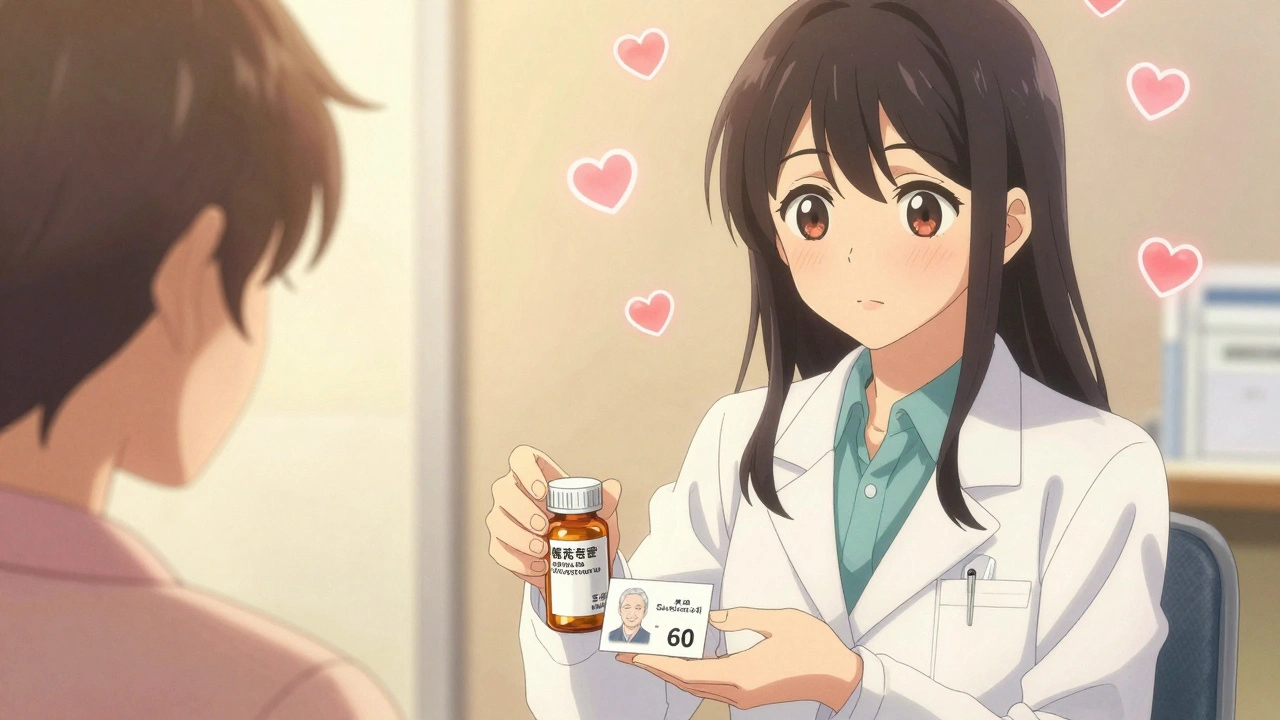
One clinic in Ohio started handing out small cards with photos of real patients who switched. The response? A 40% increase in generic acceptance among patients over 60. People trust people, not pamphlets.
Why This Matters
Generic drugs save Americans over $300 billion a year. That’s money that goes back into groceries, rent, heating bills. It’s the difference between someone taking their blood pressure pill-or skipping it because they can’t afford it.
But if we keep treating older adults like they’re stubborn or misinformed, we’ll keep losing the battle. They’re not resisting science. They’re resisting fear. And fear doesn’t respond to data. It responds to empathy.
The future of healthcare isn’t about making generics cheaper. It’s about making them feel safer. And that starts with listening-to how different generations see the world, not just how they take their pills.
Are generic medications really as effective as brand-name drugs?
Yes. By law, generic drugs must contain the same active ingredients, in the same strength, and work the same way in your body as the brand-name version. The FDA requires them to meet strict bioequivalence standards. The only differences are in inactive ingredients (like fillers or dyes) and packaging. These don’t affect how the drug works.
Why do older people distrust generic drugs more than younger people?
Older generations grew up when brand-name drugs were the only option, and advertising emphasized trust and reliability. Many have been on the same brand for decades and associate it with feeling better. Generics, with plain packaging and no marketing, feel unfamiliar-even though they’re scientifically identical. Trust is built over time, and for many, that trust is tied to the brand name, not the chemical.
Can switching to a generic cause side effects?
Rarely. Most side effects from switching are due to changes in inactive ingredients, like dyes or binders, which can cause minor reactions in sensitive individuals. But these aren’t caused by the active drug itself. If someone experiences new symptoms after switching, it’s usually temporary, and their doctor can adjust the formulation. It’s not because the generic is weaker-it’s because their body is adjusting to a slightly different filler.
Do pharmacists prefer generics over brand-name drugs?
Yes, most do. Pharmacists see the financial impact daily. They know generics help patients afford their meds and reduce insurance costs. Studies show pharmacists are more likely to support generics than physicians because they interact directly with patients and see how cost barriers lead to missed doses. Their main concern isn’t effectiveness-it’s whether the patient will stick with the medication.
Why don’t doctors always prescribe generics?
Many do-but not always. Some doctors prescribe brand names out of habit, especially if they trained decades ago when generics were less reliable. Others do it because patients ask for the brand. In rare cases, a patient has had a bad reaction to a specific generic manufacturer, so the doctor avoids that version. But 90% of prescriptions in the U.S. are filled with generics, meaning most doctors are comfortable with them.
Is it safe to switch between different generic manufacturers?
Yes. All generics sold in the U.S. must meet the same FDA standards, regardless of manufacturer. The active ingredient is identical. Sometimes, switching between generic brands can cause minor differences in how the pill looks or feels, but not how it works. If you notice a change in how you feel after switching manufacturers, talk to your pharmacist or doctor-but don’t assume it’s because the drug is less effective.
Laura Saye
December 5, 2025 AT 21:47It’s fascinating how trust is less about chemistry and more about memory. I think about my grandma who’s been on the same brand of blood pressure med since the 90s-she still calls it by the old name, even though the bottle says something else. She doesn’t distrust science; she distrusts the *absence* of the familiar. The pill’s color, the shape, the way the bottle feels in her hand-that’s her ritual. Removing that isn’t just a cost-saving move. It’s an emotional disruption.
And honestly? Maybe we’re the ones being naive by thinking data alone will fix this. Humans don’t live in spreadsheets. We live in stories. The generic doesn’t need a better label. It needs a narrative that honors the past while gently inviting change.
Krishan Patel
December 6, 2025 AT 01:56Let’s be clear: this is not about psychology-it’s about corporate manipulation. The pharmaceutical industry spends billions on branding to keep people paying inflated prices for identical drugs. The FDA approval process is a joke if you think ‘bioequivalent’ means ‘identical.’ There are subtle differences in fillers, coatings, dissolution rates-enough to cause real side effects in sensitive individuals. And don’t pretend these companies don’t know it. They count on people being too lazy or too poor to complain.
Calling it ‘trust’ is a euphemism for exploitation. If you’re paying $200 for a pill that costs $2 to make, you’re not being loyal-you’re being fleeced. The real problem isn’t generational bias-it’s capitalist greed disguised as healthcare.
Carole Nkosi
December 6, 2025 AT 07:41Wow. So we’re supposed to feel bad for old people who refuse generics because they’re ‘afraid’? That’s not empathy. That’s enabling. If you’ve been on a drug for 30 years and you’re suddenly told the generic is ‘the same,’ but you feel weird-maybe you’re not paranoid. Maybe you’re the one who’s been paying attention while everyone else got distracted by marketing.
And let’s not pretend younger people are rational. They just don’t care enough to notice. They take whatever’s handed to them, then blame the system when it fails. That’s not trust-it’s apathy. And it’s dangerous.
Jimmy Jude
December 6, 2025 AT 13:48Y’all are overcomplicating this. It’s not about trust. It’s about control. Older people don’t trust generics because they don’t trust *anyone* anymore. The system lied to them about Social Security, about Medicare, about their pensions. Now you want them to trust a pill that looks like it came from a gas station? No. They’ve been burned too many times to believe in ‘science’ again.
And Gen Z? They’re not trusting the system-they’re just numb. They’ve been conditioned to accept whatever’s cheapest, fastest, and easiest. No curiosity. No loyalty. Just consumption. We’re not bridging a generational gap-we’re watching a cultural collapse.
Mark Ziegenbein
December 7, 2025 AT 06:09The entire premise of this article is fundamentally flawed because it assumes that bioequivalence is a binary condition when in reality it’s a statistical range-between 80% and 125% of the brand’s pharmacokinetic profile. That’s not identical. That’s a 45% variance window. And while the FDA considers that acceptable, it’s not the same as being chemically identical. The fact that people are skeptical isn’t irrational-it’s mathematically informed. The marketing of generics as ‘just as good’ is a lie of omission.
And don’t even get me started on the inactive ingredients. Talc, lactose, FD&C dyes-these aren’t inert. They trigger allergies, inflammation, even autoimmune flares in susceptible populations. The idea that a 70-year-old with multiple comorbidities should just ‘switch’ without considering formulation differences is not just irresponsible-it’s medical negligence disguised as cost-saving.
So yes, the perception gap exists. But the real gap is between what regulators say and what pharmacologists know. And until we stop pretending the two are the same, we’re not helping anyone-we’re just making the system more efficient at harming people quietly.
Juliet Morgan
December 8, 2025 AT 01:27I work in a pharmacy and I’ve seen this firsthand. One woman, 72, cried when we gave her the generic version of her heart med. She said, ‘This isn’t the one that saved me.’ We didn’t just hand her the bottle-we sat with her. Showed her the label side by side with the old one. Told her the active ingredient was the same. Gave her a card with a photo of another patient who’d switched and was fine. She came back a week later and hugged me. Said she felt like she’d been heard.
It’s not about the pill. It’s about being seen. That’s all.
Norene Fulwiler
December 8, 2025 AT 15:07In South Africa, generics are the only option for most people. We don’t have the luxury of brand loyalty. But here’s the thing-our pharmacists don’t just hand out pills. They sit down. They explain. They use pictures. They say, ‘This is the same medicine, just without the advertising.’ And guess what? People trust it. Because they trust the person giving it to them-not the logo.
Maybe the answer isn’t changing the pill. Maybe it’s changing how we talk to people about it.
Katie Allan
December 10, 2025 AT 06:35I love how this post frames the issue as generational, but the real divide is between those who’ve been listened to and those who’ve been talked over. Older patients aren’t stubborn-they’re survivors of a healthcare system that dismissed them for decades. If you’d spent your life being told your pain was ‘just aging,’ you’d be wary too.
And younger people? They’re not ‘rational.’ They’re just not yet traumatized by the system. Give them 20 years of navigating insurance denials and underdosed prescriptions, and their trust might look a lot like their grandparents’.
Empathy isn’t about convincing. It’s about creating space for fear to exist without being erased.
Kylee Gregory
December 10, 2025 AT 09:11It’s interesting how we treat medication like it’s a personality. We assign meaning to colors, shapes, names-like the pill itself holds the memory of healing. But the truth is, the healing came from the body’s response to the molecule, not the bottle. Maybe the real bridge isn’t in packaging or labeling, but in helping people see that the medicine they trust isn’t the brand-it’s the relief they feel. And that relief can come from anywhere-even a plain white tablet.
It’s not about changing minds. It’s about gently shifting the story.
Lucy Kavanagh
December 11, 2025 AT 03:53Did you know the FDA allows generics to be manufactured in countries with zero oversight? India. China. Bangladesh. And yet we’re supposed to trust that the same chemical in a different country is safe? No. This isn’t psychology. This is a global scam. The brand-name companies outsource their production too, but they hide behind ‘American-made’ labels. Generics? They’re just foreign pills with a price tag. Wake up.
Stephanie Fiero
December 12, 2025 AT 16:46My dad switched to a generic and got sick for a week. Doctor said it was ‘coincidence.’ But he’s still on the brand. And you know what? I don’t blame him. I’ve seen how fast pharmacies swap manufacturers. One day it’s blue, next day it’s green. No warning. No explanation. People aren’t resisting science-they’re resisting being treated like lab rats.