
Nocebo Effect: How Negative Expectations Undermine Generic Medications
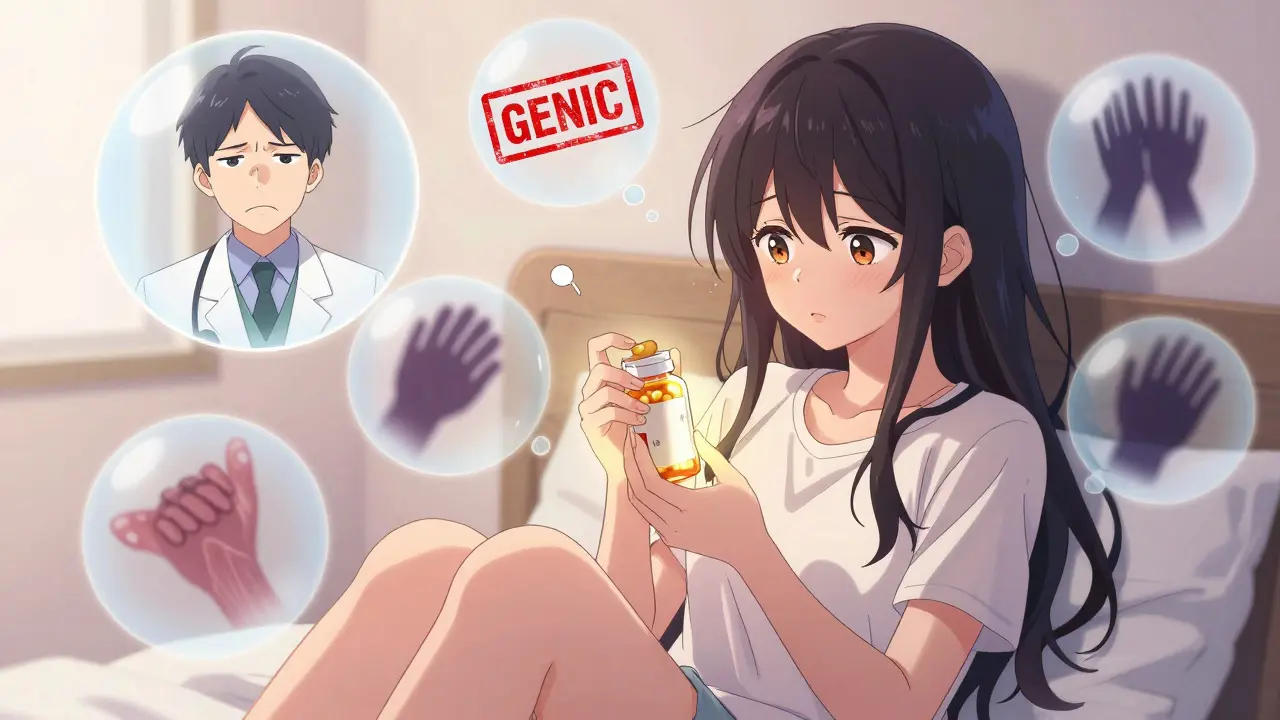
When you switch from a brand-name pill to a generic version, your body doesn’t suddenly stop working right. But your mind might. And that’s where the nocebo effect comes in.
It’s not a myth. It’s not imagination. It’s real. People who switch to generics often report side effects-muscle pain, dizziness, fatigue, nausea-even though the active ingredient is identical to the brand-name drug they were taking. The difference? Expectations. If you believe the generic won’t work as well, or that it’s "inferior," your brain can turn normal sensations into symptoms. This isn’t just about feeling anxious. It’s about your brain literally changing how your body feels.
What Exactly Is the Nocebo Effect?
The word "nocebo" comes from Latin, meaning "I shall harm." It’s the dark twin of the placebo effect. Placebos make you feel better because you expect to. Nocebos make you feel worse because you expect to.
Think about it: if your doctor says, "This generic might not work as well," you’re more likely to notice every little twinge, every headache, every tired morning. You start attributing normal body noises to the pill. A slight stomach upset? Must be the generic. A bad night’s sleep? Must be the new pill. Your brain is wired to find patterns, and when you’re primed to expect harm, it finds them-even when there’s nothing there.
Studies show that in clinical trials, about 1 in 5 people taking a sugar pill report side effects. Nearly 1 in 10 quit the study because they think they’re having bad reactions. And when those sugar pills are labeled as "generic," the numbers go even higher.
Why Generics? Why Now?
Generics make up 90% of all prescriptions filled in the U.S. But they only cost 24% of what brand-name drugs do. That’s why health systems push them. They save billions. But here’s the catch: patients often don’t want them.
Why? Because of stories. Reddit threads. Social media posts. Friends who "swore" their generic made them feel awful. News headlines screaming about "generic drug failures." Even if those stories are false, they stick. And when a patient hears, "We’re switching you to a cheaper version," their brain doesn’t hear "same medicine." It hears "lower quality."
One real-world example: In New Zealand, when doctors switched patients from a brand-name antidepressant to its generic version, there was no spike in side effects-until the media started reporting on "problems" with the switch. Suddenly, reports of dizziness, nausea, and mood swings jumped. The medication hadn’t changed. The expectations had.
The Science Behind the Symptom
Your brain doesn’t just think about the pill. It activates real physical pathways.
When patients expect negative outcomes, brain regions tied to pain, anxiety, and fear light up. In one study, people told an epidural would feel like "a bee sting" reported far more pain than those told it would be comfortable-even though the needle and procedure were identical.
With statins, the most common complaint is muscle pain. But in double-blind trials, people taking real statins and people taking sugar pills report the same rate of muscle aches. That’s not coincidence. It’s the nocebo effect in action.
Even more striking: in opioid studies, patients told the drug might not work lost nearly all pain relief. Those told it would help? Their pain relief doubled. The drug didn’t change. The message did.
And it’s not just physical. One study found patients told beta-blockers might cause sexual side effects were 3 to 4 times more likely to report them-compared to those who weren’t warned. The drug didn’t cause the issue. The suggestion did.
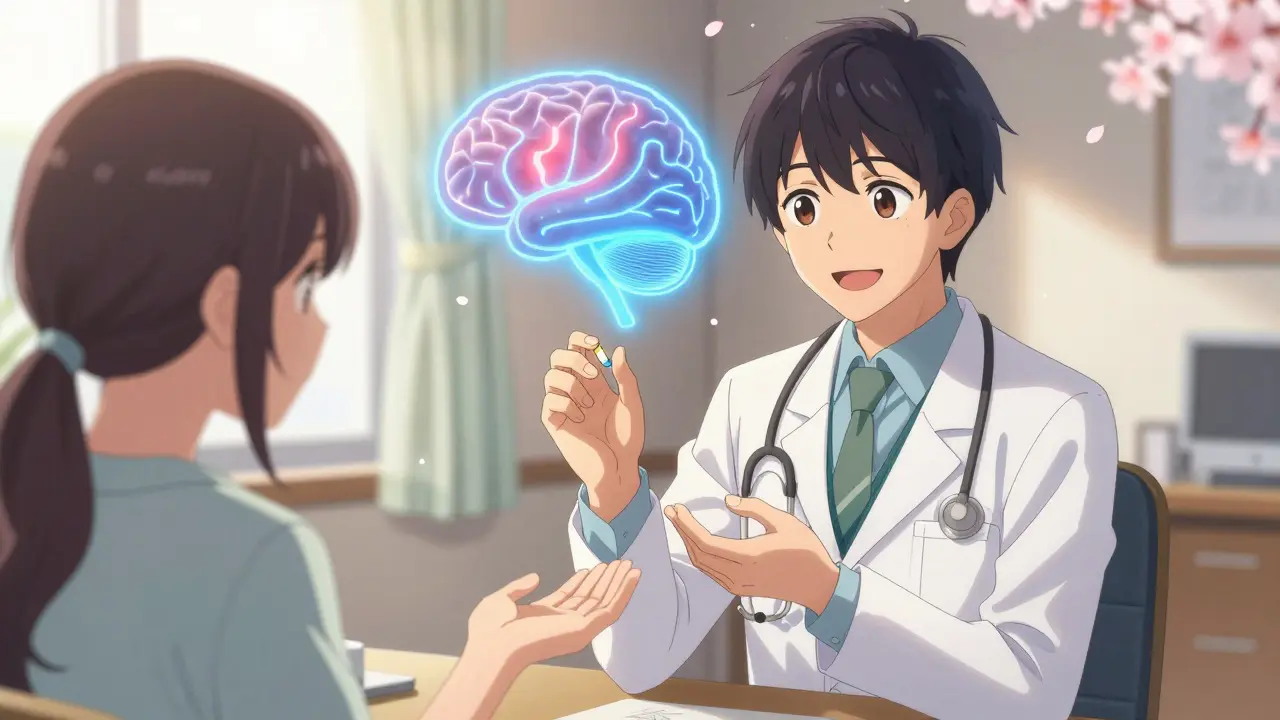
How Doctors Make It Worse (Without Realizing)
Healthcare providers aren’t trying to scare patients. But small phrases can trigger big reactions.
"This is a generic. It’s cheaper, so it might not work the same." That sentence alone increases nocebo responses by 65%.
"We’re switching because your insurance won’t cover the brand." That sounds like: "The brand is better, but you can’t afford it."
Instead, doctors who say, "This generic has the same active ingredient, same dose, same results-and it’ll save you money" see a 37% drop in reported side effects.
Training programs now teach clinicians how to frame generic switches. One 2022 study found that after just one hour of training, doctors reduced patient-reported side effects by 28%. It’s not magic. It’s language.
What Patients Are Really Feeling
Many patients don’t know the difference between a pharmacological side effect and a psychological one. They feel something. They take a new pill. They assume the pill caused it.
One study followed patients who switched from brand-name to generic statins. 45% reported muscle pain. When they switched back to the brand-name version, they still felt the pain. Not because the drug changed. Because their brain had learned to associate the pill with discomfort.
Another study found that 32% of patients switched to generic antidepressants reported new side effects. Only 12% did in the control group who were told, "This is just as effective, and it’s the same medicine."
On Reddit, threads like r/pharmacy are full of stories: "I couldn’t sleep after the switch." "My anxiety spiked." "I felt like I was dying." Then, when they went back to the brand? All symptoms vanished. No one’s lying. They felt real. But the cause? Not the drug.
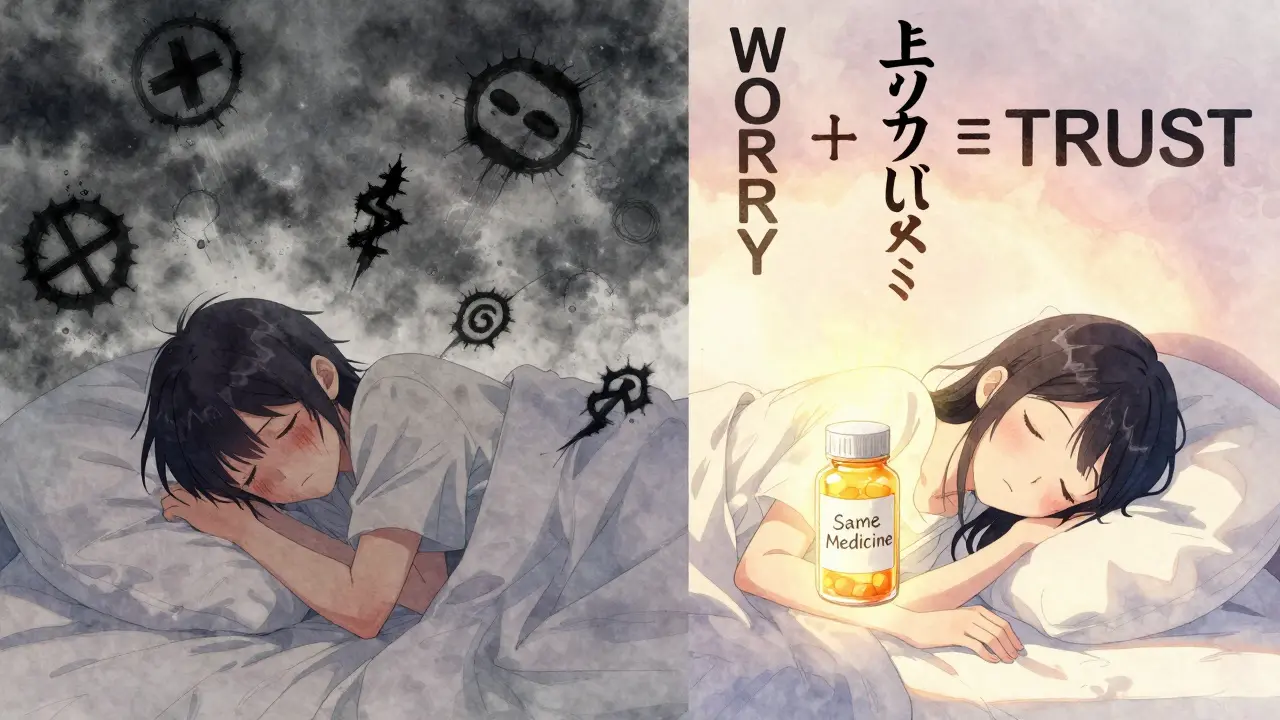
What You Can Do
If you’re being switched to a generic:
- Ask: "Is this the same active ingredient?" If yes, it is.
- Ask: "Has this been tested to work the same?" Yes, it has. The FDA requires bioequivalence.
- Ask: "Will I feel different?" The answer should be: "You might notice a different pill shape or color. But your body should react the same."
- If you start feeling worse, don’t assume it’s the drug. Wait a few days. Track your symptoms. Talk to your doctor. It might be stress, sleep, or something else.
If you’re a provider:
- Never say "this is cheaper" or "it might not work as well."
- Always say: "This is the same medicine. It’s been tested to work exactly like the brand. It’s safe. It’s effective. And it saves you money."
- Give patients a printed sheet that says: "Generic medicines contain the same active ingredient, dosage, and strength as brand-name drugs. They are required by law to be equally effective."
The Bigger Picture
The nocebo effect isn’t just about pills. It’s about trust. It’s about how we talk about medicine.
Every time a patient stops a generic because they think it’s "not as good," the system loses. The U.S. healthcare system loses about $1.2 billion a year because of nocebo-driven discontinuations. That’s billions in unnecessary brand-name prescriptions, extra doctor visits, and ER trips.
Pharmaceutical companies are now designing patient materials specifically to avoid triggering nocebo responses. Pfizer’s generic atorvastatin launch included redesigned leaflets that removed words like "alternative" or "substitute." They focused on "same medicine, same results."
The FDA and EMA now require that generic medication leaflets avoid language that could create negative expectations. No more "may not be as effective." No more "different manufacturer." Just facts: same drug. Same dose. Same effect.
The Future Is Personalized
Researchers are now using AI to predict who’s most likely to have a nocebo response. One 2023 trial tested an AI tool that customized patient messages based on their beliefs, anxiety levels, and past experiences. It cut nocebo responses by 41%.
Scientists are also studying genes. Early data suggests some people may be more genetically prone to nocebo effects-especially those with certain variations in the COMT gene, which affects how the brain processes stress and pain.
By 2025, 75% of healthcare systems using generic substitution will have formal nocebo mitigation programs. That’s not just policy. It’s science.
Generics aren’t second-rate. They’re the same medicine, sold at a fair price. The only thing standing between you and effective treatment? Your expectations.
Can generic medications really cause side effects if they’re the same as brand-name drugs?
Yes, but not because of the drug itself. When patients believe a generic is inferior, their brain can trigger real physical symptoms-like muscle pain, nausea, or fatigue-due to negative expectations. This is called the nocebo effect. In clinical trials, people taking sugar pills report the same side effects as those taking real medication, proving the symptoms come from expectation, not chemistry.
Why do some people feel worse after switching to a generic?
The change in pill size, color, or packaging can trigger subconscious associations. If someone previously had side effects with a brand-name drug, they may assume the generic will do the same-even if it’s chemically identical. Media stories, online forums, or even a doctor’s tone of voice can reinforce these beliefs. Studies show that simply telling patients "this is a cheaper version" increases side effect reports by 65%.
Is the nocebo effect real, or just "in my head"?
It’s real-and measurable. Brain scans show that negative expectations activate the same regions involved in pain and anxiety. In one study, people told an injection would hurt reported more pain than those told it wouldn’t-even though the needle and fluid were identical. The nocebo effect is a biological response to belief, not imagination.
How can I tell if my symptoms are from the drug or the nocebo effect?
If symptoms started right after switching to a generic and disappeared when you switched back to the brand-name version, it’s likely a nocebo response. But never stop medication without talking to your doctor. In some cases, switching back and forth under medical supervision can help confirm whether the issue is psychological or pharmacological. The key is: if the active ingredient is unchanged, and symptoms only appear after the switch, expectations are the most likely cause.
What should I say to my doctor if I’m worried about generics?
Ask: "Is this generic the same as the brand-name version?" and "Has it been tested to work the same way?" If the answer is yes, trust the science. You can also ask your doctor to explain the bioequivalence process-how generics must meet the same FDA standards as brand-name drugs. Avoid framing the conversation around cost. Focus on equivalence. The more you hear that it’s the same medicine, the less likely your brain is to create symptoms.
Jessica Chaloux
March 2, 2026 AT 13:28Mariah Carle
March 3, 2026 AT 10:04Pankaj Gupta
March 3, 2026 AT 15:49Richard Elric5111
March 4, 2026 AT 18:34Dean Jones
March 6, 2026 AT 01:47Betsy Silverman
March 6, 2026 AT 08:14Ivan Viktor
March 7, 2026 AT 03:55Zacharia Reda
March 8, 2026 AT 19:27Mike Dubes
March 9, 2026 AT 08:21Helen Brown
March 11, 2026 AT 07:54