
Red Blood Cell Destruction: Causes, Risks, and What You Need to Know
When red blood cell destruction, the premature breakdown of oxygen-carrying cells in the bloodstream happens, your body doesn’t just lose cells—it loses its ability to breathe properly. This process, called hemolysis, the rupture or destruction of red blood cells, isn’t always obvious. You might feel tired, dizzy, or short of breath, but no one tells you it’s because your blood is literally falling apart. And while some cases come from genetic disorders or autoimmune issues, a surprising number are triggered by everyday medications.
Take G6PD deficiency, a common inherited condition that makes red blood cells fragile under stress. It affects millions worldwide, especially men of African, Mediterranean, or Asian descent. If you have it and take a drug like nitrofurantoin—a common UTI antibiotic—you could trigger a life-threatening wave of hemolytic anemia, a condition where red blood cells are destroyed faster than the body can replace them. The symptoms come fast: dark urine, jaundice, rapid heartbeat. And if you don’t know you have G6PD deficiency, you won’t connect the dots until it’s too late. This isn’t rare. Studies show over 400 million people carry this gene variant, and many never find out until they’re hospitalized after a simple prescription.
It’s not just antibiotics. Some painkillers, antimalarials, and even certain herbal supplements can set off this chain reaction. The body tries to compensate by making new red blood cells, but if the destruction keeps going, your organs start to suffer. Your kidneys struggle to filter the waste. Your heart works overtime. And if you’re older, diabetic, or have other chronic conditions, the risk multiplies. What makes this even trickier is that doctors rarely test for G6PD unless you’ve had a bad reaction before. So if you’ve ever been told your anemia "has no clear cause," or your blood counts dropped after a new med, it might not be a mystery—it might be hemolysis.
What you’ll find below isn’t just theory. These are real cases—people who got sick from common drugs, others who avoided disaster because they knew their risk, and the science behind how to spot the warning signs before your body breaks down. From how insurance handles treatments for hemolytic conditions to why some generic meds are safer than others, this collection gives you the facts you won’t hear at the pharmacy counter. You don’t need a medical degree to protect yourself. You just need to know what to ask.
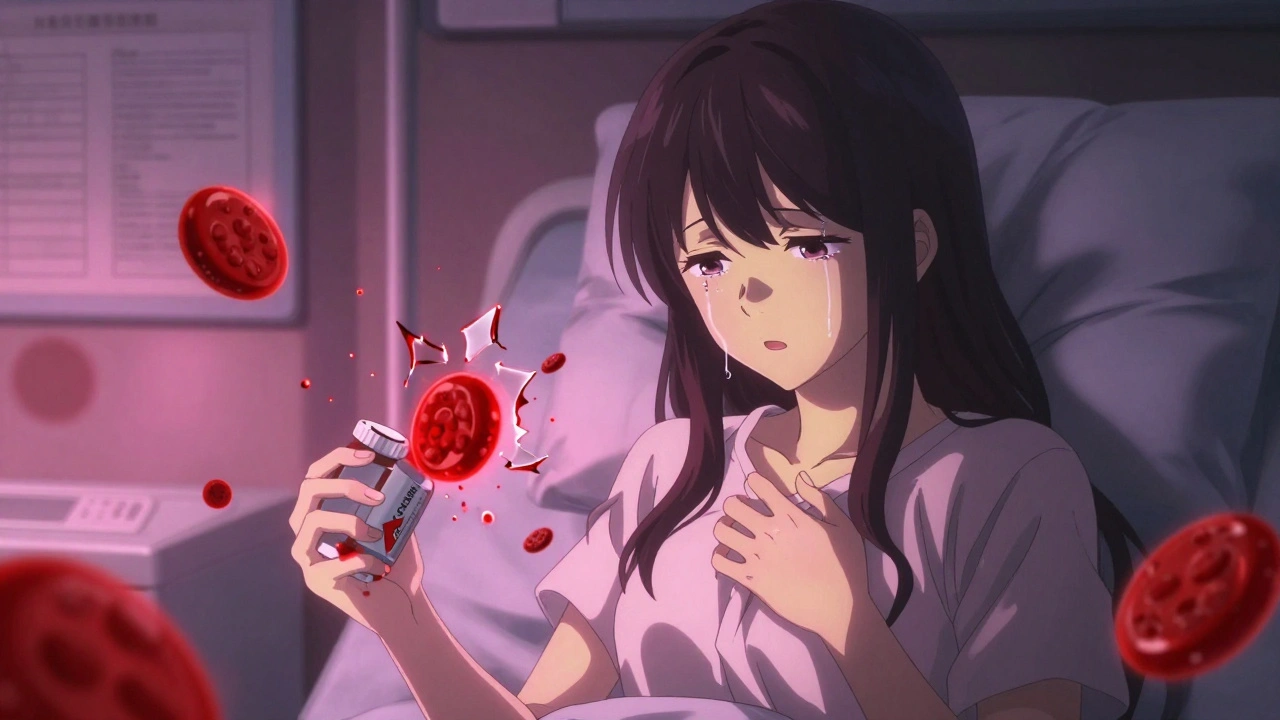
Hemolytic Anemia from Medications: Recognizing Red Blood Cell Destruction
Drug-induced hemolytic anemia destroys red blood cells through immune reactions or oxidative damage. Learn which medications cause it, how to spot the warning signs, and what to do if it happens.
VIEW MORE