
Pediatric Medication Safety: Protecting Kids from Dangerous Drug Reactions
When it comes to pediatric medication safety, the practice of ensuring drugs are prescribed, dispensed, and used correctly in children to avoid harm. Also known as child-safe drug use, it’s not just about giving smaller doses—it’s about understanding how a child’s developing body changes the way medicine works. Kids metabolize drugs faster or slower than adults, their organs aren’t fully mature, and even small dosing mistakes can lead to serious harm. A wrong pill, a misread label, or a hidden interaction can turn a routine treatment into a life-threatening event.
One major risk is adverse drug reactions, harmful side effects that aren’t expected from normal use. These aren’t rare—studies show children have higher rates of preventable drug reactions than adults, especially in emergency rooms and hospitals. Why? Because many drugs given to kids haven’t been properly tested in pediatric populations. Even common medications like antibiotics, pain relievers, or sleep aids can cause unexpected problems. For example, pharmacogenetic testing, a way to check a child’s genes to predict how they’ll respond to certain drugs, can prevent reactions before they happen. Some kids have a gene variant that makes them ultra-sensitive to certain painkillers or antidepressants. Without testing, they might get a standard dose—and end up in the ICU.
Another hidden danger is drug interactions in children, when two or more medicines react in harmful ways inside a young body. Parents often don’t realize that an over-the-counter cold syrup can clash with a prescribed antibiotic, or that a herbal supplement can make an ADHD drug too strong. And then there’s pediatric drug dosing, the precise calculation of medicine based on weight, age, and organ function. A typo in milligrams can be fatal. That’s why pharmacists now use weight-based calculators, electronic alerts, and double-check systems in pediatric units. But at home, it’s still up to caregivers to ask the right questions: Is this the right dose? Could this interact with what else my child is taking? Has this been tested for kids?
What you’ll find below isn’t just theory—it’s real stories and hard data from parents, doctors, and pharmacists who’ve seen what happens when safety fails. From epinephrine auto-injector mistakes in schools to nitrofurantoin triggering hemolytic anemia in kids with G6PD deficiency, these posts cover the risks you won’t hear about in brochures. You’ll learn how to spot red flags, what to ask at the pharmacy, and how genetic testing is quietly changing how kids get treated. This isn’t about being paranoid. It’s about being prepared.
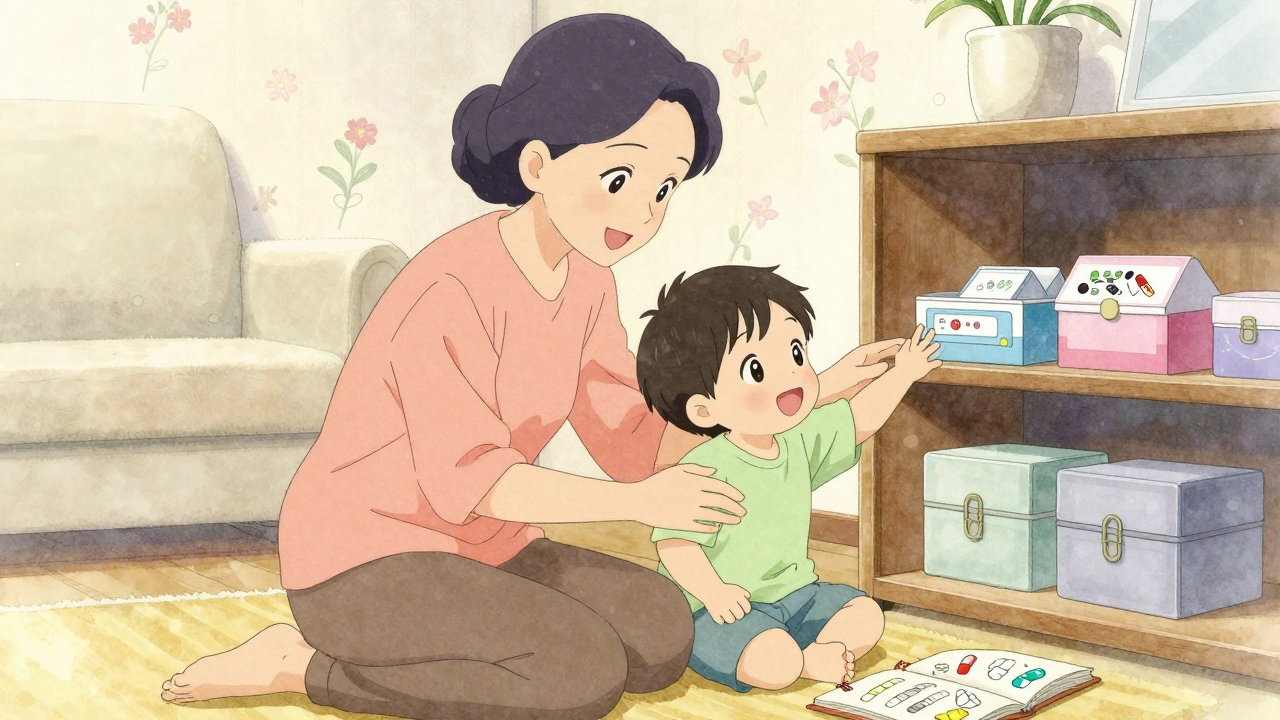
How to Involve Grandparents and Caregivers in Pediatric Medication Safety
Over one-third of pediatric medicine poisonings involve grandparents. Learn practical, non-judgmental ways to help grandparents store meds safely, teach kids what to do, and use free resources to prevent accidents.
VIEW MORE