
How to Involve Grandparents and Caregivers in Pediatric Medication Safety
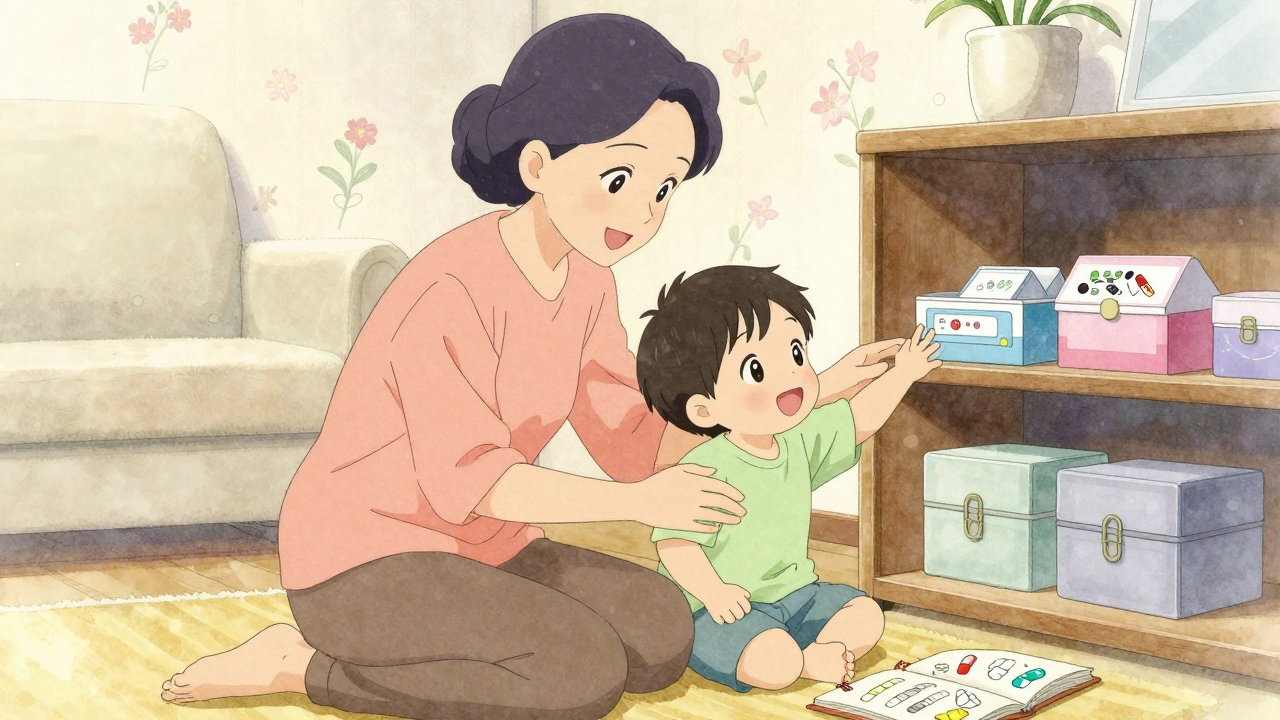
Every year, over 58,000 children under five end up in the emergency room because they got into medicine they weren’t supposed to. And in more than one-third of those cases, the medicine came from a grandparent’s purse, nightstand, or kitchen counter. It’s not because grandparents are careless-it’s because they don’t realize how easily a curious toddler can find and open a pill bottle. The truth is, most grandparents are doing their best. But when you’re taking four or five prescriptions a day, it’s easy to forget that your blood pressure pills look just like candy to a 2-year-old.
Why Grandparents Are a Critical Part of the Solution
Grandparents are raising more kids than ever. About 13% of U.S. children live with or are regularly cared for by a grandparent. And 34% of those grandparents take daily prescription medications. That’s a lot of pills in homes where little hands are always reaching.
Parents know to lock up medicine. Studies show 68% of parents store meds safely. But only 52% of caregiving grandparents do. Why? Many think child-resistant caps are enough. They’re not. Research shows 30% of 4-year-olds can open them in under five minutes. Others keep meds in purses because they’re always on the go. Or on the nightstand because they forget to put them away after taking them. One grandma told me her grandson found her insulin pen in her purse during a visit. He was holding it like a toy. She didn’t even realize it was missing until she went to use it.
And here’s the kicker: grandparents are more worried about this than parents are. Eighty-seven percent say keeping grandkids safe from medicine is extremely important. That’s a huge opening. If we talk to them the right way, they’ll change their habits.
What Safe Storage Actually Looks Like
Safe doesn’t mean putting medicine in a drawer. It means locking it up-out of sight, out of reach, and out of reach of little fingers.
- Store it high and locked. Cabinets above 4 feet with latches that require 15+ pounds of force to open. Most kids under five can’t open them.
- Keep it in the original container. No more dumping pills into weekly pill organizers. Those are easy for kids to open and don’t have warning labels.
- Never leave it in a purse, bag, or coat pocket. Grandparents who carry meds with them are 31% more likely to have a near-miss incident.
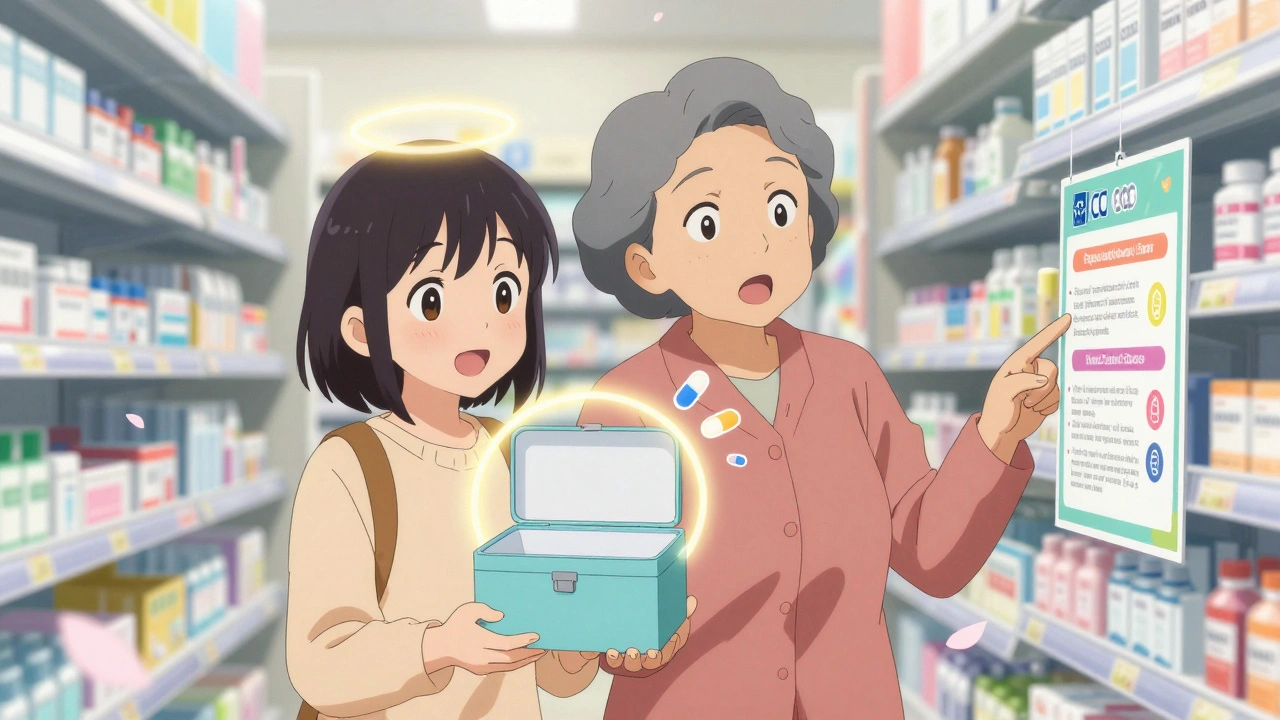
- Use a lockbox. A simple $15 plastic lockbox from the pharmacy works better than most home safes. Many pharmacies give them out for free.
One study found that after a 15-minute talk with a pharmacist, grandparents who were shown how to use a lockbox improved their safe storage from 39% to 78% in just two months. That’s not magic. That’s clear, simple guidance.
How to Talk to Grandparents Without Making Them Feel Guilty
Don’t say, “You’re putting your grandchild at risk.” That shuts people down. Instead, say: “Let’s make sure we’re both keeping our grandkids safe.”
Grandparents respond best when they feel like partners, not mistakes. The most effective programs use phrases like:
- “We’re a team when it comes to keeping the little ones safe.”
- “I know you’re careful. Let’s make sure nothing slips through the cracks.”
- “I saw this cool trick at the pharmacy-want to try it?”
One dad started leaving a small lockbox on the kitchen counter with a note: “For Grandma’s meds-thanks for keeping us safe!” His mom didn’t even realize she’d been leaving her pills on the counter until she saw the box. She started using it the next day.
Teach Kids the Rules-Early and Often
It’s not just about hiding the medicine. It’s about teaching kids what to do when they see it.
The CDC’s “Safety Talk” works because it’s simple:
- “Medicine is not candy.” Show them the difference between a gummy vitamin and a pill. Let them hold the bottle-explain it’s only for adults.
- “Only adults give medicine.” Even if Auntie says it’s okay, they need to say no.
- “If you find medicine, tell an adult immediately.” Make it a game. “If you see medicine, run and find Mommy or Grandma. No waiting.”
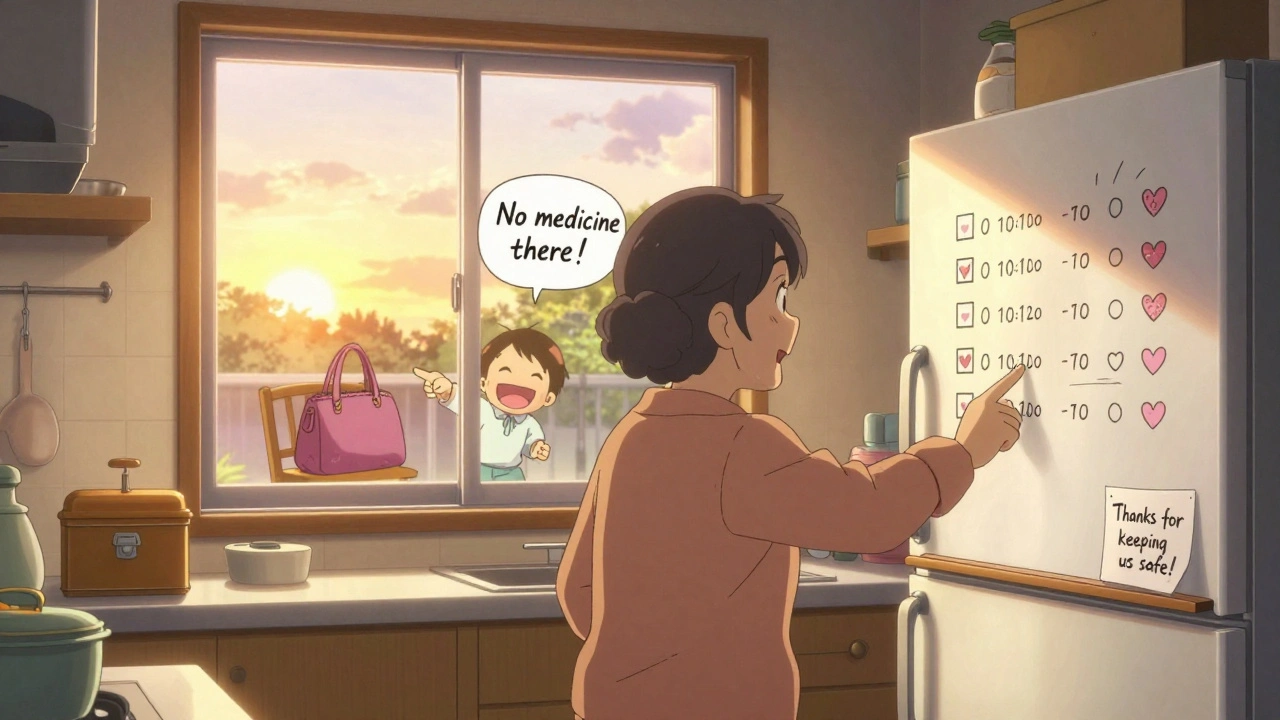
One grandma started having “medicine safety time” every visit. She’d sit with her grandson, draw pictures of pills and lockboxes, and let him color them. He started pointing at her purse and saying, “No medicine there!” She cried. Not because she was scared-but because he got it.
What to Do About Pill Organizers and Expired Meds
One of the biggest risks? Transferring pills into weekly pill sorters. Twenty-nine percent of caregiving grandparents do this. Why? Because they forget what they’ve taken. But those containers are childproof only in name. A 3-year-old can pop them open in seconds.
Instead, use a pill organizer with a lock. Or better yet-keep meds in their original bottles and use a checklist. Write down the time and dose on a sticky note. Put it next to the lockbox. That’s safer and just as easy.
And don’t forget expired meds. A 2023 study found that 41% of grandparents keep old pills “just in case.” That’s dangerous. Expired antibiotics? They can make kids sick. Old painkillers? They’re still strong enough to be deadly.
Every three months, go through your meds. Toss anything you haven’t used in six months. Many pharmacies have free take-back bins. Ask your pharmacist. They’ll help.
When Grandparents Live with Grandkids-Extra Steps
If a grandparent is the primary caregiver, the stakes are higher. These families often juggle multiple medications, complex schedules, and kids with special health needs. One study found nearly half of these caregivers make at least one dosing error a week.
Here’s what helps:
- Use a digital pill reminder app. The NIH is testing one that sends alerts before visits or holidays-when mistakes are most likely.
- Ask the doctor for a written schedule. Not just a list-actual times: “8 a.m.: blue pill, 2 p.m.: white pill.”
- Set up a shared calendar with parents. Use Google Calendar. Mark when meds are given. That way, no one double-doses.
One grandmother in Texas started using a whiteboard on her fridge. Every time she gave a pill, she checked it off. Her daughter, who lives 200 miles away, could see it from her phone. No more “Did you give the antibiotic?” texts.
Where to Get Help-Free Resources
You don’t have to figure this out alone.
- Pharmacies: Most major chains (CVS, Walgreens, Rite Aid) give free lockboxes to seniors. Ask at the counter.
- AARP: Their “Safety at 65+” workshops are offered in community centers. They include live demos on opening child-resistant caps-yes, even you might be doing it wrong.
- Poison Control: Call 1-800-222-1222. They’ll send you free safety posters and guides. No charge. No appointment needed.
- CDC’s “Up & Away” toolkit: Free multilingual videos, printables, and even a printable “medicine safety pledge” for grandparents to sign.
And if you’re a grandparent who’s never been told this before-don’t feel bad. You’re not alone. Only 12% of Medicare patients get any safety counseling from their doctor. That’s a system failure-not yours.
Final Thought: This Isn’t About Blame. It’s About Love.
Grandparents want to protect their grandkids more than almost anyone. They just need the right tools and the right words.
It’s not about making them feel like they’re failing. It’s about saying: “We’re a team. And you’re doing a great job. Let’s make it even safer.”
One lockbox. One conversation. One “medicine is not candy” talk. That’s all it takes to keep a child alive.
Why do grandparents keep medicine in their purses?
Many grandparents carry their meds with them because they’re always on the move-running errands, picking up grandkids, or visiting family. They forget to put them away. But purses and bags are easy for toddlers to reach. The safest move is to keep meds locked at home and carry only what’s needed for the day in a small, sealed container that’s out of reach.
Are child-resistant caps enough to keep kids safe?
No. While they’re designed to slow kids down, 30% of 4-year-olds can open them in under five minutes. That’s why storage location matters more than the cap. Even the best child-resistant cap won’t help if the bottle is sitting on a nightstand or in a purse. Lock it up high and out of sight.
What should I do if my grandchild gets into medicine?
Call Poison Control immediately at 1-800-222-1222. Don’t wait for symptoms. Don’t try to make them throw up. Have the medicine bottle ready-note the name, dose, and time taken. Poison Control will tell you exactly what to do. Most cases can be handled at home if you act fast.
How can I get a free medicine lockbox?
Most major pharmacies like CVS, Walgreens, and Rite Aid give free lockboxes to seniors. Just ask at the counter. Some also offer them at senior centers, AARP events, or through local health departments. If they don’t have one, ask for a prescription pill organizer with a lock-it’s a good backup.
Is it safe to keep old medicine “just in case”?
No. Expired or unused meds can be dangerous. Antibiotics lose effectiveness and can cause harm. Painkillers like opioids stay strong and can be deadly to a child. Every three months, go through your meds and toss anything you haven’t used in six months. Many pharmacies have free drop-off bins for safe disposal.
What if my grandparent refuses to lock up their medicine?
Try framing it as a team effort: “We both want to keep the kids safe. Can we try this for a week?” Offer to help set it up. Bring the lockbox yourself. Show them the CDC video on YouTube-it’s short and non-judgmental. Sometimes, seeing someone else do it helps more than being told. If they still resist, ask their doctor to mention it during a visit. Doctors have more authority.
For families with grandkids who have complex medical needs, talk to the child’s care team. Many hospitals offer home safety visits-free of charge-for caregivers. Don’t wait for a crisis. Start today.
Roger Leiton
December 3, 2025 AT 05:27Laura Baur
December 4, 2025 AT 14:04Rebecca M.
December 5, 2025 AT 04:00Lynn Steiner
December 5, 2025 AT 07:05Alicia Marks
December 6, 2025 AT 01:42Paul Keller
December 7, 2025 AT 01:17Shannara Jenkins
December 8, 2025 AT 14:59Elizabeth Grace
December 9, 2025 AT 09:55Steve Enck
December 9, 2025 AT 11:20Jay Everett
December 11, 2025 AT 01:15मनोज कुमार
December 11, 2025 AT 06:58Joel Deang
December 11, 2025 AT 22:35