
Medicine Safety for Kids: What Parents Need to Know
When it comes to medicine safety for kids, the unique way children process drugs makes them more vulnerable to side effects and dosing errors than adults. Also known as pediatric drug safety, this isn’t just about giving smaller pills—it’s about understanding how a child’s liver, kidneys, and brain respond differently to medications from birth through adolescence. A child’s body isn’t a small adult’s body. Their organs are still developing, their metabolism moves faster or slower depending on age, and even a tiny overdose can lead to serious harm. That’s why knowing which drugs are risky, how to store them safely, and when to question a prescription matters more than ever.
One major concern is adverse drug reactions in children, unexpected and harmful responses to medications that aren’t listed as common side effects. Studies show kids under five have the highest rate of emergency visits due to medication errors, often because of misread labels, incorrect measuring tools, or mixing over-the-counter drugs with prescriptions. pediatric pharmacogenetics, how a child’s genes affect how they break down drugs, is starting to change this. Some kids carry gene variants that make common antibiotics like nitrofurantoin dangerous or cause them to process painkillers too slowly—leading to toxicity. While this testing isn’t routine yet, knowing your child’s reaction history can help you and your doctor avoid these traps.
Another hidden risk is child medication dosing, the practice of giving the right amount based on weight, not age or guesswork. Many parents use kitchen spoons or eyeball measurements, but a teaspoon isn’t always 5ml, and a child weighing 30 pounds needs far less than one weighing 60. Epinephrine auto-injectors, insulin for diabetes, and even liquid antibiotics require precise dosing. Mistakes here can mean the difference between recovery and hospitalization. That’s why pharmacists now recommend using only the dosing syringe or cup that comes with the medicine—and never substituting it.
You’ll also find that some drugs, like certain antibiotics or sleep aids, cause brain fog or memory issues in kids just like they do in adults. Others, like steroids, can weaken bones over time. And while generic drugs save money, not all are created equal—some have different fillers that trigger allergies in sensitive children. The posts below cover real cases: how a single wrong dose of a common UTI drug led to hemolytic anemia in a child with undiagnosed G6PD deficiency, why insulin stacking causes dangerous lows in teens with diabetes, and how pharmacogenetic testing is quietly preventing tragedies in hospitals. These aren’t theoretical risks—they happen every day, often because no one asked the right questions at the pharmacy.
What you’ll find here isn’t a list of warnings—it’s a practical guide to spotting red flags, asking smarter questions, and making sure your child gets the right medicine in the right way. From storage tips that keep kids out of harm’s way to knowing when to push back on a prescription, these are the conversations that save lives.
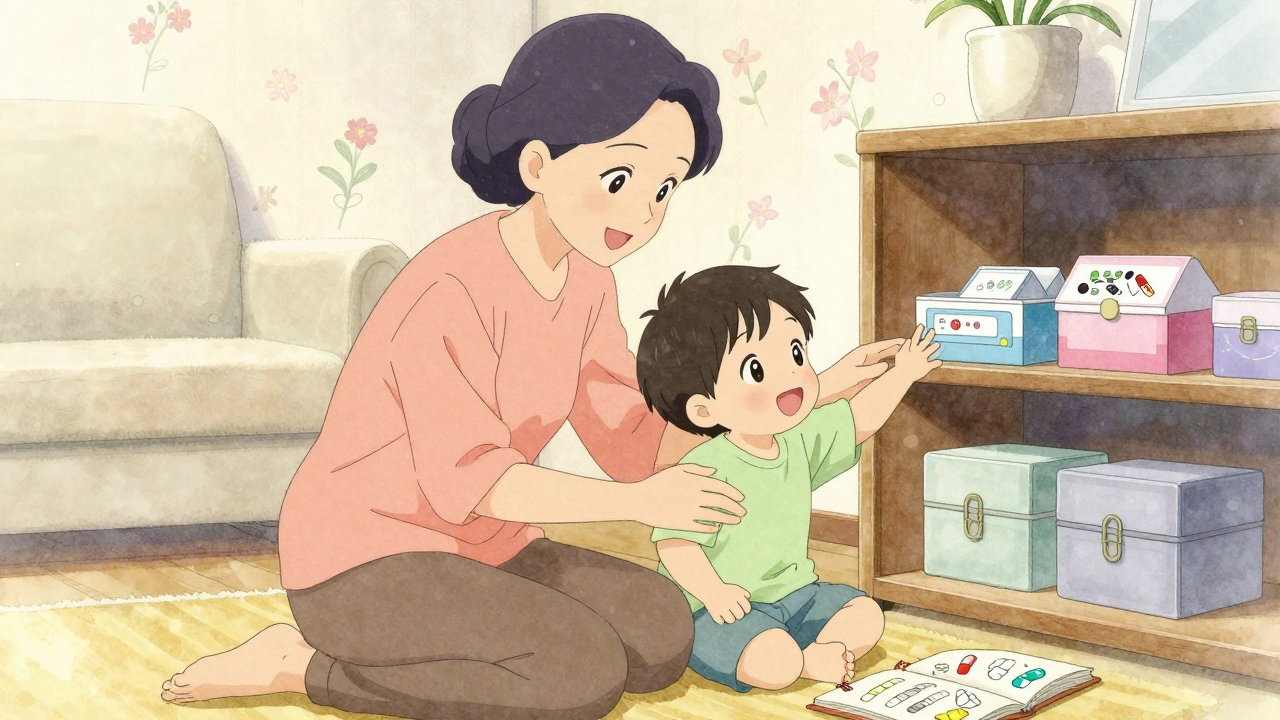
How to Involve Grandparents and Caregivers in Pediatric Medication Safety
Over one-third of pediatric medicine poisonings involve grandparents. Learn practical, non-judgmental ways to help grandparents store meds safely, teach kids what to do, and use free resources to prevent accidents.
VIEW MORE