
Hemolytic Anemia Symptoms: What to Watch For and Why It Matters
When your body destroys red blood cells faster than it can replace them, you get hemolytic anemia, a condition where red blood cells break down prematurely, leading to low oxygen delivery and systemic stress. Also known as hemolytic disease, it doesn’t always show up as tiredness—it can hit like a sudden fever, dark urine, or yellowing skin. This isn’t just about feeling worn out. It’s a medical signal that something inside your body is out of balance—often triggered by drugs, infections, or inherited conditions like G6PD deficiency, a genetic disorder that makes red blood cells fragile when exposed to certain medications or foods.
Many people don’t know they have G6PD deficiency until they take a common antibiotic like nitrofurantoin, a drug used for urinary tract infections that can trigger life-threatening hemolysis in susceptible individuals. The symptoms come on fast: fatigue so deep it feels like you’ve run a marathon while lying down, pale or yellow skin, dark tea-colored urine, and a rapid heartbeat even at rest. Some feel back pain or abdominal cramps. These aren’t side effects you can ignore—they’re signs your blood is breaking down. If you’ve ever been told you’re "just anemic" without a clear cause, or if you’ve had a bad reaction to a simple antibiotic, this could be why.
Hemolytic anemia isn’t one thing. It can be caused by autoimmune disorders, infections like malaria, or even certain foods like fava beans in people with G6PD deficiency. But in recent years, the biggest wake-up call has come from medications—especially those prescribed without checking for genetic risks. That’s why pharmacogenetic testing is becoming more common: it can spot who’s at risk before they take a dangerous drug. The good news? Once you know what’s triggering it, you can avoid it. Stop the drug, treat the cause, and your body can rebuild its red blood cells. The bad news? If you miss the signs, it can lead to kidney damage, heart strain, or even death.
What you’ll find below are real stories and science-backed details about how drugs like nitrofurantoin, infections, and genetic risks connect to these symptoms. You’ll learn what doctors look for, what tests confirm it, and which medications to avoid if you’re at risk. No fluff. Just what you need to protect yourself—or someone you care about—before it’s too late.
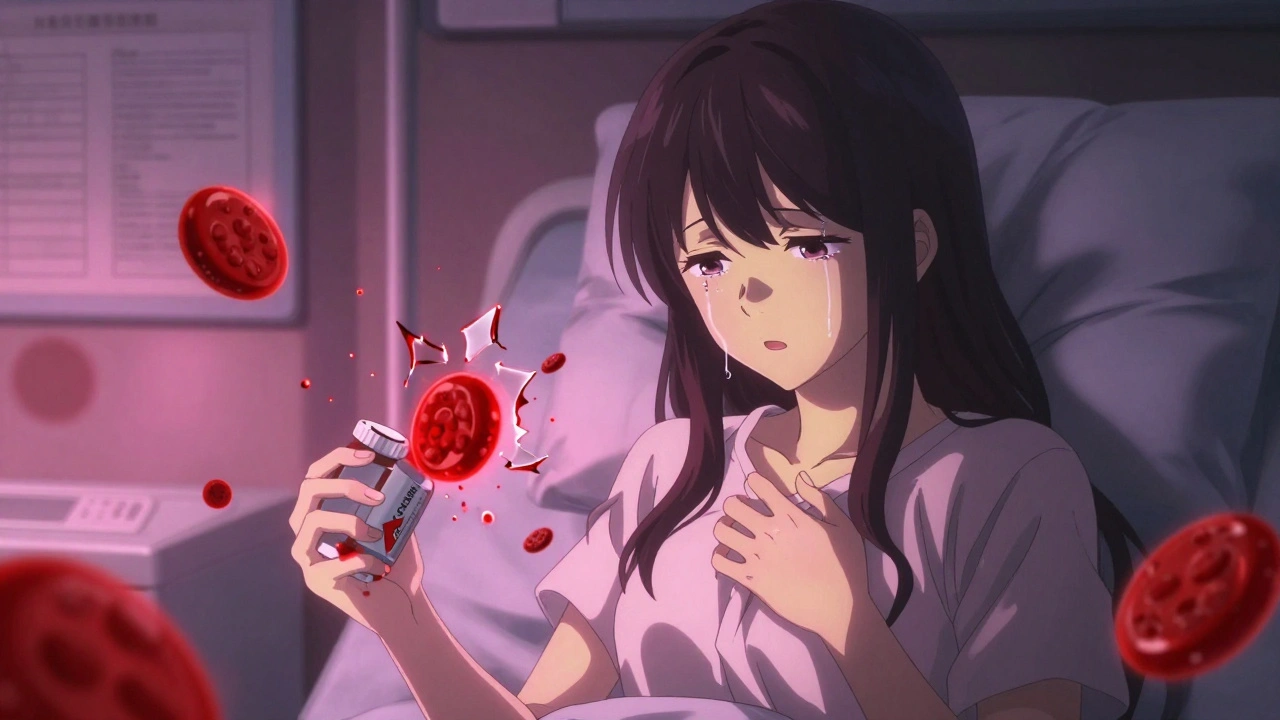
Hemolytic Anemia from Medications: Recognizing Red Blood Cell Destruction
Drug-induced hemolytic anemia destroys red blood cells through immune reactions or oxidative damage. Learn which medications cause it, how to spot the warning signs, and what to do if it happens.
VIEW MORE