
Hemolytic Anemia: Causes, Symptoms, and How Medications Can Trigger It
When your body destroys red blood cells faster than it can replace them, you get hemolytic anemia, a condition where red blood cells are broken down prematurely, leading to low oxygen delivery to tissues. Also known as hemolytic disorder, it’s not a single disease but a reaction to something else — like an infection, a drug, or your own immune system turning against you. This isn’t just about feeling tired. Your skin might turn yellow, your urine dark, and your heart races just to keep up. It’s your body screaming that something’s wrong with its oxygen supply.
One major cause is drug-induced hemolytic anemia, a reaction where certain medications trigger your immune system to attack your own red blood cells. Antibiotics like penicillin, anti-inflammatory drugs like ibuprofen, and even some diabetes pills can set this off. It doesn’t happen to everyone — but when it does, it hits fast. You might feel fine one day, then dizzy and pale the next. Another form, autoimmune hemolytic anemia, a condition where the immune system mistakenly targets healthy red blood cells as foreign invaders, can be linked to lupus, lymphoma, or even happen for no clear reason at all. In both cases, the lab test that gives it away is a high reticulocyte count — your bone marrow is working overtime to make more cells, but they’re still getting destroyed.
Doctors don’t just guess. They check your bilirubin, lactate dehydrogenase, haptoglobin, and look for spherocytes under the microscope. Treatment depends on what’s breaking the cells. Stop the drug? That’s step one. Steroids to calm the immune system? Often. In rare cases, a spleen removal or IVIG therapy might be needed. The good news? Many people recover fully once the trigger is removed. The bad news? If it’s missed, it can lead to heart strain, kidney damage, or worse.
The posts below cover real cases where medications — from antibiotics to blood pressure pills — accidentally triggered this reaction. You’ll find what drugs to watch for, how to spot early signs before it gets serious, and what tests actually matter. No fluff. Just what you need to know if you or someone you care about is suddenly feeling off, and the cause isn’t obvious.
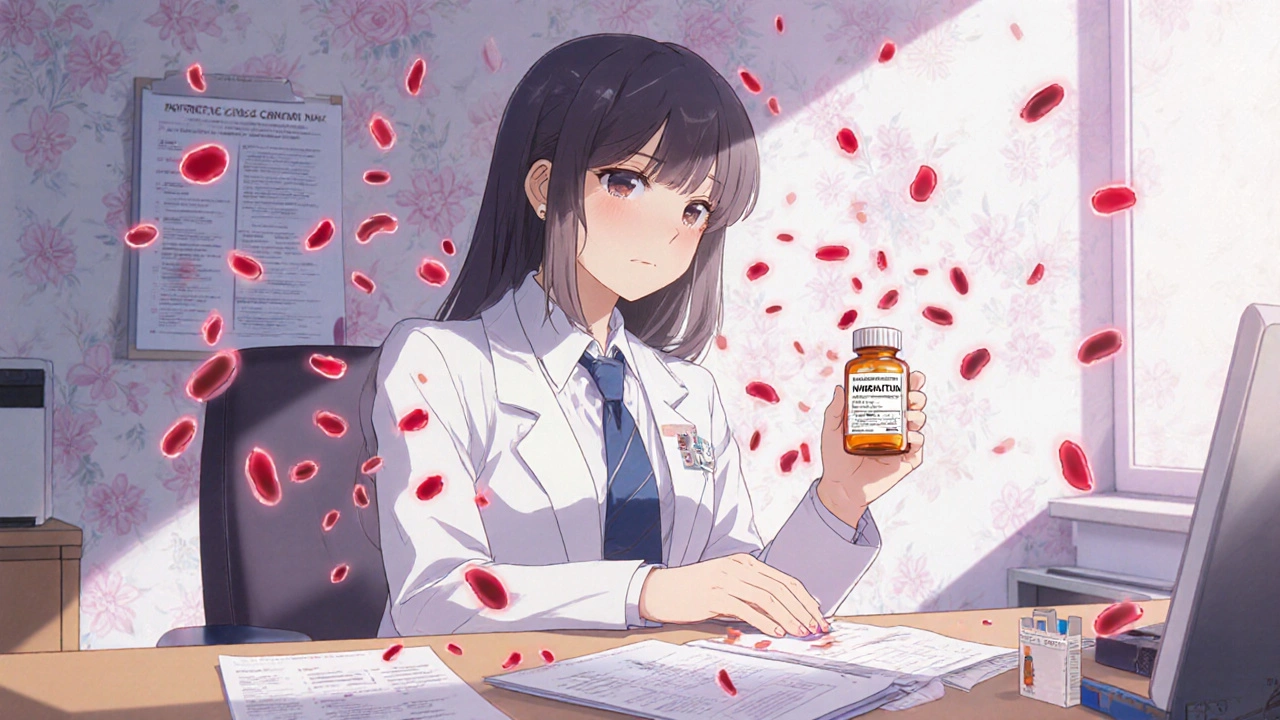
Nitrofurantoin and Hemolytic Anemia: What You Need to Know About G6PD Deficiency Risk
Nitrofurantoin is a common UTI antibiotic, but it can cause life-threatening hemolytic anemia in people with G6PD deficiency. Learn who's at risk, what symptoms to watch for, and safer alternatives.
VIEW MORE