
SSRIs with NSAIDs: How to Reduce Your Risk of GI Bleeding
SSRI-NSAID GI Bleeding Risk Calculator
Your Medications
Risk Factors
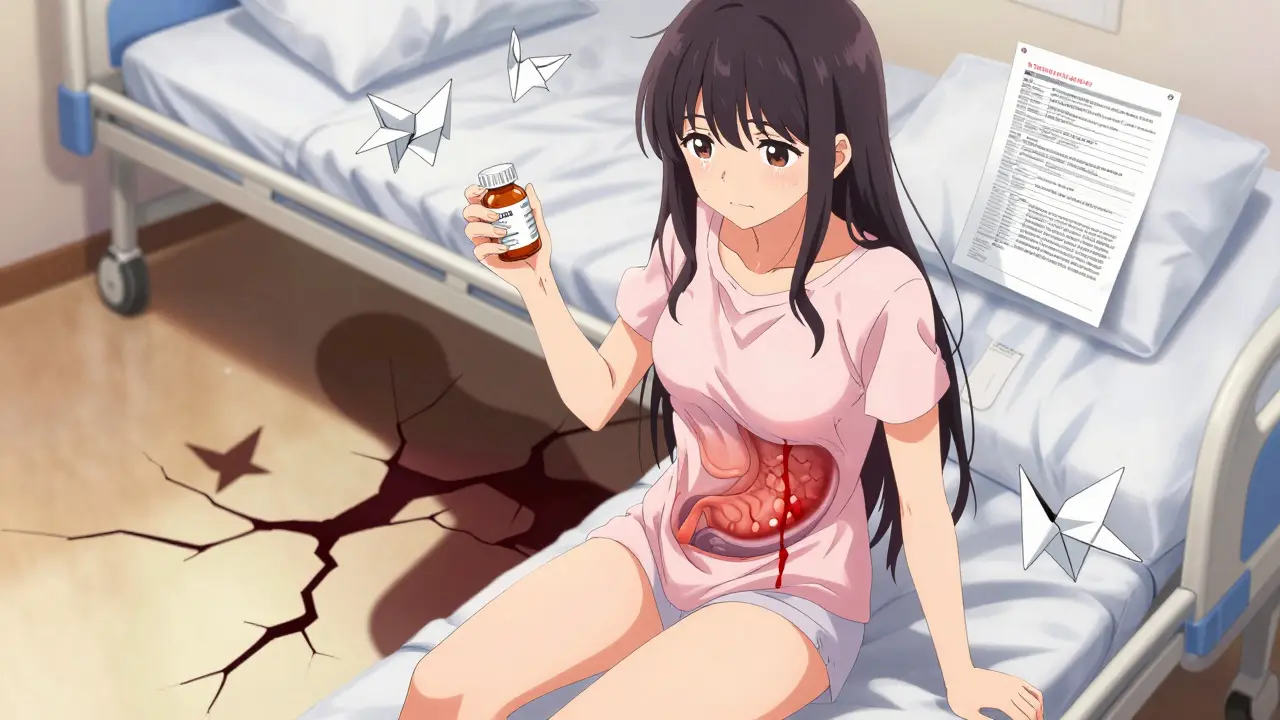
Combining SSRIs and NSAIDs might seem harmless-after all, one treats depression, the other relieves pain. But together, they can quietly increase your risk of gastrointestinal bleeding by 75%. This isn’t theoretical. Thousands of people end up in the ER each year because neither their doctor nor they realized this combo could be dangerous.
Why This Combination Is Riskier Than You Think
SSRIs like sertraline, fluoxetine, or escitalopram work by boosting serotonin in the brain. But serotonin also helps platelets stick together to stop bleeding. When SSRIs block serotonin reuptake in platelets, those cells can’t clump properly. That means even a small cut inside your stomach lining might not seal up. NSAIDs like ibuprofen, naproxen, or diclofenac damage the stomach lining directly. They also block prostaglandins-chemicals that protect your stomach from acid. So now you’ve got two problems: a weakened lining and platelets that won’t clot. Together, they don’t just add risk-they multiply it. A 2022 meta-analysis of over 1.2 million patients found that people taking both drugs had a 75% higher chance of upper GI bleeding than those taking NSAIDs alone. That’s not a small increase. It’s comparable to the risk from blood thinners like warfarin.Who’s Most at Risk?
Not everyone who takes both drugs will bleed. But some people are far more vulnerable:- People over 65
- Those with a history of ulcers or GI bleeding
- Anyone also taking low-dose aspirin, corticosteroids, or anticoagulants
- Patients on high-dose NSAIDs (more than 1,200 mg of ibuprofen daily)
- Those on SSRIs for more than 90 days
Not All SSRIs or NSAIDs Are Created Equal
Some drugs in these classes are riskier than others. Among SSRIs: Paroxetine and fluoxetine have the strongest effect on platelet serotonin. That means they carry a higher bleeding risk than sertraline or citalopram, which are milder in this regard. Among NSAIDs: Non-selective NSAIDs like naproxen and diclofenac are the worst offenders. Ibuprofen is a bit safer, but still risky when combined with SSRIs. Celecoxib-a COX-2 inhibitor-has the lowest GI bleeding risk among NSAIDs, though it’s not risk-free. The key takeaway? If you’re on an SSRI and need pain relief, don’t assume all NSAIDs are the same. Some are less dangerous, but none are safe when paired with SSRIs.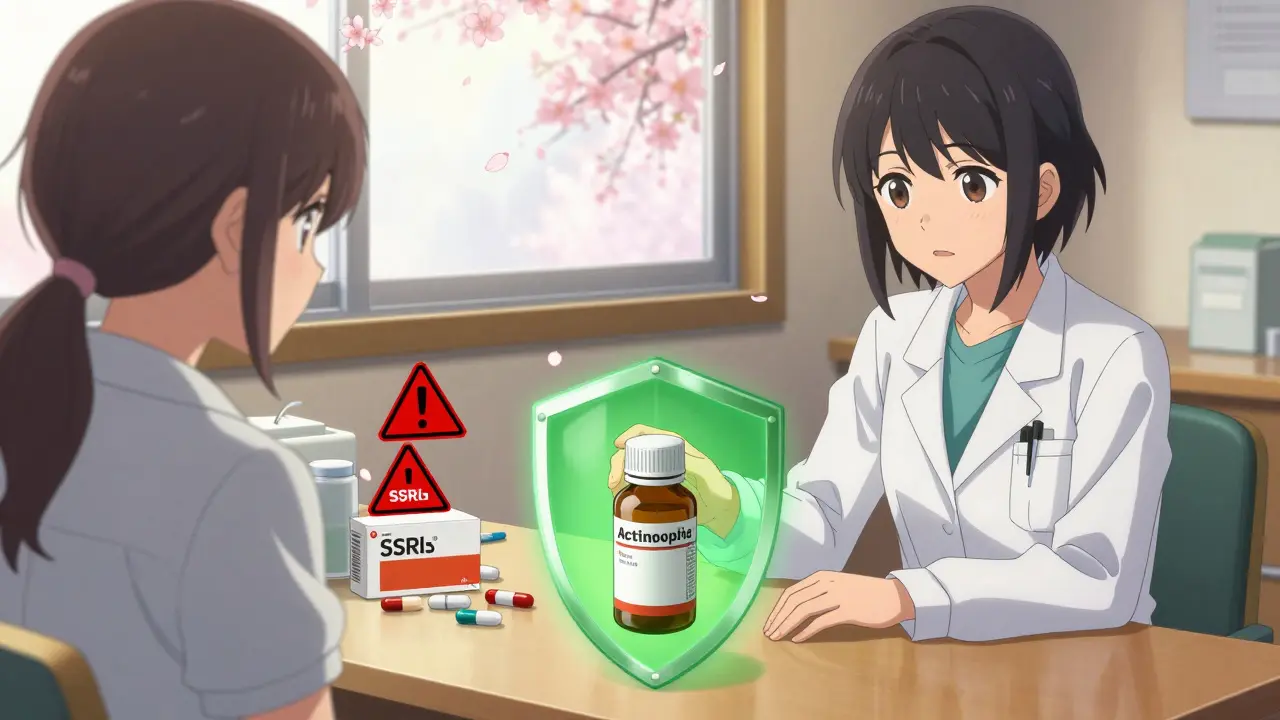
Acetaminophen: The Safer Alternative
If you’re on an SSRI and need pain or fever relief, acetaminophen (paracetamol) is your best bet. Unlike NSAIDs, it doesn’t affect platelets or the stomach lining. A 2023 meta-analysis confirmed no increased bleeding risk when acetaminophen is used with SSRIs. Many patients don’t know this. On patient forums like Reddit and Drugs.com, over 60% of users said they were unaware of the danger until they experienced bleeding symptoms. One user wrote: “I was on sertraline and ibuprofen for six months before I ended up in the ER with a bleeding ulcer. No one ever warned me.” Switching to acetaminophen isn’t always perfect-it doesn’t reduce inflammation like NSAIDs do. But for headaches, muscle aches, or arthritis pain that isn’t driven by inflammation, it’s often enough. And it’s far safer.Proton Pump Inhibitors (PPIs) Can Help-But They’re Not a Fix
If you absolutely must take both an SSRI and an NSAID, your doctor should prescribe a proton pump inhibitor (PPI) like omeprazole or esomeprazole. PPIs reduce stomach acid, helping the lining heal and lowering bleeding risk by about 70%. But here’s the catch: PPIs aren’t a green light to keep taking both drugs long-term. They can cause side effects of their own-nutrient deficiencies, increased infection risk, and even bone loss with prolonged use. They’re a protective measure, not a solution. The American Gastroenterological Association recommends PPIs for anyone on this combo, especially if they’re over 65 or have a history of ulcers. But the best strategy is still to avoid the combo altogether.What to Do If You’re Currently Taking Both
If you’re on an SSRI and regularly taking NSAIDs, here’s what to do next:- Don’t stop either drug suddenly. Talk to your doctor first.
- Ask: Can I switch to acetaminophen for pain? Many people can.
- If you need an NSAID for inflammation (like severe arthritis), ask if celecoxib is an option-it’s the safest NSAID in this context.
- If you must stay on both, request a PPI. Make sure you’re on the lowest effective dose of the NSAID.
- Watch for warning signs: black or tarry stools, vomiting blood, dizziness, or sudden abdominal pain. These aren’t normal. Call your doctor immediately.

Spencer Garcia
December 25, 2025 AT 01:35Just had a patient on sertraline and naproxen come in last week with melena. No one ever warned him. This post is spot-on.
Usha Sundar
December 26, 2025 AT 15:19My mom took ibuprofen with citalopram for years. Never knew it could bleed her out. Scary.
Abby Polhill
December 27, 2025 AT 07:12Acetaminophen is the only viable alternative here. The COX-2 inhibition profile of celecoxib doesn't negate the platelet dysfunction cascade induced by SSRIs. It's pharmacokinetic synergy, not just additive risk.
Bret Freeman
December 28, 2025 AT 19:22Doctors are lazy. They don't want to have the conversation. They just write the script. And patients? They don't know to ask. This is systemic malpractice disguised as standard care.
Pankaj Chaudhary IPS
December 29, 2025 AT 12:13As a physician in India, I see this daily. Elderly patients on SSRIs for anxiety, then self-medicating with diclofenac for back pain. No counseling. No follow-up. We need public health campaigns, not just EHR alerts.
Aurora Daisy
December 30, 2025 AT 12:56Of course Americans don't know how to take medicine. You treat pain like a snack and depression like a lifestyle choice. Meanwhile, the NHS would’ve flagged this combo in 3 seconds.
Georgia Brach
January 1, 2026 AT 12:53The 75% increase is misleading. Relative risk without absolute risk context is fearmongering. How many patients actually bleed? 0.5%? 1%? That’s not warfarin-level danger. It’s a statistical ghost.
Payson Mattes
January 2, 2026 AT 18:06Did you know the FDA got pressured by Big Pharma to delay the black box warning? I’ve got documents. SSRIs were designed to be safer than tricyclics, but they’re just replacing one silent killer with another. PPIs? They’re just bandaids on a bullet wound.
Steven Mayer
January 2, 2026 AT 18:28The meta-analysis cited is solid, but it’s confounded by polypharmacy. Most patients on this combo are also on aspirin or steroids. Is it the SSRI-NSAID interaction, or the poly-drug burden? We need stratified data.
Joe Jeter
January 3, 2026 AT 15:36Acetaminophen is toxic to the liver. You’re trading one risk for another. Why not just stop being depressed and stop having pain? Maybe you need to exercise and meditate instead of popping pills like candy.
bharath vinay
January 4, 2026 AT 10:23This is all a ploy. SSRIs are designed to make you dependent. NSAIDs are cheap. The real goal? Keep you on lifelong meds so Big Pharma keeps cashing in. PPIs? They’re the next profit center.
Dan Gaytan
January 4, 2026 AT 11:58Thank you for writing this. I’ve been on sertraline for 4 years and just started taking Tylenol for migraines. I had no idea this was a thing. So glad I didn’t go with Advil. 🙏
Chris Buchanan
January 5, 2026 AT 07:19Y’all are overcomplicating this. If you’re on an SSRI and need pain relief, grab Tylenol. It’s literally the easiest fix. Stop overthinking. Start living. And yes, it works for most non-inflammatory pain.
Wilton Holliday
January 7, 2026 AT 05:01For anyone reading this and feeling overwhelmed: you’re not alone. Talk to your doctor. Ask for alternatives. Switching to acetaminophen or celecoxib can change your life. Small steps. Big safety gains. 💪