
Shift Work Sleep Disorder: Managing Night Shifts and Sleep

Working nights doesn’t just mean you’re awake when everyone else is sleeping-it means your body is fighting against its own biology. If you’ve ever tried to sleep during the day after a 12-hour night shift, only to be wide awake by 3 p.m., you’re not lazy. You’re not failing at sleep. You’re dealing with shift work sleep disorder (SWSD), a real, medically recognized condition that affects millions of people in the U.S. alone.
What Exactly Is Shift Work Sleep Disorder?
SWSD isn’t just being tired from working late. It’s a circadian rhythm disorder where your internal body clock-your circadian system-is out of sync with your work schedule. Your brain naturally wants you to sleep between 10 p.m. and 6 a.m. That’s when melatonin rises, your core temperature drops, and your body prepares for rest. But if you’re working from midnight to 8 a.m., your body is still trying to sleep during the day while you’re awake at night. This mismatch creates a constant state of fatigue, insomnia, and mental fog.
The American Academy of Sleep Medicine officially recognized SWSD in 2005, and since then, research has shown that 10% to 30% of night and rotating shift workers develop this disorder. That’s 1 in 3 people in these jobs. The CDC reports that 29% of night shift workers and 24% of rotating shift workers experience moderate to severe sleepiness-compared to just 8% of day workers. This isn’t normal tiredness. It’s a physiological mismatch that affects your safety, health, and relationships.
Why Your Body Won’t Adapt (Even After Years)
You might think, “I’ve been on nights for five years-I should be used to it by now.” But science says otherwise. Dr. Charles Czeisler’s research at Brigham and Women’s Hospital found that only 2% to 5% of night shift workers ever fully adapt. Even after decades, most people still have melatonin peaks during their waking hours and cortisol spikes during their sleep time. That means your body thinks it’s nighttime when you’re at work, and daytime when you’re trying to sleep.
Light exposure is the biggest culprit. Artificial light at night-especially blue light from screens or fluorescent bulbs-suppresses melatonin by up to 85%. So even if you have blackout curtains and earplugs, if you’re exposed to daylight on your way home, your brain gets confused. Your circadian clock doesn’t reset easily. It’s not a matter of willpower. It’s biology.
The Real Costs: More Than Just Tiredness
SWSD doesn’t just make you groggy. It’s linked to serious long-term health risks. The International Agency for Research on Cancer classified shift work as “probably carcinogenic” in 2007. Why? Because disrupted sleep cycles affect hormone regulation, immune function, and metabolism. Studies show shift workers have a 15% to 40% higher risk of developing type 2 diabetes, heart disease, and certain cancers-especially breast and prostate cancer.
And it’s not just health. Fatigue costs money. The National Safety Council estimates workplace accidents caused by shift work fatigue cost the U.S. $13 billion annually. One case study from a Midwest manufacturing plant showed a single $2.3 million equipment failure was traced directly to a worker with undiagnosed SWSD. In healthcare, nurses on night shifts are more likely to make medication errors. A 2021 study found that 68% of nurses reported improved alertness after using strategic naps-but only 22% of workplaces provide proper sleeping facilities.
How to Recognize SWSD in Yourself
Here’s what SWSD typically looks like in real life:
- You fall asleep easily at work but can’t sleep during the day-even with blackout shades, white noise, and earplugs.
- You wake up hours before your shift ends and can’t fall back asleep.
- You feel groggy, slow, or forgetful during your shift, even after drinking coffee.
- You have mood swings, irritability, or anxiety that doesn’t go away.
- You’ve had accidents or near-misses at work or while driving home.
- Your relationships suffer because you’re always tired or on a different schedule.
Diagnosis requires symptoms lasting at least one month (NIH) or three months (ICSD-3). But you don’t need a doctor to know if this sounds like you. If you’ve been struggling for more than a few weeks, it’s time to take action.

What Actually Works: Science-Backed Strategies
There’s no magic pill-but there are proven, practical steps you can take right now.
1. Light Therapy: Reset Your Clock
Use bright light (10,000 lux) during your night shift. A 2022 study in the Journal of Sleep Health found that 57% of shift workers who used light therapy reported improved alertness. Place a light box near your workstation and use it for 30 minutes every 2 hours. This tells your brain it’s daytime, suppressing melatonin and boosting alertness.
On your way home, wear blue-blocking glasses. These cut out the light that tricks your brain into thinking it’s morning. Even a simple pair of orange-tinted glasses can help your body start preparing for sleep.
2. Strategic Caffeine Use
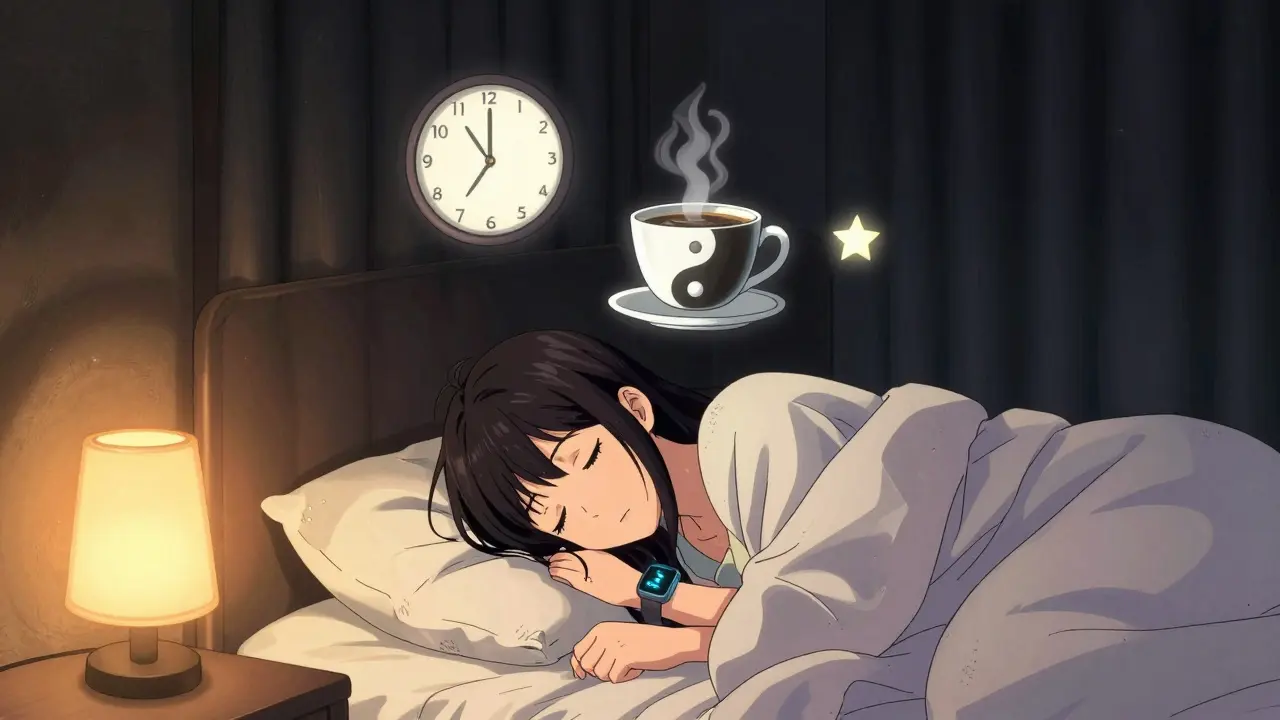
Caffeine can help-but only if timed right. Limit it to the first half of your shift. A 200 mg dose (about two cups of coffee) taken at the start of your shift improves performance for 4-6 hours. Avoid caffeine after 4 a.m. if you’re heading home to sleep. Caffeine stays in your system for 8-10 hours. Drinking it late can ruin your daytime sleep.
3. Napping Like a Pro
Don’t wait until you’re exhausted to nap. A 20- to 30-minute nap before your shift can boost alertness by 34%. A 2021 study in the American Journal of Critical Care found nurses who napped before night shifts made 30% fewer errors. If you can nap during a break, even 10 minutes helps. Set an alarm. Don’t sleep longer than 45 minutes-you’ll wake up groggy.
4. Melatonin Supplements
Take 0.5 to 5 mg of melatonin 30 minutes before your daytime sleep. This helps signal to your brain that it’s time to rest. Studies show it improves sleep quality and duration by 30-60 minutes on average. Don’t take it at night-that’s when your body already makes it. Take it when you’re trying to sleep during the day.
5. Sleep Environment: Treat Your Daytime Sleep Like a Hospital Stay
Blackout curtains. Noise-canceling headphones. A cool room (65-67°F). No phone notifications. Tell your household you’re sleeping. Put a sign on your door. If you live with others, negotiate quiet hours. Your sleep is not optional-it’s medical.
What Doesn’t Work (And Why)
Many people try to “fix” SWSD with the wrong tools:
- Alcohol: It might help you fall asleep, but it fragments sleep and reduces deep sleep. You’ll wake up more tired.
- Over-the-counter sleep aids: Diphenhydramine (Benadryl) and similar drugs cause next-day grogginess and don’t improve sleep quality.
- Just sleeping more: If your circadian rhythm is misaligned, sleeping 10 hours won’t fix it. You need to align your sleep with your body’s rhythm.
Chronotypes Matter: Are You a Night Owl or a Morning Lark?
Not everyone adapts the same way. Research from the University of Munich found that “night owls” (people naturally inclined to stay up late) adapt 37% better to night shifts than “morning larks.” If you’ve always been a late-night person, you’re more likely to handle nights. If you’re the type who goes to bed at 10 p.m. and wakes up at 6 a.m., your body is fighting a losing battle.
Take a free chronotype quiz online. If you’re a morning person on nights, your best option might be to switch shifts if possible-or invest even harder in light therapy and melatonin.
Employers Have a Role Too
SWSD isn’t just an individual problem-it’s an organizational one. The CDC and NIOSH recommend:
- Limiting consecutive night shifts to 3-4
- Providing dark, quiet sleeping areas
- Using forward-rotating schedules (day → evening → night) instead of backward
- Offering light therapy devices
But only 22% of workplaces offer proper sleep facilities. If your employer doesn’t support you, you’re at a disadvantage. That’s why awareness matters. If you’re a manager, advocate for change. If you’re a worker, know your rights. OSHA and the EU have guidelines for fatigue management. You’re not asking for luxury-you’re asking for safety.
What’s New in 2026
The FDA approved sodium oxybate in May 2023 as a new treatment for SWSD-related sleepiness. It’s a powerful wake-promoting agent, but it’s not for everyone-it’s tightly regulated due to side effects. Modafinil and armodafinil are still first-line options for severe cases, but they’re not cures. They’re tools to manage symptoms while you fix your sleep environment.
Researchers are now testing personalized treatments based on your genes. Trials are underway using variations in the PER3 and CLOCK genes to predict who responds best to light therapy, melatonin timing, or caffeine. Wearable devices that track your circadian rhythm are expected to be standard in healthcare settings by 2025.
When to Seek Help
If you’ve tried the strategies above for 4-6 weeks and still can’t sleep, can’t stay awake at work, or are feeling depressed or anxious, talk to a sleep specialist. SWSD is treatable. You don’t have to live like this. Sleep clinics use actigraphy (a wrist device that tracks movement and light exposure) to confirm circadian misalignment. They can create a personalized plan-light, melatonin, schedule adjustments, and sometimes medication.
Remember: this isn’t weakness. It’s biology. And biology can be managed.
Can shift work sleep disorder be cured?
SWSD can’t be permanently cured if you continue working nights, but it can be effectively managed. The goal isn’t to eliminate the disorder-it’s to reduce symptoms enough to stay safe, alert, and healthy. With consistent use of light therapy, melatonin, napping, and sleep hygiene, most people see major improvements in 2-4 weeks. If you stop night shifts, symptoms usually resolve within weeks to months.
Why can’t I sleep even after working 12 hours straight?
Your body’s internal clock still thinks it’s daytime. Even if you’re exhausted, your brain is flooded with cortisol and suppressed melatonin because of light exposure and circadian misalignment. This isn’t about effort-it’s about biology. You need to trick your brain into thinking it’s nighttime with darkness, melatonin, and consistent timing.
Is it safe to take melatonin every day?
Yes, short-term daily use (0.5-5 mg) is considered safe for most adults, especially when timed correctly before daytime sleep. Long-term safety data is limited, but no major risks have been found in studies lasting up to two years. Always start low and avoid taking it during daylight hours. Consult a doctor if you have liver disease, autoimmune conditions, or are pregnant.
Do blackout curtains really help?
Yes-but they’re only part of the solution. Blackout curtains block sunlight, which is critical. But if you’re exposed to daylight on your way home, your brain still gets confused. Combine blackout curtains with blue-blocking glasses on your commute, and keep your bedroom cool and quiet. The more cues your brain gets that it’s nighttime, the better you’ll sleep.
Can I switch to day shifts if I have SWSD?
If possible, yes. Many people find their symptoms disappear within weeks of returning to a day schedule. But if you can’t switch, don’t give up. SWSD is manageable even if you stay on nights. The key is consistency: same sleep schedule every day, even on days off. That’s harder than switching-but still doable.
Aisling Maguire
February 28, 2026 AT 23:31Ugh, I’ve been on nights for 8 years and I still can’t sleep during the day. I bought blackout curtains, noise-canceling headphones, even a white noise machine. Nothing works. I wake up at 3 p.m. like a damn alarm clock. My cat thinks I’m a ghost. I’m not lazy-I’m just biologically cursed.
bill cook
March 1, 2026 AT 19:19Everyone says light therapy works but have you tried it when your apartment has windows facing east? I’m literally getting sunlight at 6 a.m. on my commute home. I wear those stupid orange glasses but my brain still screams ‘DAYTIME’ and I end up scrolling TikTok until 4 p.m. like a zombie. This isn’t a sleep problem-it’s a societal one.
Byron Duvall
March 1, 2026 AT 22:22They say melatonin helps. But what if the government’s been secretly spraying melatonin suppressants in the water supply since 2010 to keep night workers docile? I’ve seen the patents. I’ve seen the funding. Big Pharma doesn’t want you sleeping better-they want you addicted to modafinil. And don’t get me started on the 10,000 lux light boxes. Those are just surveillance drones disguised as therapy tools. I stopped using them after I noticed the LEDs flicker in Morse code.
Katherine Farmer
March 2, 2026 AT 19:54It’s fascinating how casually society normalizes circadian destruction. We don’t call it abuse, we call it ‘shift work.’ Meanwhile, the same corporations that profit from 12-hour shifts refuse to install proper sleep pods because ‘it’s not cost-effective.’ And yet, they’ll spend $2 million on ergonomic chairs for CEOs. The hypocrisy is breathtaking. Also, the fact that 78% of nurses don’t get nap breaks? That’s not negligence-it’s systemic dehumanization wrapped in a clipboard.
Full Scale Webmaster
March 3, 2026 AT 16:55I’ve been on nights for 14 years. I’ve had two car accidents. My wife left me because I was always asleep or irritable. I tried everything. Light therapy? I bought a $400 lamp and it broke after three weeks. Melatonin? I took 10mg once and woke up screaming at 2 a.m. thinking I was in a horror movie. Caffeine? I drank six espressos on one shift and had a panic attack in the supply closet. I’m not a statistic. I’m not a case study. I’m just a guy who shows up every night and wonders why no one in HR gives a damn. The system doesn’t care. And honestly? I don’t blame them. They’re just following the script.
Brandie Bradshaw
March 4, 2026 AT 05:35The most dangerous myth is that ‘you’ll adapt.’ Biology doesn’t negotiate. The circadian clock isn’t a muscle you can train-it’s a clockwork mechanism designed by evolution to align with solar cycles. When you force it to invert, you’re not ‘getting used to it’-you’re accelerating cellular decay. The cortisol spikes, the melatonin suppression, the disrupted insulin sensitivity-all of it is measurable, all of it is documented. The fact that we treat this as a personal failure instead of an occupational hazard is not just unjust-it’s scientifically indefensible.
Jimmy Quilty
March 4, 2026 AT 07:11you ever try to sleep after a shift and your partner is blasting music because they think 'its just a nap'?? i mean like... its not a nap. its a medical necessity. and they dont get it. i just lay there with my eyes closed and think about how the world just keeps going like nothing happened. like i dont exist. i wish i could just disappear for 8 hours. no one would notice.
Miranda Anderson
March 5, 2026 AT 21:16I’m a night shift nurse and I’ve been using the 20-minute nap strategy before shifts-it’s been a game-changer. I used to feel like I was sleepwalking through my shifts. Now I catch myself smiling at patients because I’m actually awake. It’s not perfect, but it’s something. I also started using a sleep tracker app and realized I was sleeping way more on weekends than I thought. Turns out, consistency matters more than duration. I still don’t sleep like a normal person, but I’m not dying anymore. That’s a win.
Gigi Valdez
March 6, 2026 AT 15:39The most underappreciated factor in shift work sleep disorder is social rhythm. Human beings are inherently social creatures, and our sleep patterns are shaped not just by light, but by interaction. When you’re the only one awake in your household at 5 a.m., the absence of social cues-conversation, routine, even the sound of a kettle boiling-contributes to circadian disorientation. This is why some people adapt better than others: not because of biology alone, but because they’ve constructed a social environment that reinforces their new rhythm. It’s not just about darkness and melatonin. It’s about belonging-even if it’s a belonging built in the shadows.