
Sexual Side Effects from Antidepressants: Proven Solutions and Better Alternatives
Antidepressant Side Effect Comparison Tool
Compare Your Antidepressant Options
Select your current medication to see the sexual side effect risks, cost comparison, and potential benefits of switching to alternatives.
It’s not rare to hear someone say, "I started feeling better emotionally, but I lost interest in sex altogether." If you’re on an antidepressant and noticing changes in your libido, arousal, or ability to reach orgasm, you’re not alone-and you’re not broken. About 35-70% of people taking antidepressants experience sexual side effects, with some studies putting the number as high as 80% when measured properly. These aren’t minor inconveniences. They strain relationships, erode self-esteem, and sometimes lead people to quit their meds altogether-often without telling their doctor.
Why Do Antidepressants Kill Your Sex Drive?
The answer lies in how these drugs work. Most antidepressants, especially SSRIs like sertraline (Zoloft), fluoxetine (Prozac), and paroxetine (Paxil), boost serotonin levels in the brain. That helps stabilize mood. But serotonin doesn’t just affect sadness-it also shuts down the pathways tied to dopamine and norepinephrine, the two chemicals that drive sexual desire and physical response.
Think of it like turning down a volume knob. Your brain still gets the signal to feel pleasure, but the signal gets muffled. For men, this often shows up as trouble getting or keeping an erection, delayed ejaculation, or flat-out lack of interest. For women, it’s usually dryness, difficulty climaxing, or reduced desire. One study of 25 clinical trials found that 61% of women on SSRIs reported low sexual desire, while 52% had trouble with lubrication.
Here’s the twist: depression itself causes sexual problems. Up to half of people with untreated major depression already have low libido or arousal issues. So it’s not always the drug-it could be the illness. But when the problem gets worse after starting medication, it’s likely the antidepressant.
Not All Antidepressants Are Equal
The risk isn’t the same across the board. Some antidepressants are far more likely to cause sexual side effects than others.
Paroxetine (Paxil) is the worst offender. Studies show it causes sexual dysfunction in as many as 1 in 2 or 3 people who take it. Sertraline and citalopram follow closely behind. Fluoxetine has a slightly lower risk, but it sticks around in your system longer, so side effects can linger even after you stop.
On the other side of the spectrum, bupropion (Wellbutrin) stands out. Multiple trials show it causes significantly fewer sexual side effects than SSRIs. In fact, one study found that 68% of people who switched from an SSRI to bupropion saw improvement in their sex life. It doesn’t boost serotonin-it works on dopamine and norepinephrine, which actually help with desire and arousal.
Other lower-risk options include:
- Mirtazapine (Remeron): Often used for sleep and appetite, it has minimal sexual side effects and may even improve libido.
- Agomelatine (Valdoxan): Used in Europe and Australia, it works on melatonin and serotonin receptors and rarely causes sexual problems.
- Nefazodone (Serzone): Effective and low-risk for sex, but it’s rarely used now because of rare liver damage risks.
SNRIs like venlafaxine (Effexor XR) are about as bad as SSRIs. Tricyclics like clomipramine are also high-risk. So if you’re struggling, switching meds isn’t just an option-it’s often the smartest first step.
What Works When You Can’t Switch
What if your depression is well-controlled and switching meds isn’t safe? You still have options.
Dose reduction helps about 20-30% of people. Lowering your SSRI dose just a bit-say, from 50mg to 25mg of sertraline-can sometimes restore sexual function without triggering a relapse. But this only works if your depression isn’t severe. Always do this under medical supervision.
Drug holidays mean skipping your pill for a day or two, usually over the weekend. This can help men with delayed ejaculation and women with arousal issues. But it’s risky with short-acting drugs like paroxetine. You could get withdrawal symptoms: dizziness, nausea, brain zaps. Fluoxetine is safer for this because it lasts longer in your system.
Add-on treatments can be game-changers:
- Sildenafil (Viagra): For men on SSRIs with erectile problems, Viagra works in 65-70% of cases. A 50mg dose taken 1 hour before sex makes a measurable difference.
- Bupropion as an add-on: Adding 150mg of bupropion daily to an SSRI improved sexual function in 58% of women in a 2019 trial. It’s not FDA-approved for this, but it’s a common off-label use backed by solid data.
- Cyproheptadine: An old antihistamine used for allergies, it’s now being used off-label for SSRI-induced anorgasmia. A 2021 study found 52% of women saw improvement with 4mg nightly-compared to 18% on placebo.
These aren’t magic pills. But they’re real, tested, and often effective.
The Hidden Risk: PSSD
Most people assume that when they stop the drug, the side effects go away. For most, they do. But a small number-between 0.5% and 1.2%-develop something called Post-SSRI Sexual Dysfunction (PSSD).
PSSD means sexual problems persist for months or even years after quitting the antidepressant. Symptoms include permanent low libido, genital numbness, and inability to climax-even without any medication in the system. It’s rare, but it’s real. Since 2010, over 28 peer-reviewed case reports have documented it. The European College of Neuropsychopharmacology now includes PSSD in its official guidelines.
There’s no cure yet. But awareness is growing. If you’re considering stopping your antidepressant, know the risk. Don’t quit cold turkey. Work with your doctor to taper slowly, especially with paroxetine.
What Patients Are Really Saying
Real-world data tells a different story than clinical trials. In trials, patients are monitored closely. In real life? Many people suffer in silence.
On Reddit’s r/antidepressants, 78% of users who mentioned sexual side effects said it damaged their relationships. 42% stopped their meds without telling their doctor. GoodRx data shows 23% of SSRI users quit within 90 days because of sex problems-and women are 1.7 times more likely to do so than men.
Even more telling: On Drugs.com, only 18% of users reported improvement after 6 months. That’s way lower than the 30-40% seen in controlled studies. Why? Because trials often use questionnaires to catch problems. In real life, people don’t bring it up unless they’re asked.
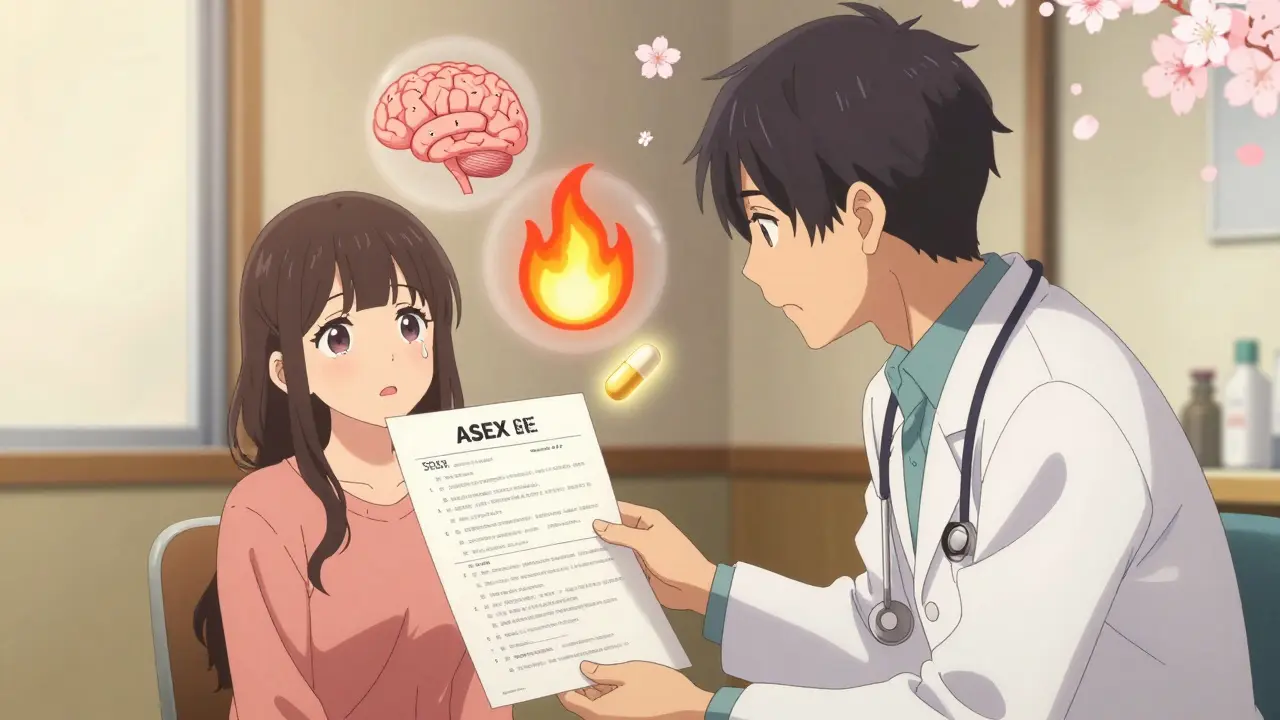
That’s why screening matters. The American Psychiatric Association now recommends asking about sexual function at every visit. Tools like the AzSexual Experience Scale (ASEX) can spot problems early-with 89% accuracy.

Cost, Access, and New Hope
Switching to bupropion isn’t just better for your sex life-it’s cheaper. Generic bupropion XL 150mg costs about $15.72 a month. Brand-name Zoloft? Over $57. That’s a big difference if you’re paying out of pocket.
New options are coming. Esketamine (Spravato), approved in 2019 for treatment-resistant depression, has only a 3.2% rate of sexual side effects. But it’s expensive-$880 per dose-and requires clinic visits. Not practical for everyone.
Researchers are testing new drugs like SEP-227162, a serotonin receptor modulator that showed 87% fewer sexual side effects than sertraline in early trials. It’s not available yet, but it’s a sign the field is finally listening.
Genetic testing is also becoming more common. People who are poor metabolizers of CYP2D6 (about 7% of Caucasians) process paroxetine slower, leading to higher blood levels and worse side effects. If you’ve had bad reactions to multiple SSRIs, a simple genetic test might explain why.
What to Do Next
If you’re experiencing sexual side effects:
- Don’t quit cold turkey. Stopping suddenly can cause withdrawal or worsen depression.
- Talk to your doctor. Bring up the issue-even if you’re embarrassed. Use the ASEX scale if you have it.
- Ask about switching. Bupropion is the most proven alternative. Mirtazapine is a good second choice.
- Consider add-ons. Sildenafil for men. Bupropion or cyproheptadine for women.
- Track your symptoms. Keep a simple log: libido, arousal, orgasm, satisfaction. It helps your doctor see patterns.
This isn’t about choosing between mental health and sex. It’s about finding a treatment that gives you both. You deserve to feel better emotionally-and to feel desire, connection, and pleasure again.
Do all antidepressants cause sexual side effects?
No. While SSRIs and SNRIs like Zoloft, Prozac, and Effexor have high rates of sexual side effects, other antidepressants like bupropion (Wellbutrin), mirtazapine (Remeron), and agomelatine (Valdoxan) are much less likely to cause them. Bupropion, in particular, is often chosen specifically because it doesn’t interfere with sexual function.
How long do sexual side effects last after stopping antidepressants?
For most people, sexual function returns within weeks to months after stopping the medication. But a small percentage-between 0.5% and 1.2%-experience Post-SSRI Sexual Dysfunction (PSSD), where symptoms persist for months or even years after discontinuation. This is rare but real, and it’s why tapering slowly under medical supervision is critical.
Can I take Viagra with my SSRI?
Yes, and many men do. Sildenafil (Viagra) has been shown to improve erectile dysfunction in 65-70% of men taking SSRIs. It’s safe to use together, but always consult your doctor first. The standard dose is 50mg taken about an hour before sexual activity. Avoid combining it with nitrates or certain blood pressure meds.
Is bupropion as effective as SSRIs for depression?
Bupropion is just as effective as SSRIs for treating depression in most cases, especially for low energy, fatigue, and lack of motivation. It’s often preferred for people with atypical depression or those who struggle with sexual side effects. However, it may be less effective for anxiety-heavy depression. Your doctor can help determine if it’s the right fit.
Why don’t doctors talk more about this?
Many doctors assume patients won’t bring it up, or they think it’s a minor issue compared to depression. But research shows sexual side effects are a top reason people quit their meds. The American Psychiatric Association now recommends routine screening using tools like the ASEX scale. If your doctor hasn’t asked, it’s okay to bring it up first.
Are there natural remedies that help?
There’s no strong evidence that supplements like ginseng, maca, or L-arginine reliably fix SSRI-induced sexual dysfunction. While some people report benefits, studies haven’t confirmed them. The most reliable solutions are medical: switching medications, dose adjustments, or add-on treatments like sildenafil or bupropion. Don’t replace proven treatments with unproven supplements.
Kelly McRainey Moore
January 20, 2026 AT 02:20I was on Zoloft for two years and honestly thought my sex life was just dead forever. Switched to Wellbutrin and it’s like my body remembered how to feel pleasure. Not just physically-emotionally too. My partner noticed the difference immediately. Seriously, if you’re suffering, talk to your doc. It’s not just in your head.
Stephen Rock
January 20, 2026 AT 15:16SSRIs are just chemical handcuffs disguised as therapy. They don’t treat depression-they suppress the whole damn nervous system. You get numb. Sex is just one symptom. The real problem? Doctors treat mood like a dial you turn up or down. Human beings aren’t thermostats.
Amber Lane
January 20, 2026 AT 20:19My therapist asked me about this out of nowhere one day. I cried. No one had ever asked before. It’s not embarrassing-it’s medical. Just say it.
michelle Brownsea
January 20, 2026 AT 20:35Let’s be clear: if you’re taking antidepressants and not discussing sexual dysfunction with your prescriber, you’re not being brave-you’re being negligent. The APA has clear guidelines. The ASEX scale exists for a reason. Ignoring this isn’t stigma-it’s medical malpractice by omission. And don’t even get me started on Reddit ‘solutions’ like maca root. That’s not medicine. That’s folk magic.
Roisin Kelly
January 21, 2026 AT 20:44Big Pharma doesn’t want you to know this. They make billions off SSRIs. They bury the PSSD data. They don’t test for genetic metabolism risks. They don’t care about your libido. They care about your monthly refill. You’re a product. Your sex life? A side effect. A footnote.
lokesh prasanth
January 22, 2026 AT 19:20wellbutrin works but its not for everyone. i tried it and got anxiety attacks. SSRIs are bad but so is quitting cold turkey. its a tradeoff. no free lunch in psych med
Malvina Tomja
January 24, 2026 AT 16:10So let me get this straight. You’re suggesting we replace one pharmaceutical dependency with another? Sildenafil? Bupropion? Cyproheptadine? This isn’t treatment-it’s pharmaceutical whack-a-mole. You’re not healing. You’re layering chemicals on top of chemicals. What happened to therapy? What happened to lifestyle? To connection? To vulnerability? This is medicine as a vending machine.
Samuel Mendoza
January 25, 2026 AT 13:54Everyone’s acting like bupropion is some miracle drug. It’s not. It’s just less likely to kill your sex drive. But it’s also less effective for anxiety. And if you’re someone who gets depressed from low serotonin, you’ll crash. Stop treating this like a menu. It’s biology, not a buffet.