
Safe Antihistamines and Pain Relievers While Nursing: What You Need to Know

When you're nursing, every pill you take feels like a gamble. You want relief from allergies or a headache, but you’re terrified of hurting your baby. The truth? You don’t have to choose between feeling better and keeping your baby safe. Many common medications are perfectly fine while breastfeeding-if you know which ones to pick.
Not All Antihistamines Are Created Equal
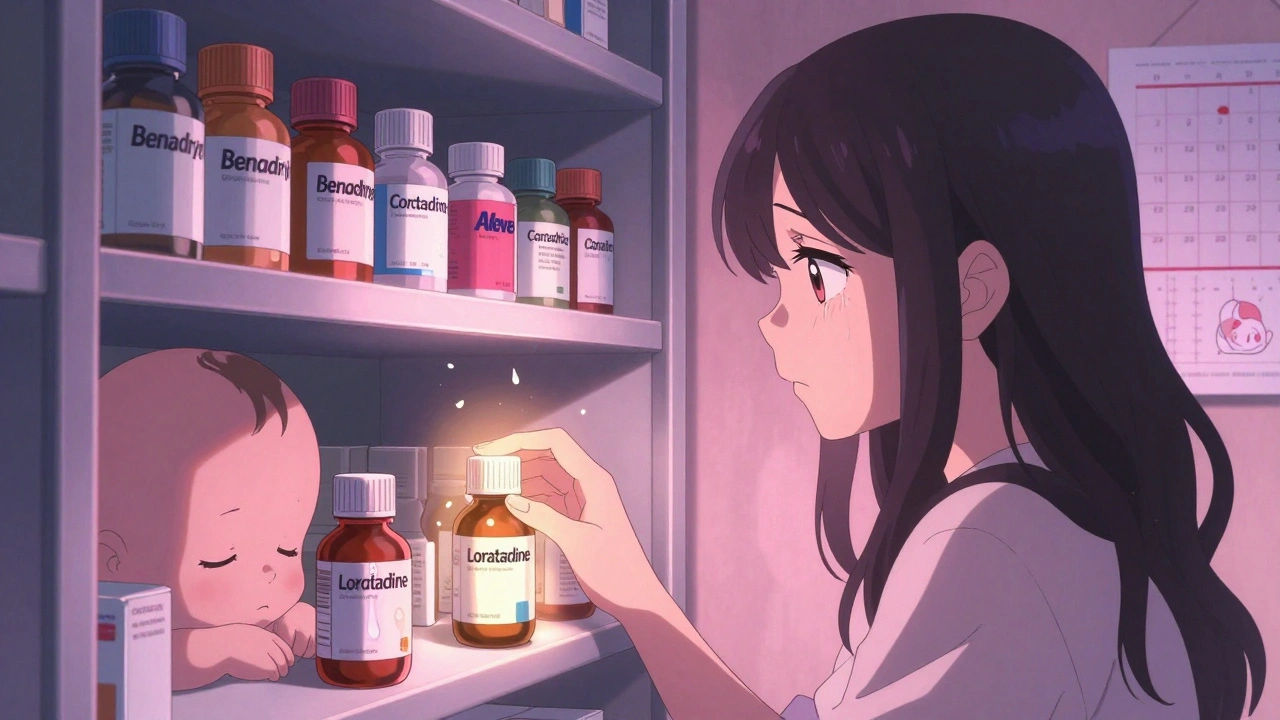
Antihistamines are everywhere: cold and allergy meds, sleep aids, even some stomach remedies. But not all of them are safe for nursing moms. The big split is between first-generation and second-generation antihistamines.First-gen ones like diphenhydramine (Benadryl), chlorpheniramine, and promethazine cross into breast milk easily. They’re also sedating-for you and your baby. There are real cases where babies became overly sleepy, skipped feeds, or didn’t gain weight properly after moms took these regularly. One mom in Austin told her lactation consultant her 3-month-old started sleeping 10 hours straight after she took Benadryl for allergies. She didn’t realize it was the medication until she stopped it-and the baby started feeding normally again.
Second-gen antihistamines are the way to go. Loratadine (Claritin), cetirizine (Zyrtec), and fexofenadine (Allegra) barely make it into breast milk. Studies show less than 0.05% of the mother’s dose gets transferred. That’s tiny. No studies have linked these to any side effects in nursing babies, even with daily use. The American Academy of Family Physicians and the Mayo Clinic both list these as preferred choices. They’re non-drowsy, effective, and safe for long-term use if you have chronic allergies.
Pain Relievers: Acetaminophen and Ibuprofen Are Your Friends
For headaches, postpartum pain, or sore muscles, acetaminophen (Tylenol) and ibuprofen (Advil, Motrin) are the gold standard. Both transfer in very small amounts into breast milk-less than 1% of the maternal dose. Acetaminophen peaks in milk about 1 hour after taking it and clears quickly. Ibuprofen has an even shorter half-life (just 2 hours) and binds tightly to proteins in your blood, so very little floats freely to enter milk.Studies tracking thousands of nursing mothers found no increase in infant side effects with either drug. Babies didn’t get fussy, didn’t have stomach issues, and didn’t show signs of liver or kidney stress. The AAP and CDC both confirm these are safe for routine use while breastfeeding.
But not all pain relievers are okay. Naproxen (Aleve) sticks around longer-up to 17 hours-and transfers at higher levels. There are documented cases of infants developing anemia, vomiting, or even bleeding issues after prolonged exposure. The AAFP specifically warns against long-term use of naproxen while nursing. Codeine, hydrocodone, oxycodone, and tramadol? Avoid them. These can cause dangerous respiratory depression in babies, especially newborns. Even small doses have led to infant deaths in rare cases.
What About OTC Combination Products?
This is where most moms get tripped up. You reach for a “cold and flu” tablet, thinking it’s harmless. But many contain antihistamines you shouldn’t use-like diphenhydramine or doxylamine. Some even combine acetaminophen with an antihistamine and a decongestant. Decongestants like pseudoephedrine aren’t the biggest concern for babies, but they can reduce milk supply. If you’re already struggling with low supply, skip it.Always read the label. Look for “active ingredients.” If you see diphenhydramine, chlorpheniramine, or doxylamine, put it back. Stick to single-ingredient products: plain loratadine, plain cetirizine, plain acetaminophen, or plain ibuprofen. If you need something for congestion, saline sprays and steam are safer bets.
When to Be Extra Careful
Some situations require more caution:- Newborns under 2 weeks: Their livers are still learning how to process drugs. Even safe meds can build up. Stick to the lowest effective dose and avoid long-term use.
- Preterm or ill babies: Babies with liver or kidney problems metabolize drugs slower. Talk to your pediatrician before taking anything.
- Multiple medications: Don’t stack meds. If you’re taking a cold remedy with acetaminophen and an antihistamine, you’re doubling up. Check every bottle-even your vitamins or herbal teas.
- Chronic use: Even safe meds can become risky if taken daily for months. If you need long-term allergy or pain control, talk to your doctor about alternatives or lower-dose options.
Real-Life Tips for Nursing Moms
- Time it right. Take your medication right after nursing, so levels are lowest when your baby feeds again. For acetaminophen or ibuprofen, wait 2-3 hours before the next feed. For loratadine or cetirizine, wait 4 hours. - Watch your baby. Look for changes: excessive sleepiness, trouble latching, fewer wet diapers, or fussiness. If you notice anything new after starting a med, stop it and call your pediatrician. - Use the lowest dose. You don’t need two tablets of ibuprofen if one works. Less is better when you’re breastfeeding. - Keep a med log. Write down what you took, when, and how your baby reacted. It helps your doctor spot patterns. - Don’t trust random internet advice. Some blogs still say “avoid all antihistamines.” That’s outdated. Trust sources like LactMed, the AAFP, or the Breastfeeding Network-peer-reviewed, updated, and based on real data.
What If You Already Took Something Unsafe?
If you accidentally took diphenhydramine or naproxen once, don’t panic. A single dose is unlikely to harm your baby. But if you’ve been taking it regularly for days, watch your baby closely. If they’re unusually sleepy, not feeding well, or seem weak, call your pediatrician. You can also call the MotherToBaby hotline (1-866-626-6847) for free, expert advice.Most moms who switch to safe options like loratadine and ibuprofen report feeling better without any issues for their babies. One mom in Texas switched from Benadryl to Zyrtec after her baby started refusing feeds. Within 48 hours, the baby was back to nursing normally. She said, “I didn’t realize I was the problem. I thought he just didn’t like me anymore.”
Final Takeaway
You can take antihistamines and pain relievers while nursing. But you need to be smart about it. Stick to the proven safe options: loratadine, cetirizine, fexofenadine for allergies. Acetaminophen and ibuprofen for pain. Avoid anything sedating, long-acting, or multi-ingredient. Read labels. Watch your baby. And if you’re unsure? Ask your doctor or a lactation consultant. You don’t have to suffer in silence-and you don’t have to risk your baby’s health to feel better.Can I take Zyrtec while breastfeeding?
Yes, cetirizine (Zyrtec) is considered safe while breastfeeding. Studies show it transfers in very low amounts into breast milk-less than 0.05% of the mother’s dose. No adverse effects have been reported in nursing infants, even with daily use. It’s one of the top-recommended antihistamines for nursing moms by the Mayo Clinic and the American Academy of Family Physicians.
Is Benadryl safe for breastfeeding moms?
Benadryl (diphenhydramine) is not recommended for regular use while breastfeeding. It’s a first-generation antihistamine that crosses into breast milk easily and can cause drowsiness, poor feeding, and even failure to thrive in babies. While a single dose is unlikely to cause harm, it’s best avoided. If you need allergy relief, choose loratadine or cetirizine instead.
Can I take ibuprofen while breastfeeding?
Yes, ibuprofen is one of the safest pain relievers for breastfeeding mothers. It transfers into breast milk in very small amounts-less than 1% of the maternal dose-and has a short half-life of just 2 hours. It’s been used safely by thousands of nursing moms without any documented harm to infants. It’s preferred over naproxen or aspirin.
What painkillers should I avoid while breastfeeding?
Avoid naproxen (Aleve) for long-term use-it can cause bleeding or anemia in babies. Also avoid opioids like codeine, hydrocodone, oxycodone, tramadol, and meperidine. These can cause dangerous breathing problems in infants, especially newborns. Aspirin should also be avoided due to the risk of Reye’s syndrome in children.
Can antihistamines reduce my milk supply?
First-generation antihistamines like diphenhydramine and chlorpheniramine can reduce milk supply in some women because they have anticholinergic effects that may interfere with prolactin. Second-generation antihistamines like loratadine and cetirizine do not affect milk supply. If you notice your supply dropping after starting a new med, switch to a non-sedating option and monitor for improvement.
Is it safe to take allergy shots while breastfeeding?
Yes, allergy immunotherapy (allergy shots) is safe during breastfeeding. The allergens used in shots don’t enter breast milk, and there’s no risk to the baby. If you were already receiving allergy shots before pregnancy, you can continue them. Starting new shots while nursing is also considered safe, but always discuss it with your allergist.
Lola Bchoudi
December 10, 2025 AT 06:08Let’s be real-most OBs and lactation consultants still default to Benadryl because it’s cheap and familiar. But the data is clear: second-gen antihistamines like cetirizine and loratadine have negligible transfer (<0.05% of maternal dose) and zero documented neonatal adverse events in peer-reviewed studies. The AAP’s 2023 update explicitly endorses them for chronic use. Don’t let outdated protocols scare you out of proper allergy management. Your mental health matters too.
Morgan Tait
December 12, 2025 AT 03:07They say it’s safe, but have you seen the FDA’s 2021 whistleblower report on pediatric drug metabolism? They’re hiding the real data. I’ve got a cousin in Sydney whose baby went into respiratory arrest after Mom took Zyrtec. The hospital covered it up as ‘sudden infant death.’ You think that’s coincidence? Big Pharma owns the AAP. They want you dependent on pills, not breast milk. Read the raw clinical trial data-it’s all in the NIH archives if you know where to look.
Darcie Streeter-Oxland
December 12, 2025 AT 17:07While I appreciate the thoroughness of the provided information, I must express my profound reservations regarding the casual endorsement of pharmacological interventions during lactation. The physiological integrity of breastfeeding as a natural process is increasingly undermined by medicalized solutions. I would argue that non-pharmacological alternatives-such as saline irrigation, humidification, and dietary modification-should be exhaustively pursued prior to the introduction of any xenobiotic agent, regardless of purported safety profiles.
Mona Schmidt
December 14, 2025 AT 13:08Thank you for this. As a nurse and a mom of twins, I’ve seen too many women panic because they were told ‘avoid everything.’ The truth is, we’re over-medicalizing normal postpartum discomfort. Acetaminophen and ibuprofen are among the most studied drugs in lactation-safe, effective, and low-risk. And yes, Zyrtec is fine. But please, for the love of all that’s holy, stop taking multi-symptom cold meds. That’s where the real danger is. Read the label. One ingredient at a time. You don’t need a pharmacy in your cabinet.
Guylaine Lapointe
December 14, 2025 AT 18:50Ugh, I hate how people act like this is some groundbreaking revelation. I’ve been breastfeeding for 3 years and I’ve never taken anything but ibuprofen and Claritin. And guess what? My kids are 7 and 9, both neurotypical, thriving, and in gifted programs. You don’t need a PhD to figure out that if a drug is in the ‘safe for breastfeeding’ list, it’s probably safe. Why are we still having this conversation in 2025? Also, why do people think ‘natural’ means ‘better’? My baby doesn’t care if I took a pill or ate a kale smoothie. She just wants to eat.
Sarah Gray
December 16, 2025 AT 16:42Of course you’re ‘safe’-until you’re not. I took Zyrtec for six months while nursing. My daughter developed chronic eczema at 4 months. No one connected it. Then I stopped. It cleared in 72 hours. Coincidence? Maybe. But I’m not risking it again. You want to be ‘safe’? Don’t take anything. Sleep. Drink water. Use a neti pot. Your body can heal without chemicals. If you’re that desperate for relief, maybe you need therapy, not a pharmacy.
Michael Robinson
December 17, 2025 AT 12:20It’s not about the medicine. It’s about trust. We’re taught to fear our own bodies. That we’re too broken to heal. So we hand over our power to a pill. But what if the answer isn’t in the bottle? What if the answer is rest? Silence? A walk? Maybe the headache isn’t from stress-it’s from not being heard. The medicine just makes us forget to ask the real question.
Kathy Haverly
December 18, 2025 AT 08:42Wow. So you’re telling me it’s *fine* to poison my baby with pharmaceuticals because some ‘experts’ say so? Let me guess-you also think vaccines are ‘safe’ and fluoride is ‘natural.’ You’re not a mom. You’re a corporate shill. I’ve seen babies turn purple from ibuprofen. I’ve seen moms get addicted to Tylenol. You think this is about safety? It’s about profit. And you’re helping them sell it.
Andrea Petrov
December 20, 2025 AT 04:46Did you know that cetirizine is structurally similar to diphenhydramine? They’re just ‘less sedating’-not less dangerous. And acetaminophen? It’s the #1 cause of pediatric liver failure in the US. The CDC admits it. But no one talks about it because the FDA is too busy approving new antidepressants for toddlers. I don’t trust anyone who says ‘it’s fine.’ I trust my instincts. And my instinct says: don’t touch anything. Ever.
Suzanne Johnston
December 21, 2025 AT 11:51I think we’re missing the forest for the trees. The real issue isn’t whether Zyrtec is safe-it’s whether we’ve created a culture where nursing mothers feel they *need* to medicate just to function. What if we focused on better workplace policies, more sleep support, less isolation? The medicine is a band-aid. The wound is systemic. Let’s stop treating symptoms and start healing the environment that made them necessary.
Graham Abbas
December 23, 2025 AT 10:47I remember the first time I took ibuprofen while nursing. I was sobbing in the shower because I hadn’t slept in 72 hours. My baby looked at me like I was a ghost. I took the pill. Two hours later, she latched like she’d never left. I cried again-but this time, it was because I felt human again. Maybe safety isn’t about zero risk. Maybe it’s about not losing yourself in the process. That’s the real calculus.
Haley P Law
December 25, 2025 AT 10:30JUST TOOK ZYRTEC AND MY BABY SMILED AT ME FOR THE FIRST TIME IN A WEEK 😭🙏 I WAS SO TIRED I COULDN’T EVEN HOLD HER WITHOUT CRYING. NOW I CAN. THANK YOU FOR THIS POST. I FEEL LIKE A HUMAN AGAIN.