
Privacy and Security at Online Pharmacies: How to Protect Your Data in 2025
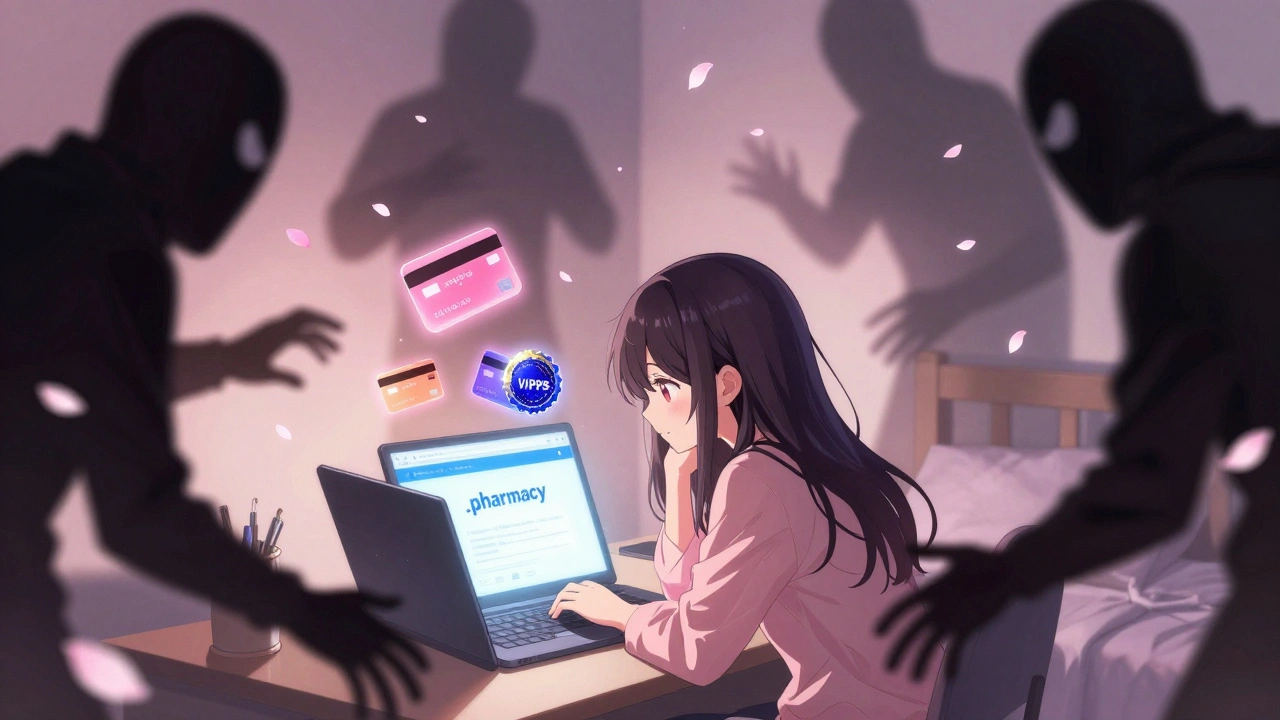
Buying medicine online sounds simple-click, pay, wait for delivery. But if you’re not careful, you could be handing over your prescription history, Social Security number, and credit card details to a scammer. In 2025, online pharmacy security isn’t just a nice-to-have-it’s a survival skill. Nearly 96% of websites selling prescription drugs don’t follow basic health and safety laws, according to the National Association of Boards of Pharmacy (NABP). That means if you’re not verifying the site, you’re gambling with your most sensitive personal information.
What Makes an Online Pharmacy Safe?
Not all online pharmacies are the same. There’s a huge difference between a legitimate pharmacy and a fake one that looks real. The only reliable way to tell them apart is by checking for official verification badges. Look for the .pharmacy domain. This isn’t just a fancy web address-it’s a verified seal. Only pharmacies that pass 47 strict checks get this domain. They must prove they’re licensed in every state they operate in, have a real physical address, and follow all U.S. privacy laws. If a site ends in .pharmacy, it’s been vetted by the NABP. That’s your first line of defense. The second sign is the VIPPS seal. This stands for Verified Internet Pharmacy Practice Sites. As of February 2025, only 68 pharmacies in the entire U.S. hold this accreditation. These pharmacies are inspected against 21 quality standards, including how they handle your data. They must use 256-bit AES encryption for your records, require multi-factor login, and keep audit logs for at least six years. Compare that to non-accredited sites: 78% don’t even use proper encryption, and 63% don’t control who can access your files.How Your Data Gets Stolen (And How to Stop It)
Fake pharmacies don’t just sell fake pills-they steal your identity. Here’s how it happens:- You enter your prescription details, birth date, and insurance info on a shady site.
- Within hours, you start getting calls offering "discounted" diabetes meds or "free" blood pressure tests.
- Soon after, you get phishing emails that mention your exact medication-"Hi Sarah, your Lipitor refill is ready. Click here to confirm."
The New Rules in 2025 (And What They Mean for You)
2025 brought major changes to online pharmacy rules-and they’re designed to protect you.- New York’s e-prescription mandate (effective January 1, 2025): All prescriptions, even for non-controlled drugs, must be sent electronically. This cuts down on forged paper scripts and makes it harder for fake pharmacies to operate.
- DEA’s telemedicine rules (effective March 21, 2025): Before filling any controlled substance prescription from a telehealth visit, the pharmacy must verify your identity using government-issued ID. They also must check your state’s Prescription Drug Monitoring Program (PDMP) and log the time they did it.
- HIPAA Security Rule updates (proposed January 6, 2025): By September 2025, all pharmacies must use multi-factor authentication for remote access. By 2026, they’ll need annual third-party security audits.
What You Should Never Do
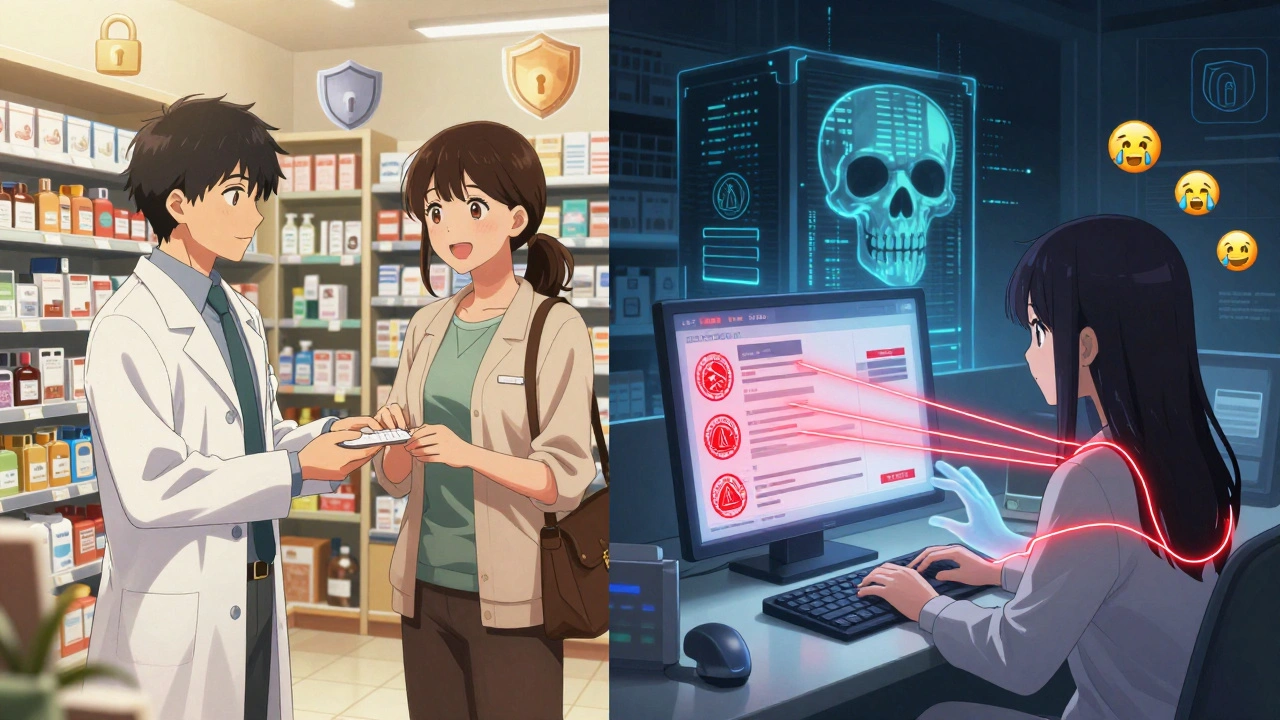
Here are three dangerous habits that put your data at risk:- Never buy from sites that say "no prescription needed". Legitimate pharmacies require a valid prescription from a licensed doctor. If they skip this step, they’re breaking federal law-and they don’t care about your safety.
- Don’t pay with a debit card or direct bank transfer. Use a credit card instead. Credit cards offer fraud protection. If your info is stolen, you can dispute the charges. Debit cards drain your bank account immediately.
- Avoid using your real email address. Create a burner email just for pharmacy orders. That way, if your data leaks, your main inbox stays clean. Reddit users in r/Privacy report this as one of the most effective steps they’ve taken.
How to Verify a Pharmacy in 5 Minutes
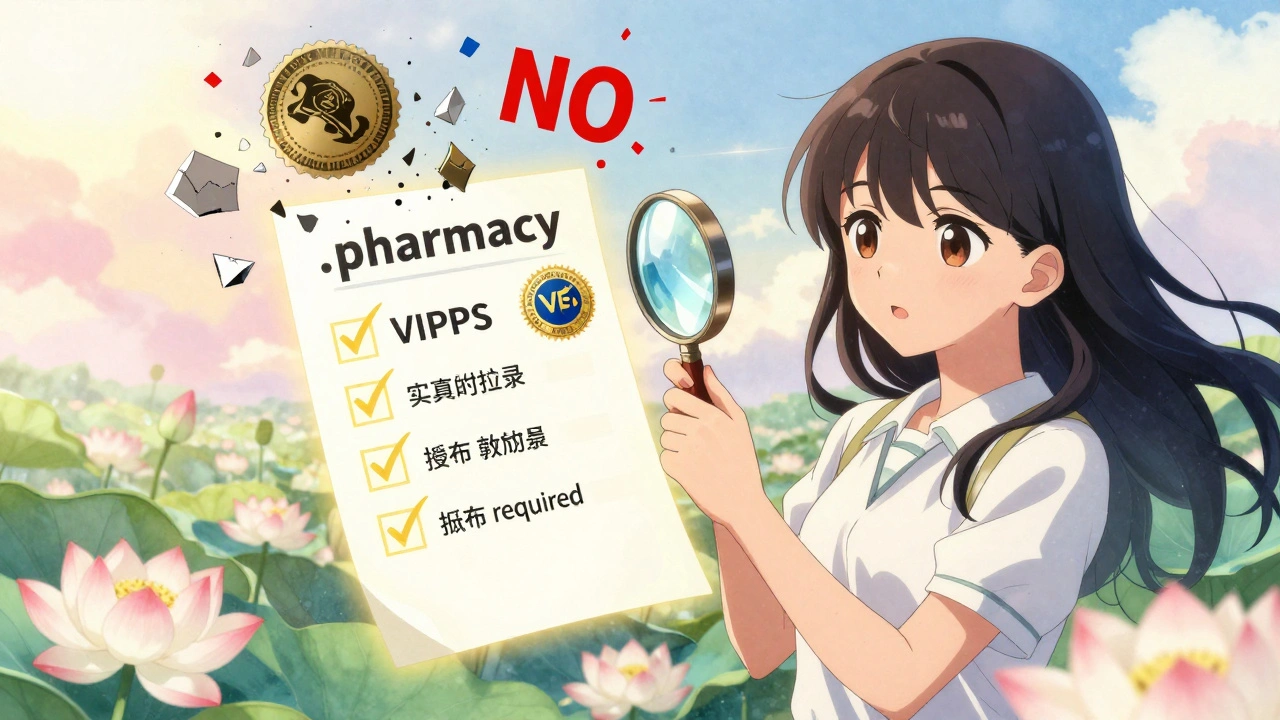
Here’s a simple checklist you can use before you click "Checkout":- Check the website URL. Does it end in .pharmacy? If not, walk away.
- Look for the VIPPS seal. Click it. Does it take you to nabp.pharmacy? If yes, it’s real.
- Find the "About Us" or "Contact" page. Is there a real street address? Call the number. Ask if they’re licensed in your state. Legit pharmacies will answer without hesitation.
- Check if they require a prescription. If they don’t, it’s illegal.
- Search for reviews on Trustpilot or Reddit. Look for mentions of privacy issues, unsolicited calls, or fake seals.
Why Brick-and-Mortar Pharmacies Are Still Safer
Let’s be honest: your local pharmacy is still the safest option. According to HHS Office for Civil Rights data, 94.3% of physical pharmacies comply with HIPAA privacy rules. Only 58.1% of online pharmacies do. Why? Because in-person pharmacies have face-to-face checks. Pharmacists see you. They know your name. They verify your ID. They can spot if something’s off. Online pharmacies can’t replicate that human layer. That’s why the DEA’s new identity verification rules are so important. Without a live person checking your ID, the system relies entirely on tech-and tech can be hacked.What Happens If You Get Hacked?
If you suspect your data was stolen from an online pharmacy:- Call your bank and freeze your credit card immediately.
- File a report with the FTC at IdentityTheft.gov.
- Notify your doctor and pharmacy. They may need to flag your account.
- Change all passwords linked to your health accounts.
- Watch for unusual activity on your insurance statements. Fraudsters sometimes file fake claims using your info.
Final Thought: Convenience Isn’t Worth the Risk
Sixty-seven percent of people use online pharmacies because they’re convenient. But only 12% can tell a real one from a fake one. That gap is dangerous. You wouldn’t buy a heart medication from a stranger on the street. Don’t do it online either. The tools to protect yourself exist. The rules are getting stricter. The safest pharmacies are easy to spot-if you know what to look for. Use the .pharmacy domain. Demand a prescription. Avoid sketchy payment methods. And always, always verify before you buy.How can I tell if an online pharmacy is legitimate?
Look for two key signs: the .pharmacy domain and the VIPPS seal. Click on the seal to verify it links to the official NABP website. Legitimate pharmacies also require a valid prescription, list a physical address, and use secure encryption (TLS 1.3 and 256-bit AES). Avoid any site that offers "no prescription needed" or doesn’t let you contact a real pharmacist.
Is it safe to use my real email for online pharmacy orders?
No. Many fake pharmacies harvest email addresses to sell to marketers or scammers. Use a separate, burner email just for pharmacy orders. That way, if your data leaks, your personal inbox stays protected. Reddit users report this as one of the most effective privacy steps.
What should I do if I get scam calls after ordering from an online pharmacy?
This is a red flag that your data was stolen. Immediately contact your bank to freeze your card, file a report with IdentityTheft.gov, and notify your doctor. Avoid clicking any links in follow-up emails. These calls often come from data brokers or criminal networks that buy stolen health records.
Are all online pharmacies illegal?
No. Only 4% of online pharmacies are legitimate, according to NABP’s 2024 findings. But those 4% are fully licensed, verified, and follow strict privacy laws. Stick to pharmacies with the .pharmacy domain or VIPPS accreditation. They’re rare, but they exist-and they’re safe.
Why do some online pharmacies offer cheaper prices than my local pharmacy?
Legitimate pharmacies have overhead costs: licensed pharmacists, secure systems, compliance audits. Fake pharmacies skip all of that. Their low prices come from selling counterfeit, expired, or stolen drugs. They also don’t pay taxes or follow regulations. If a price seems too good to be true, it probably is-and your health is at risk.
Can I trust online pharmacies that are based in other countries?
Generally, no. U.S. laws like HIPAA and the Ryan Haight Act don’t apply overseas. Many international sites sell drugs that are banned in the U.S., or they ship without proper licensing. Even if they claim to be "FDA-approved," that’s misleading-the FDA doesn’t approve foreign pharmacies. Stick to U.S.-based, NABP-verified pharmacies.
Do I need to use multi-factor authentication on my pharmacy account?
Yes-if the pharmacy offers it. Starting in September 2025, all legal U.S. pharmacies must require it. Even before then, enabling it adds a critical layer of protection. If someone steals your password, they still can’t log in without your phone or authentication app.
Olivia Portier
December 6, 2025 AT 08:03Also burner email? YES. I made one called '[email protected]' and never look at it unless I'm ordering. My main inbox is peaceful now.
Tiffany Sowby
December 6, 2025 AT 09:46Also, 'VIPPS seal'? LOL. I bet they're all in bed with the same lobbyists who killed real privacy laws.
Asset Finance Komrade
December 6, 2025 AT 16:24One cannot encrypt one's way out of capitalism.
Jennifer Blandford
December 8, 2025 AT 13:06Thank you for making this so clear. I just shared it with my mom-she’s 72 and buys all her meds online because she’s scared to drive. This could save her life.
Brianna Black
December 9, 2025 AT 02:18Also, the VIPPS seal? Click it. If it doesn’t redirect to nabp.pharmacy, it’s a JPEG. I’ve seen fakes that even had the correct font. It’s scary.
Shubham Mathur
December 10, 2025 AT 20:50Stacy Tolbert
December 11, 2025 AT 22:00Now I use cash at the corner store. Less convenient, but I sleep at night.
Ronald Ezamaru
December 13, 2025 AT 00:07Also, credit card use is non-negotiable-chargebacks are your only recourse. Debit cards are financial suicide in this context.
Ryan Brady
December 13, 2025 AT 01:39Just use a VPN and pay with crypto. Problem solved.
Raja Herbal
December 13, 2025 AT 02:50Also, why are you assuming everyone has a credit card?
Iris Carmen
December 14, 2025 AT 14:13Rich Paul
December 15, 2025 AT 15:27Also, why are you trusting NABP? They’re a trade org. Their funding comes from Big Pharma. The .pharmacy domain is a marketing ploy.
Use PGP-signed e-prescriptions. That’s the real move.
Delaine Kiara
December 17, 2025 AT 04:19Then last month my sister got a package of fake Adderall. Her heart was racing for 12 hours. She’s fine now. But she’s not buying online again.
And yes, the burner email thing? I made one called '[email protected]'. I literally never open it. I check it once a month. It’s my little digital shield.
Ruth Witte
December 18, 2025 AT 22:47Just shared with my entire family group chat. My grandma is going to use the checklist tomorrow. I’m so proud of you for making this so clear!! 💪💊✨
Noah Raines
December 20, 2025 AT 17:54Called my doctor. They said my info was leaked from a site I used in 2023. Now I only use .pharmacy. Took me 3 minutes to switch. Worth it.
Katherine Rodgers
December 21, 2025 AT 22:45And your 'burner email'? They still track your IP. You're just playing dress-up with your paranoia.
Lauren Dare
December 22, 2025 AT 14:22And the VIPPS seal? It’s a vanity metric. I’ve seen accredited pharmacies with SQL injection vulnerabilities. Compliance ≠ security.
Gilbert Lacasandile
December 23, 2025 AT 21:51Lola Bchoudi
December 24, 2025 AT 18:17It’s expensive. It’s slow. But it’s safe. And yes, we lose customers because of it. But we sleep at night.
Morgan Tait
December 25, 2025 AT 12:40And the 'verified' pharmacies? They’re the ones who agreed to share your data with insurers and pharma analytics firms.
Real privacy? Don’t buy online. Don’t give them your name. Don’t give them your number. Burn the prescription. Walk into a store. Pay cash. Be invisible.