
Methotrexate and NSAIDs: How They Affect Kidneys and Drug Levels

Methotrexate-NSAID Risk Calculator
This tool helps you understand your risk of kidney problems when taking methotrexate with NSAIDs based on your age, kidney function, and NSAID type. Based on the article content, certain combinations can increase methotrexate levels by 25-50%.
When you take methotrexate for rheumatoid arthritis or another autoimmune condition, you're likely counting on it to keep your pain and inflammation under control. But what happens when your doctor adds an NSAID like ibuprofen or naproxen for a flare-up? It sounds harmless-until your kidneys start to struggle. This isn't just a theoretical risk. In real-world use, combining these two drugs can push methotrexate levels up by 25% to 50%, and that spike can land you in the hospital with kidney damage, low blood counts, or worse.
Why Methotrexate and NSAIDs Don't Mix Well
Methotrexate leaves your body mostly through your kidneys. It’s filtered out by tiny tubes in the nephrons, and that process depends on healthy blood flow and specific transporter proteins. NSAIDs, whether they’re over-the-counter or prescription, shut down prostaglandins-chemicals your kidneys use to keep blood flowing smoothly. Less blood flow means less methotrexate gets cleared. On top of that, NSAIDs block the same transporters methotrexate uses to exit the kidney. It’s like two cars trying to get through a single toll booth, and one car is now blocking the lane.
At low doses (15 mg or less per week), methotrexate is usually safe with NSAIDs-if your kidneys are working fine. But if you’re over 65, have diabetes, high blood pressure, or any sign of kidney trouble, even a small dose of naproxen can be dangerous. A 2021 study of nearly 800 patients with early kidney damage found that those who took NSAIDs while on methotrexate had a 3.5 times higher chance of needing hospital treatment for acute kidney injury. And here’s the scary part: many of these cases showed no symptoms until a routine blood test revealed a spike in creatinine.
How Much Do Drug Levels Really Rise?
It’s not just a guess. Multiple studies have measured the exact increase in methotrexate levels when NSAIDs are added:
- Ketorolac: Increases methotrexate levels by up to 50%-the worst offender.
- Ibuprofen: Raises levels by 25-30%.
- Naproxen: Similar to ibuprofen, around 25-30%.
- Diclofenac: Also high risk, especially in older adults.
- Celecoxib: Only 10-15% increase. This COX-2 selective NSAID is the safest option if you absolutely need one.
Why does this matter? Because methotrexate doesn’t follow normal rules. At higher doses, its elimination becomes nonlinear-meaning even a small drop in kidney clearance can cause a big jump in drug levels. A 2020 study of 127 RA patients showed that those taking NSAIDs had methotrexate concentrations in their blood that were 25-50% higher than those who didn’t. That’s enough to push someone from a safe range into a toxic one.
High-Dose vs. Low-Dose: Big Difference in Risk
For cancer patients getting high-dose methotrexate (500 mg/m² or more), this interaction is life-threatening. The FDA has received reports of deaths linked to this combo. A 2022 meta-analysis found that combining NSAIDs with high-dose methotrexate increases the risk of severe toxicity-like bone marrow failure or kidney failure-by nearly fivefold. That’s why hospitals have strict rules: if you’re getting high-dose methotrexate for lymphoma or leukemia, you can’t take any NSAID for at least 72 hours before and after treatment. Blood levels are checked at 24, 48, and 72 hours to make sure the drug is leaving your body.
For RA patients on low-dose methotrexate (usually 10-25 mg weekly), the risk is lower-but not zero. A 2019 study of over 4,000 RA patients found no significant increase in side effects overall. But when researchers looked closer, they found that among patients with even mild kidney impairment (eGFR between 45 and 59), NSAIDs tripled the risk of serious harm. The key difference? Monitoring. Patients who had their kidney function and blood counts checked every 4-6 weeks had far fewer problems.

Who’s Most at Risk?
Not everyone who takes this combo will have trouble. But certain people are walking into danger without knowing it:
- People over 65: Kidney function naturally declines with age. A 2021 European study found this group had a 2.8 times higher risk of death from this interaction.
- Those with eGFR below 60: Any sign of kidney trouble makes you vulnerable. Even if you feel fine.
- People on multiple kidney-stressing drugs: Diuretics, ACE inhibitors, or contrast dye used in imaging can add to the problem.
- Patients with the SLC19A1 80G>A gene variant: About 15% of Caucasians carry this genetic quirk, which makes their kidneys less able to clear methotrexate. When NSAIDs are added, they see up to 40% more drug buildup.
And here’s the real problem: many patients don’t know they have early kidney damage. Creatinine levels can stay normal until damage is advanced. That’s why routine blood tests aren’t optional-they’re your early warning system.
What Should You Do? Practical Rules
If you’re on methotrexate and need pain relief, here’s what works:
- Test your kidney function first. Get an eGFR blood test before starting any NSAID. If it’s below 60 mL/min/1.73m², avoid NSAIDs entirely.
- Choose celecoxib if you must. It’s the least likely to interfere with methotrexate clearance.
- Use the lowest dose for the shortest time. Don’t take ibuprofen daily unless absolutely necessary. Try it for 3 days, then stop.
- Space out the doses. Take methotrexate on your usual day, then wait at least 12 hours before taking an NSAID. This reduces peak concentration overlap.
- Get blood tests 48-72 hours after starting NSAIDs. Check creatinine and complete blood count. If creatinine rises by 25% or more, stop the NSAID.
- Consider alternatives. Acetaminophen (up to 3,000 mg/day) is usually safe. Physical therapy, heat packs, or low-dose opioids (for short-term use) can also help.
Pharmacists are your allies here. A 2023 study showed that when pharmacists actively reviewed prescriptions and educated patients, methotrexate-NSAID interactions dropped by 63%. If your pharmacist flags this combo, listen.
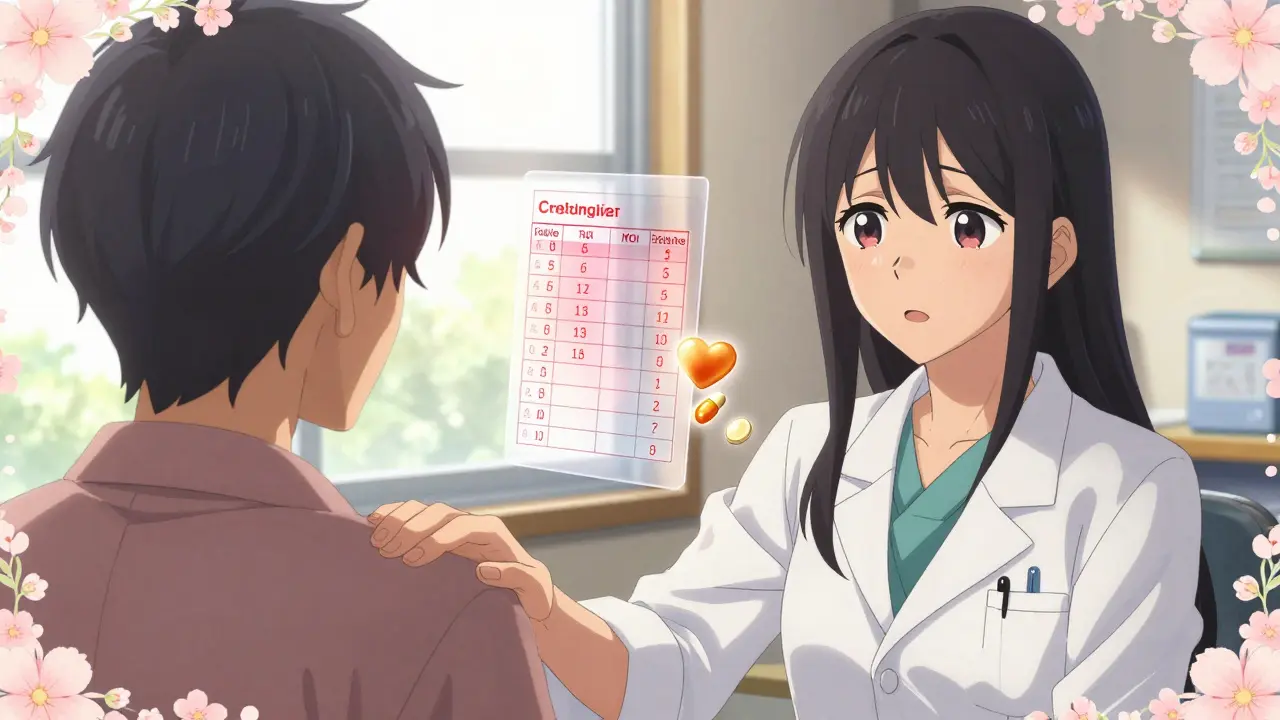
Real Stories: What Happens When Things Go Wrong
Reddit user ‘RAWarrior2020’ described how their rheumatologist prescribed naproxen without checking kidney function. Three days later, they were vomiting, exhausted, and their white blood cell count had crashed to 1.8 (normal is 4-11). They needed leucovorin-a rescue drug-to reverse the toxicity. Recovery took two weeks.
Another patient, ‘MTXandMe’, said they’ve taken methotrexate with occasional ibuprofen for eight years with no issues. The difference? Their doctor checks their creatinine and CBC every four weeks. That’s the key: consistent monitoring turns a risky combo into a manageable one.
A 2022 survey by the Arthritis Foundation found that 41% of patients who took NSAIDs with methotrexate without monitoring had at least one adverse event-fatigue, mouth sores, liver enzyme spikes. Only 9% had problems when they were monitored. The difference isn’t luck. It’s protocol.
What’s Changing in 2026?
Regulators are catching up. The FDA now requires all methotrexate labels to warn about NSAID interactions. The EMA says NSAIDs should be avoided in anyone on more than 10 mg of methotrexate per week unless absolutely necessary-and even then, drug levels must be checked for 72 hours.
On the horizon: a new point-of-care test is in phase 3 trials (NCT05123456) that could measure methotrexate levels in your blood within minutes. Imagine getting your methotrexate dose and then having your doctor check your level right after you take naproxen. That kind of real-time feedback could change everything.
Until then, the rules are simple: Know your kidney numbers. Avoid NSAIDs if you’re over 65 or have any kidney trouble. Choose celecoxib if you must use one. And never, ever skip your blood tests.
Can I take ibuprofen with methotrexate if my kidneys are normal?
Yes, but only if your kidney function is normal (eGFR above 60 mL/min/1.73m²), you use the lowest effective dose (200-400 mg), and you limit it to 3-5 days. Always get your creatinine and blood count checked 48-72 hours after starting ibuprofen. Avoid daily use. If you’re over 65, skip it entirely.
Is celecoxib safer than other NSAIDs with methotrexate?
Yes. Celecoxib is the safest NSAID to use with methotrexate because it selectively blocks COX-2, not COX-1, which means it has less effect on kidney blood flow. Studies show it raises methotrexate levels by only 10-15%, compared to 25-50% with ibuprofen or naproxen. Still, it’s not risk-free. Monitor kidney function and blood counts even if you take celecoxib.
What are the signs methotrexate toxicity is happening?
Early signs include severe fatigue, nausea, vomiting, mouth sores, unusual bruising or bleeding, and fever. Later signs include dark urine, swelling in legs, confusion, or a sudden drop in blood cell counts. These symptoms can appear within days of starting an NSAID. If you notice any of these, stop the NSAID and contact your doctor immediately. Don’t wait for your next appointment.
Why do I need blood tests if I feel fine?
Because methotrexate toxicity often shows up silently. A 2020 review found that 63% of kidney problems from this interaction had no symptoms. Your creatinine might be normal one month and jump 30% the next. That’s why routine blood tests every 4-6 weeks are essential. Feeling fine doesn’t mean your kidneys are fine.
What’s a safer alternative to NSAIDs for pain with methotrexate?
Acetaminophen (up to 3,000 mg per day) is the safest option. For longer-term pain, your doctor might adjust your methotrexate dose, add a DMARD like sulfasalazine, or consider a short course of low-dose prednisone. Physical therapy, heat therapy, or gentle exercise can also reduce inflammation without drugs. Avoid aspirin and other NSAIDs unless under strict supervision.
Roland Silber
March 6, 2026 AT 11:34And celecoxib isn't a free pass either. Still monitor. Still check. Still care.
Patrick Jackson
March 7, 2026 AT 01:40Adebayo Muhammad
March 8, 2026 AT 07:24Pranay Roy
March 9, 2026 AT 17:47Joe Prism
March 11, 2026 AT 13:38Bridget Verwey
March 12, 2026 AT 16:59Andrew Poulin
March 13, 2026 AT 09:37Weston Potgieter
March 13, 2026 AT 18:56Joey Pearson
March 14, 2026 AT 23:39William Minks
March 15, 2026 AT 13:12Jeff Mirisola
March 15, 2026 AT 14:34