
Long-Term Care Insurance and Generic Drug Coverage in Nursing Homes: What You Really Need to Know
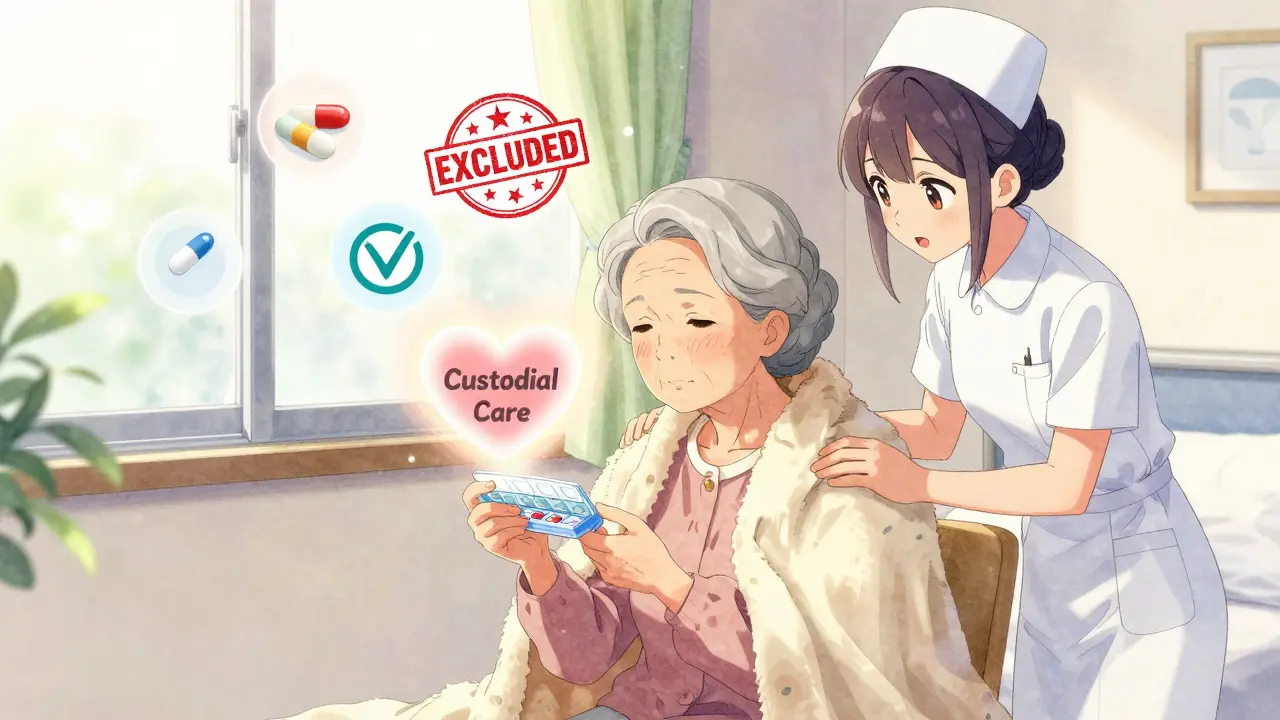
Many people assume that if they have long-term care insurance, it will cover everything that comes with living in a nursing home - including the pills they take every day. But that’s not true. Long-term care insurance doesn’t pay for prescription drugs, not even generics. It covers room and board, help with bathing, dressing, and eating - the daily support you need when you can’t live independently. But the meds? Those come from somewhere else.
Why Long-Term Care Insurance Doesn’t Cover Medications
Long-term care insurance was never designed to be health insurance. It’s custodial care insurance. Think of it like paying for a helper who gets you dressed, feeds you, and reminds you to take your pills - but not the pills themselves. The California Department of Insurance makes this clear: policies cover skilled, intermediate, or custodial care in nursing homes or assisted living. Prescription drugs? Not included. That’s been the rule since the 1970s, when these policies first became common.Even if you’re in a nursing home covered by your long-term care policy, your medications are handled separately. Triage Health puts it simply: "If you live in a nursing home that’s covered by your long-term care insurance, the prescription drugs you take will be covered by your health insurance, not your long-term care insurance."
Who Actually Pays for Your Pills in a Nursing Home?
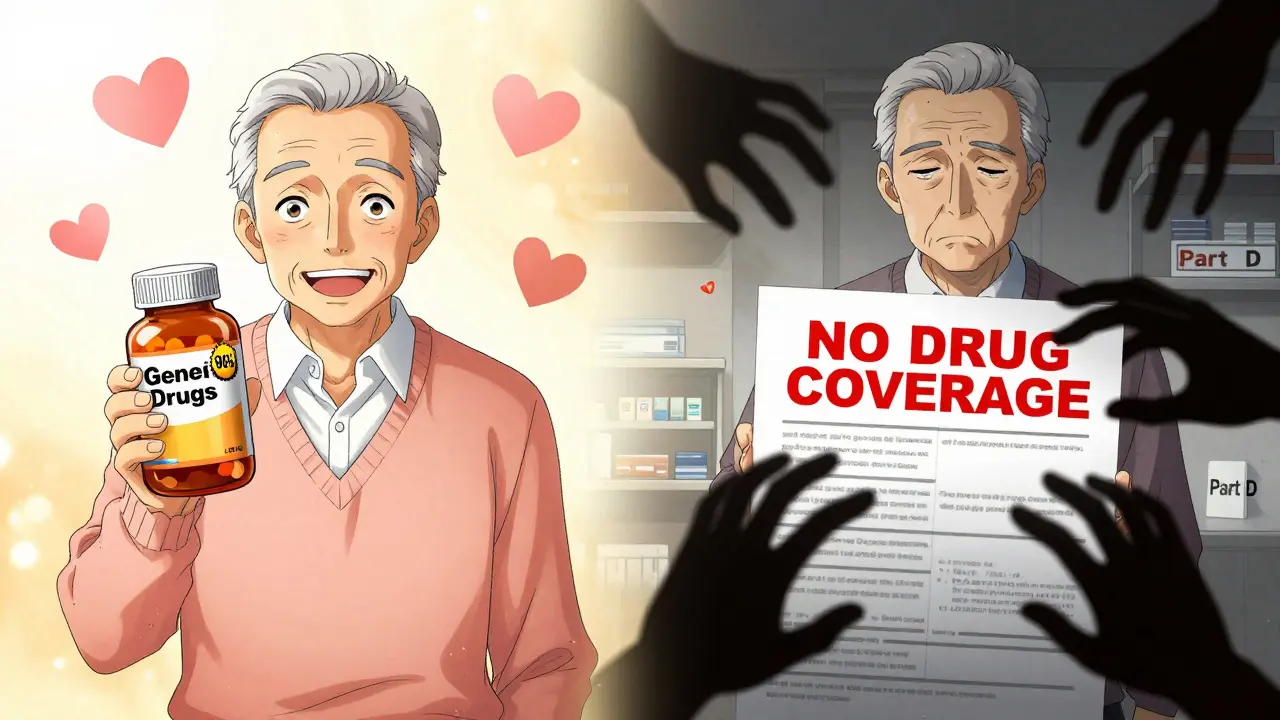
For most people living in nursing homes, the answer is Medicare Part D. Since it launched in January 2006, Part D has become the main source of drug coverage in these facilities. A 2020 study in PMC found that 82.4% of nursing home residents on Medicare get their prescriptions paid for by Part D. That’s over four out of five people.Medicaid covers about 11.2% of drug costs, mostly for people who qualify for both Medicare and Medicaid (called "dual eligibles"). The Veterans Administration covers less than 1% - mostly for veterans with service-connected conditions. But here’s the scary part: nearly 9% of long-stay Medicare residents have no drug coverage at all. They pay out of pocket, rely on charity programs, or go without.
And yes - generic drugs are covered under Part D. In fact, they’re the backbone of nursing home pharmacy use. About 90% of all prescriptions written in nursing homes are for generics. They’re cheaper, just as effective, and preferred by most plans. Part D plans usually charge lower copays for generics - sometimes as little as $1 or $5 per prescription. But that doesn’t mean access is easy.
Formularies Are the Hidden Roadblock
Every Medicare Part D plan has a formulary - a list of drugs it will pay for. Not every generic is on every list. Some plans exclude certain generics because they’re not on their preferred drug list, or because they’re considered "non-formulary." And here’s the catch: if your drug isn’t on the formulary, you might not get it - unless you or your family appeals.Medicare requires plans to cover all drugs on the official Part D formulary, but they’re not required to cover every single generic within a drug class. For example, if your doctor prescribes a generic blood pressure pill that’s not on your plan’s list, you could be stuck paying full price - unless you file an exception request. And while CMS now requires plans to respond to these requests within 72 hours for nursing home residents, delays still happen. Some facilities report waiting up to five days for approval.
And it’s not just about access. Some plans limit how much of a drug they’ll cover per month. A resident on a diuretic for heart failure might be restricted to 30 tablets a month, even if their doctor says they need 60. That’s not a medical decision - it’s a plan policy.
What About Private Insurance or Long-Term Care Policies?
Private insurance - like the kind you buy through an employer or individually - covers only 8.5% of nursing home drug costs. And even then, it’s often secondary to Medicare Part D. Most private plans don’t pay first for drugs in nursing homes. They wait for Medicare to process the claim, then cover what’s left - if anything.Long-term care insurance? It doesn’t touch prescriptions at all. Not even if your policy says "comprehensive coverage." That’s a marketing term, not a legal one. You’ll find the fine print: "Coverage includes personal care services, but excludes medical care, physician visits, and prescription drugs."
Why This Mess Exists
Before Medicare Part D, nursing home residents relied on Medicaid for drugs - one system, one pharmacy, one payment stream. It was messy, but predictable. When Part D rolled out, it replaced that with dozens of private plans, each with their own rules, formularies, and preferred pharmacies.Nursing homes now have to track which resident is on which plan, whether the plan works with their contracted long-term care pharmacy, and what drugs are covered. A 2019 survey found that 78% of facilities spend 10 to 15 hours a week just managing drug coverage issues. That’s over $28,000 a year in staff time per facility.
Residents and families are just as confused. Many don’t know the difference between Medicare Part A (hospital care), Part B (doctor visits), and Part D (drugs). Some think their long-term care policy covers everything. Others assume Medicaid pays for all drugs - until they’re told they don’t qualify.

What’s Changing in 2025?
Good news: the Inflation Reduction Act is fixing some of the worst problems. Starting in 2025, Medicare Part D beneficiaries will pay no more than $2,000 out of pocket for all their prescription drugs in a year - no more "donut hole." That’s huge for people on multiple meds.Also, Medicare will now cover all vaccines recommended by the CDC at no cost. And CMS has tightened rules: Part D plans must now cover every drug on the official Part D formulary for nursing home residents, and they must approve exceptions within 72 hours.
But challenges remain. Rural nursing homes still struggle to find pharmacies that contract with all major Part D plans. About 22% of rural facilities report problems - compared to just 8% in cities. And while generics make up 90% of prescriptions, they only account for 25% of total drug spending. Why? Because the most expensive drugs - even when generic - are often for complex conditions like cancer or autoimmune diseases, and those are the ones that drive costs up.
What You Should Do Now
If you or a loved one is moving into a nursing home:- Find out what drug coverage they already have - Medicare Part D, Medicaid, VA, or private insurance.
- Ask the facility’s social worker or pharmacy liaison for a list of the Part D plans they work with.
- Check if your current prescriptions are on those plans’ formularies. Use the Medicare Plan Finder tool online.
- If a needed drug isn’t covered, file an exception request immediately. Don’t wait.
- Ask about generic alternatives. Many doctors will switch to a covered generic without losing effectiveness.
- Don’t assume long-term care insurance will pay for meds. It won’t.
And if you’re considering buying long-term care insurance - understand what it does and doesn’t cover. It’s great for personal care. It’s useless for prescriptions. Buy a Part D plan separately. Don’t rely on the wrong policy to fill your pillbox.
Bottom Line
Long-term care insurance is not health insurance. It doesn’t pay for drugs - generic or brand-name. Medicare Part D does. And while Part D has dramatically improved access to medications in nursing homes, it’s far from perfect. Formularies, delays, and gaps in coverage still leave nearly 1 in 10 residents without reliable drug access. Knowing the difference between custodial care and medical care could save you thousands - and maybe even your health.Does long-term care insurance cover generic drugs in nursing homes?
No. Long-term care insurance covers personal care services like help with bathing, dressing, and eating - not prescription drugs, including generics. Medications are covered by Medicare Part D, Medicaid, or private health insurance, depending on the resident’s eligibility.
Who pays for medications in a nursing home?
Medicare Part D covers about 82% of prescription drug costs in nursing homes. Medicaid covers around 11%, and the VA covers less than 1%. About 9% of residents pay out of pocket or rely on temporary assistance programs. Long-term care insurance does not pay for drugs.
Are generic drugs covered under Medicare Part D?
Yes. Medicare Part D plans cover both brand-name and generic drugs, but they usually charge lower copays for generics. In fact, about 90% of prescriptions in nursing homes are for generic medications because they’re cost-effective and clinically equivalent.
What if my medication isn’t on the Part D formulary?
You can request an exception from your plan. By law, Part D plans must respond to exception requests for nursing home residents within 72 hours. If denied, you can appeal. Many facilities have pharmacy liaisons who help file these requests. Always ask for generic alternatives first - they’re often covered.
How can I avoid drug coverage gaps when moving into a nursing home?
Before admission, confirm your drug coverage status. Use the Medicare Plan Finder to check if your medications are covered by your Part D plan. Ask the facility which pharmacies they work with and whether those pharmacies accept your plan. If you’re on multiple drugs, request a medication review from the facility’s pharmacist. Don’t wait until you’re settled - delays can mean missed doses.
Is there a cap on out-of-pocket drug costs for nursing home residents?
Yes, starting in 2025, Medicare Part D beneficiaries will pay no more than $2,000 per year out of pocket for all prescription drugs - including those taken in nursing homes. This eliminates the previous "donut hole" coverage gap and protects residents from catastrophic costs.
Why do some nursing homes have trouble getting certain drugs?
Many nursing homes, especially in rural areas, struggle to find pharmacies that contract with all Medicare Part D plans. About 22% of rural facilities report difficulty accessing certain medications because their local pharmacy doesn’t work with their resident’s plan. This creates delays and sometimes forces residents to go without needed drugs.
jay patel
February 2, 2026 AT 19:42so like... you pay all this money for long-term care insurance and then your grandma still has to beg for her blood pressure pills? lol. i mean, i get it’s not health insurance, but come on. it’s like buying a car that only has seats and no wheels. you’re still gonna walk everywhere. and generics? they’re literally the same damn pills, just cheaper. why does the system hate us so much? 😅
Ellie Norris
February 3, 2026 AT 13:40oh my gosh yes!! i’m a nurse in london and this is SUCH a mess. families think their policy covers meds and then they’re shocked when the pharmacy says ‘nope, not covered’. we spend hours on the phone with Part D reps. and don’t get me started on formularies - one week a generic is covered, next week it’s not. it’s like playing roulette with someone’s health. please, please check the formulary before moving in!!
Brittany Marioni
February 4, 2026 AT 16:02Just to clarify-because people are still confused-Long-Term Care Insurance (LTCI) is for ADLs: bathing, dressing, eating, toileting, transferring, continence. That’s it. Medications? That’s medical care. That’s Part D, Medicaid, or private insurance. Not LTCI. Not ever. And yes, generics are covered under Part D-90% of nursing home scripts are generics. But formularies? Oh, they’re a nightmare. I’ve seen residents go without meds for days because a $2 generic isn’t on the plan’s list. It’s not a medical decision. It’s a spreadsheet. And someone’s life is on the line.
Monica Slypig
February 6, 2026 AT 06:58Why are we even paying for this broken system? In America, we’ve turned healthcare into a corporate bingo card. LTCI doesn’t cover meds? Shocking. Who knew? Meanwhile, in Germany, Japan, Canada-they just cover the drugs. Period. No formularies. No appeals. No 72-hour delays. We’re not a first-world country when it comes to elder care. We’re a joke with a spreadsheet.
Becky M.
February 7, 2026 AT 02:03Just wanted to say-this post saved my mom’s life. We moved her into a nursing home last year and assumed LTCI covered meds. Turns out, it didn’t. We were about to pay $400/month out of pocket for her diabetes meds until I found this article. Used the Medicare Plan Finder, switched her to a plan that covered her generics, and now she pays $5/month. I cried. Please, if you’re reading this-don’t wait until it’s too late. Check the formulary. Ask the pharmacy liaison. Don’t trust marketing. It’s not your fault. The system is rigged.
Eli Kiseop
February 7, 2026 AT 07:50so part d covers generics but not all of them? and you have to appeal? and it takes 3 days? and rural homes can't get meds? wow. that's wild. also why is no one talking about how the drug companies charge more for generics that are still expensive? like why does a generic heart med cost $100 if it's generic? someone explain this to me
Sandeep Kumar
February 8, 2026 AT 23:25India has universal drug coverage for elderly. We don't have this nonsense. Your grandma gets her pills, no paperwork, no appeals. You think America is better? Look at the numbers. 9% without meds. That's criminal. You call this healthcare? It's a scam with a white coat.
Gary Mitts
February 10, 2026 AT 21:20Yeah, LTCI doesn’t cover meds. Big surprise. I’ve been saying this for years. You want meds covered? Get Part D. Simple. Stop blaming the insurance. Blame the people who sold you ‘comprehensive coverage’ as a magic wand. Also-generic? Good. Use it. No one needs brand-name lisinopril.
Brett MacDonald
February 12, 2026 AT 03:56It’s not about the drugs. It’s about the myth of security. We buy LTCI like it’s a promise. But it’s just a contract with loopholes bigger than your regrets. We’re all just trying to outsmart death with paperwork. And the system? It laughs. Then it bills you for the laughter.
Hannah Gliane
February 13, 2026 AT 15:34OMG I KNEW THIS WAS A SCAM!! 😭 I told my cousin 6 months ago to check her mom's Part D formulary and she said 'but I have LTCI!' Like honey, your insurance isn't a fairy godmother. It's a corporate robot with a 10-page PDF that says 'we don't cover your pills'. And now her mom is going without her thyroid med because of a 'non-formulary' generic? That's not negligence. That's evil. 🤬
Murarikar Satishwar
February 14, 2026 AT 22:05Thank you for this detailed breakdown. I work with elderly patients in Delhi and have seen how fragmented systems create real suffering. The U.S. system is complex, but your clarity here helps. I especially appreciate the actionable steps-checking formularies, using the Medicare Plan Finder, asking for generics. These are small things that save lives. And yes, LTCI is for care, not meds. That distinction is everything.
Dan Pearson
February 15, 2026 AT 18:11Let me get this straight-Americans pay thousands for insurance that doesn’t cover pills, while the government forces them into a maze of 40 different Part D plans, each with its own secret rules, and then acts surprised when people die because they couldn’t get a $3 generic? This isn’t healthcare. This is a dystopian comedy written by Wall Street and performed by bureaucrats. And the worst part? We’re supposed to be grateful for the $2,000 cap in 2025. Like, congrats, you’ve finally stopped bleeding us dry. We’re still missing a leg.