
How to Safely Transition from Liquid to Chewable or Tablet Medications for Children
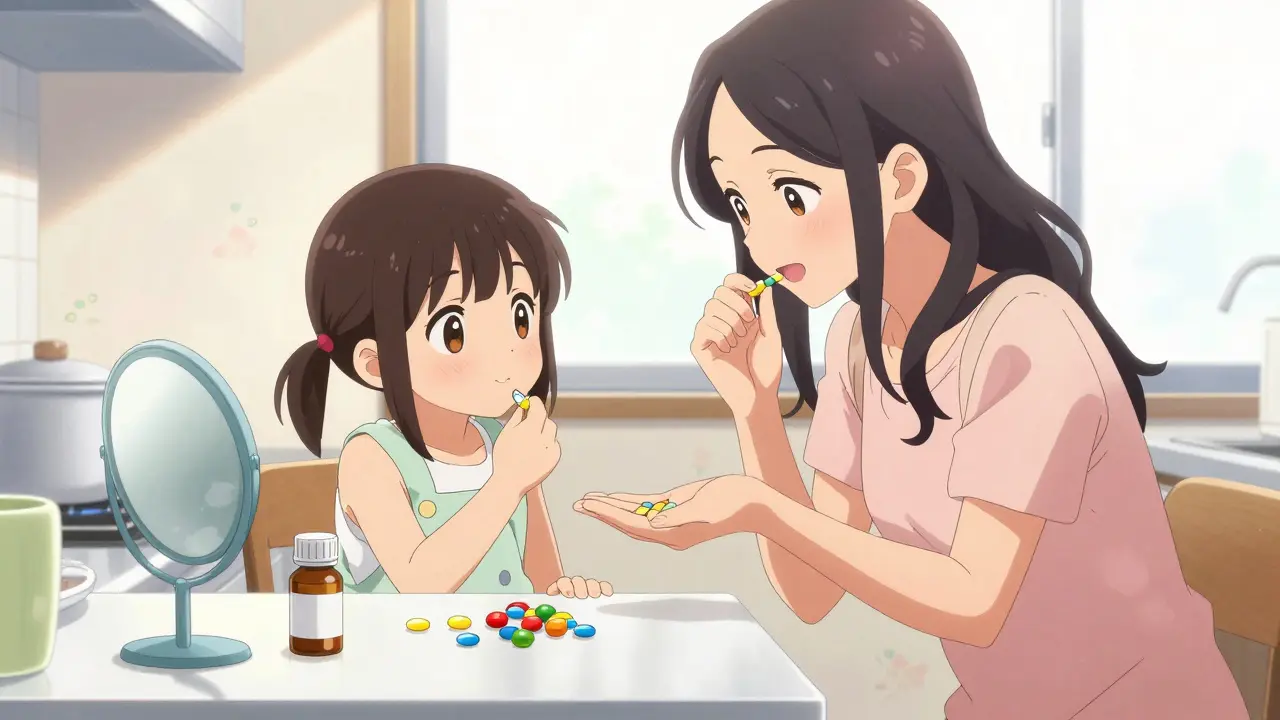
Switching your child from liquid medicine to a chewable or tablet can feel like a small win - no more spilled bottles, no more measuring cups, no more fighting over taste. But if you don’t do it right, it can backfire. Your child might swallow the tablet whole, the medicine might not work as well, or worse - they might not get the full dose at all. This isn’t just about convenience. It’s about safety, effectiveness, and making sure your child actually gets the treatment they need.
Why Switch from Liquid to Chewable or Tablet?
Liquid medications are common for kids because they’re easy to adjust by dose. But they come with big downsides. Most need refrigeration. They spill. They expire in 12 to 18 months. And studies show up to 60% of parents struggle with accurate dosing - using kitchen spoons instead of the provided syringe, guessing milliliters, or not shaking the bottle properly. That’s a 15-20% chance of giving too much or too little. Chewable tablets fix most of that. They don’t need cold storage. They last 24 to 36 months. And because they’re pre-measured, dosing errors drop to under 2%. They’re easier to carry in a backpack, purse, or diaper bag. For kids who hate the taste of syrup, many chewables are flavored like fruit or candy - without the sugar overload of some liquids. Plus, research shows kids who switch to chewables take their medicine more consistently. One 2023 study found adherence jumped from 65% to 92% in a 4-year-old with recurring urinary tract infections after switching from liquid antibiotics to chewables.When Is the Right Time to Switch?
Not every child is ready. Age matters, but so does development. Most kids can handle chewables between ages 2 and 12. But it’s not just about age - it’s about chewing ability. If your child can chew food like apples or crackers without gagging or spitting it out, they’re likely ready. If they swallow pills whole or choke on soft foods, hold off. Some kids with developmental delays, autism, or swallowing disorders (dysphagia) need extra care. Talk to your pediatrician or pharmacist before switching. They’ll check if the medicine is even available in chewable form. Not all drugs are. For example, some antibiotics, heart meds, or high-dose treatments still come only as liquids.How to Choose the Right Chewable or Tablet
Not all chewables are made the same. Some are designed to be chewed. Others are meant to dissolve on the tongue. Some can be crushed. Others can’t. Look at the label. It should say:- “Chew thoroughly before swallowing” - this means it’s designed to be broken down in the mouth.
- “Do not swallow whole” - if it says this, swallowing it without chewing could delay or block absorption.
- “May be crushed or mixed with food” - useful if your child refuses to chew.
Dosing: Don’t Guess, Calculate
This is where most mistakes happen. You can’t just swap “one teaspoon” for “one tablet.” Liquid and solid doses are measured differently. For example:- Children’s Tylenol Liquid: 160 mg per 5 mL
- Children’s Tylenol Chewable: 160 mg per tablet
Teach Proper Chewing Technique
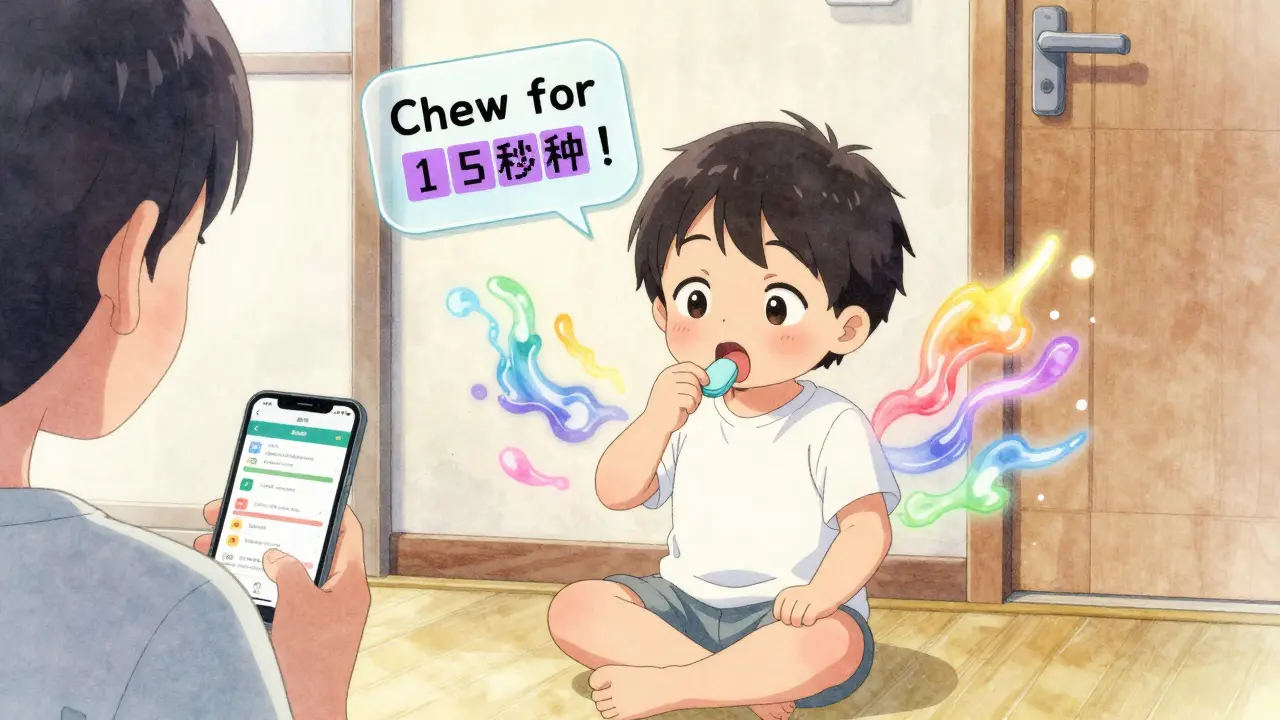
This is the step most parents skip - and it’s the reason 17% of transitions fail. A chewable tablet doesn’t work if it’s swallowed whole. The medicine needs to be broken down in the mouth to be absorbed properly. Studies show kids need to chew for at least 15 to 20 seconds to get the full effect. Here’s how to teach it:- Start with a placebo chewable - one without medicine, like a vitamin or antacid. Let them practice chewing and spitting it out.
- Use a mirror so they can see their jaw moving.
- Count out loud: “Chew, chew, chew… 10, 11, 12… swallow.”
- Make it a game. “Can you chew it until it disappears?”
What If They Swallow It Whole?
If your child accidentally swallows a chewable tablet whole, don’t panic - but don’t ignore it either. Check the label. If it says “do not swallow whole,” call your pharmacist. Some tablets are designed to dissolve slowly in the stomach even if swallowed. Others, like certain antacids or potassium supplements, can cause serious delays in absorption or even blockages. In one case, a 5-year-old swallowed a chewable potassium tablet whole and ended up in the ER with a delayed reaction. The medicine didn’t kick in for over two hours - and by then, the symptoms had worsened. If you’re unsure, call your doctor or poison control. Keep the packaging - they’ll need to know the exact product.Watch for These Red Flags
Not every switch works. Here’s when to stop and go back to liquid:- Your child refuses to chew - they gag, spit it out, or cry every time.
- The tablet is too big - if it’s larger than a grape, many kids can’t manage it.
- They complain of stomach upset or nausea - some chewables have fillers that irritate sensitive stomachs.
- The medicine doesn’t seem to be working - fever stays high, cough doesn’t improve.
- You notice they’re swallowing it whole and you can’t get them to chew.
What About Tablets (Not Chewable)?
Some older kids (ages 8 and up) can swallow small tablets whole. But don’t assume a chewable can be turned into a swallowable pill. Tablets meant to be swallowed are made differently. They’re harder, coated, and designed to dissolve in the gut - not the mouth. Swallowing a chewable tablet whole might mean it doesn’t break down fast enough, leading to low effectiveness. If your child is ready for a regular tablet, ask your doctor if the medicine is available in a swallowable form. Some brands offer both chewable and swallowable versions. Don’t try to crush or split a chewable unless the label says it’s safe.Follow-Up Is Non-Negotiable
The University of Toledo Medical Center requires a 72-hour follow-up after any switch from liquid to solid. That’s not just bureaucracy - it’s lifesaving. Call your pharmacist or pediatrician three days after the switch. Ask:- Did the medicine seem to work?
- Did your child have any stomach upset or refusal?
- Are you sure they’re chewing, not swallowing?
The Future Is Bright - But Stay Practical
The market for chewable medications is growing fast. By 2028, experts predict 35% of pediatric oral meds will be chewables - up from 22% today. New tech like 3D-printed personalized doses and dissolving films are coming. But for now, stick with what’s proven. Chewables aren’t magic. They’re tools. And like any tool, they work best when used correctly. The goal isn’t just to avoid spills - it’s to make sure your child gets every bit of medicine they need, every time.Can I crush a chewable tablet and mix it with food if my child won’t chew it?
Only if the label says it’s safe to crush or mix. Some chewables are designed to release medicine slowly in the mouth, and crushing them can change how the drug works. Others, like certain antibiotics or antihistamines, can be safely crushed and mixed with applesauce or yogurt. Always check with your pharmacist before crushing.
Are chewable tablets as effective as liquid medicine?
Yes - if they’re properly chewed. The FDA requires chewables to match the liquid version in how much medicine enters the bloodstream (bioequivalence). But if the tablet is swallowed whole, absorption can be delayed or incomplete. Proper chewing is what makes them equal.
How do I know if my child is ready for a chewable tablet?
Look at their eating habits. If they can chew crunchy foods like raw carrots or crackers without choking, they’re likely ready. If they gag on soft foods or spit out pills, wait. Also, consider their age - most kids between 2 and 12 can handle chewables, but development matters more than age.
What if my child hates the taste of the chewable?
Try a different brand. Many medicines come in multiple flavors - grape, cherry, bubblegum, or even unflavored. If taste is the issue, ask your pharmacist for alternatives. You can also try mixing a safe-to-crush chewable with a small amount of yogurt or applesauce to mask the flavor.
Do chewable tablets have more sugar than liquid medicine?
Often, yes. Chewables need sweeteners and flavorings to make them palatable. A single chewable can have 1-3 grams of sugar - more than a teaspoon of liquid syrup. If your child has diabetes or is on a low-sugar diet, check the label or ask for a sugar-free version. Some brands now offer sucralose or stevia-based options.
Can I switch my toddler to a chewable before age 2?
Generally, no. Most chewables are not tested or approved for children under 2. Their chewing and swallowing skills aren’t developed enough, and the risk of choking is higher. Stick with liquid until your pediatrician says otherwise. Even then, only use chewables labeled for ages 2+.
Dave Old-Wolf
January 8, 2026 AT 03:16I never realized how many parents are just guessing doses with kitchen spoons. My kid used to spit out liquid medicine like it was poison, so we switched to chewables last year. Big difference. No more mess, no more tears. Just a quick chew and done.
Annette Robinson
January 9, 2026 AT 19:46This is so helpful. I’ve been nervous about switching my 3-year-old because she gags on anything that isn’t syrup. I’m going to try the placebo chewable trick with a vitamin first. Thanks for the step-by-step guide-it feels less scary now.
christy lianto
January 10, 2026 AT 21:46Let me tell you-I thought chewables were just candy in disguise until my daughter swallowed one whole and her fever didn’t drop for 3 hours. We called poison control. Turned out it was a potassium chewable that needed to be chewed. Lesson learned. Always check the label. Always. And if it says ‘do not swallow whole,’ don’t even try it. I’ve seen too many parents assume it’s fine. It’s not.
Also, the color-changing ones? Genius. My kid thinks it’s a game now. She chews until it turns blue. No more begging. No more bribes. Just chew, wait, swallow. Done.
And yes, sugar content is wild. One chewable has more sugar than a juice box. I switched to the stevia version for my diabetic kid. Found it by calling the pharmacy-no one mentions it on the box. Ask. Always ask.
Don’t rush it. If your kid’s still gagging on crackers, hold off. My nephew with autism couldn’t handle chewables until he was 6. We tried again after OT. Worked like magic.
And don’t crush anything unless it says you can. I crushed a Zyrtec once because I was desperate. Turned out it was enteric-coated. Took 8 hours to kick in. We were in the ER again. Don’t be me.
Follow-up call? Do it. Three days later. Just say, ‘Hey, just checking in-did it work?’ They’ll appreciate it. I’ve done it. They remember you.
Also, flavor matters. Grape ruined my kid’s trust in medicine for months. Cherry saved us. Try three brands. Don’t give up.
And yes, tablets are different. Don’t try to turn a chewable into a swallowable pill. They’re not the same. I learned that the hard way too.
This post saved my sanity. Thank you.
Aubrey Mallory
January 12, 2026 AT 20:23If you’re still using kitchen spoons to dose liquid meds, you’re endangering your child. Stop. Just stop. This isn’t ‘close enough.’ It’s medicine. Dosing errors kill. Chewables aren’t optional-they’re the standard now. And if your pediatrician doesn’t push them, find a new one. Your kid’s health isn’t a suggestion.
Lois Li
January 14, 2026 AT 17:23I love that you mentioned the 72-hour follow-up. I didn’t know that was a thing, but I did it after switching my son to chewables and the pharmacist noticed he was swallowing them whole. She showed me how to use the mirror trick. Game changer. Also, the sugar thing? Yeah, I didn’t realize chewables had 3g per tablet. My kid has asthma and gets steroid meds-so we switched to the sugar-free ones. Took a bit of digging but worth it.
One thing I wish was clearer: some chewables are designed to dissolve on the tongue, not chew. I gave my daughter one that was meant to dissolve and she chewed it like crazy. Turned out it tasted awful that way. Label matters.
And don’t forget to store them right. I left a bottle in the car once. It got sticky and weird. Expired in two months. Chewables last longer, but not if you treat them like candy.
Donny Airlangga
January 15, 2026 AT 00:06My daughter’s 7 and she swallows everything whole. We tried chewables for months. Nothing worked. Then we switched to a swallowable tablet-small, coated, easy. She takes it like a pro now. No chewing needed. Just water and done. If your kid can swallow pills, don’t force chewables. They’re not better for everyone.
Kristina Felixita
January 15, 2026 AT 23:35OMG YES to the color-changing ones!! I thought it was a gimmick until my 4-year-old started doing the ‘blue chew dance’ like it was a TikTok trend. Now she asks for her medicine like it’s candy. Also, my sister tried crushing a chewable because her kid hated the taste-turned out it was a time-release antibiotic. Kid got sick again. Don’t crush. Just. Don’t.
And sugar? My kid’s on a keto diet for seizures-so we found a stevia version. Took 3 calls to 3 pharmacies, but we got it. You have to be the advocate. No one else will.
Prakash Sharma
January 16, 2026 AT 02:39Why are we even talking about this? In India, we’ve been giving kids tablets since they were 2. No chewables, no syrup. Just crush it, mix with honey, done. Your system is overcomplicated. Kids are tougher than you think. Stop babying them. If they can eat rice, they can swallow a pill.