
How to Safely Dispose of Expired EpiPens, Inhalers, and Medicated Patches
Why You Can’t Just Toss Expired EpiPens, Inhalers, or Patches in the Trash
It’s easy to forget about that old EpiPen in your glove compartment or the inhaler you haven’t used since last winter. But throwing them in the trash isn’t just careless-it’s dangerous. Expired EpiPens still contain epinephrine, a powerful drug that can kill a child or pet if accidentally injected. Inhalers are pressurized canisters that can explode in trash compactors or incinerators. Medicated patches, especially fentanyl ones, can deliver a deadly dose through skin contact if left lying around. The FDA reports that 12% of accidental poisonings in kids involve improperly discarded meds. You’re not just protecting yourself-you’re protecting your neighbors, sanitation workers, and the environment.
How to Dispose of Expired EpiPens
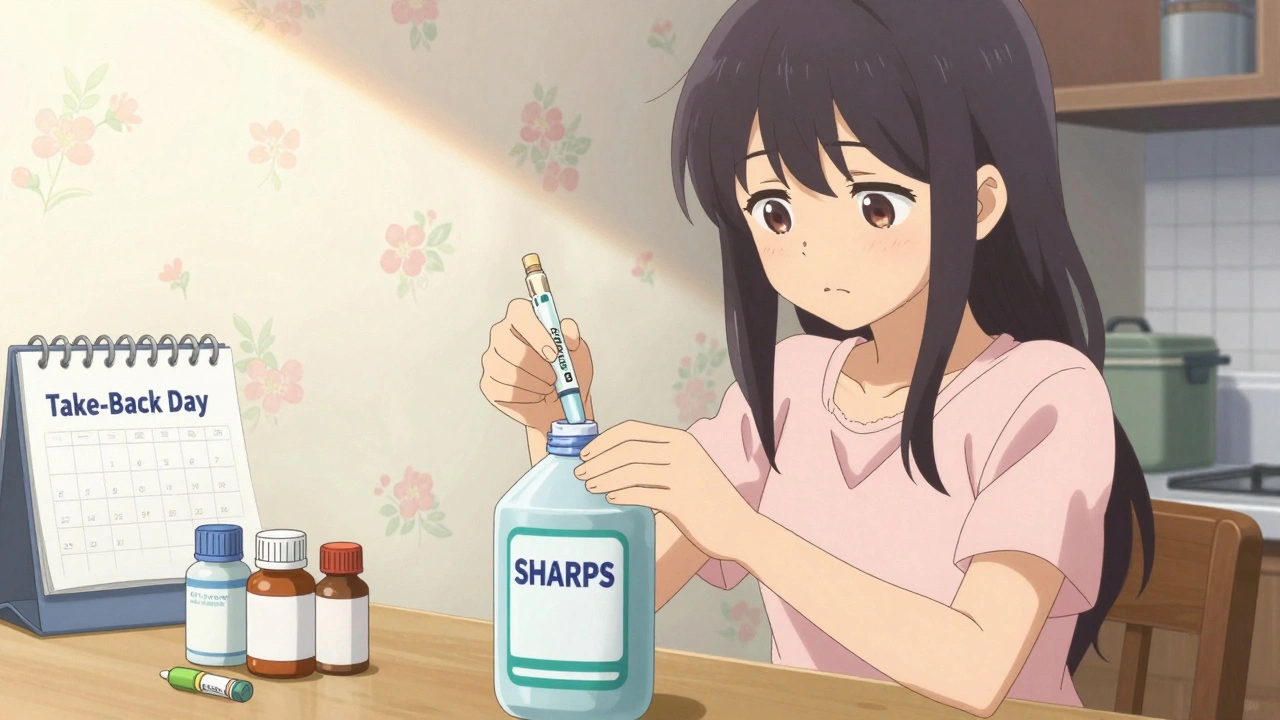
EpiPens aren’t regular trash. They’re classified as medical sharps because of the hidden needle inside. Even if it’s empty or expired, that needle can poke through plastic bags and injure someone. The safest way to dispose of an EpiPen is to return it to your doctor’s office or pharmacy when you pick up your new one. Most allergists and clinics have sharps bins specifically for this.
If that’s not an option, look for a DEA-authorized drug take-back location. These are often police stations, hospitals, or pharmacies with take-back programs. You can find the nearest one using the DEA’s National Take Back Initiative website. In Texas, you can legally dispose of an EpiPen in household trash if it’s in a puncture-proof container-like a thick plastic detergent bottle-with a clear label: "SHARPS," "BIOHAZARD," and "DO NOT RECYCLE." But in California, you must use a certified sharps disposal center or mail-back program. Don’t assume rules are the same everywhere.
Never try to remove the needle or dismantle the device. The lithium battery inside can leak, and the spring mechanism can snap unexpectedly. Just put the whole thing in a sturdy container, seal it, and get it to a proper drop-off point.
What to Do with Expired Inhalers
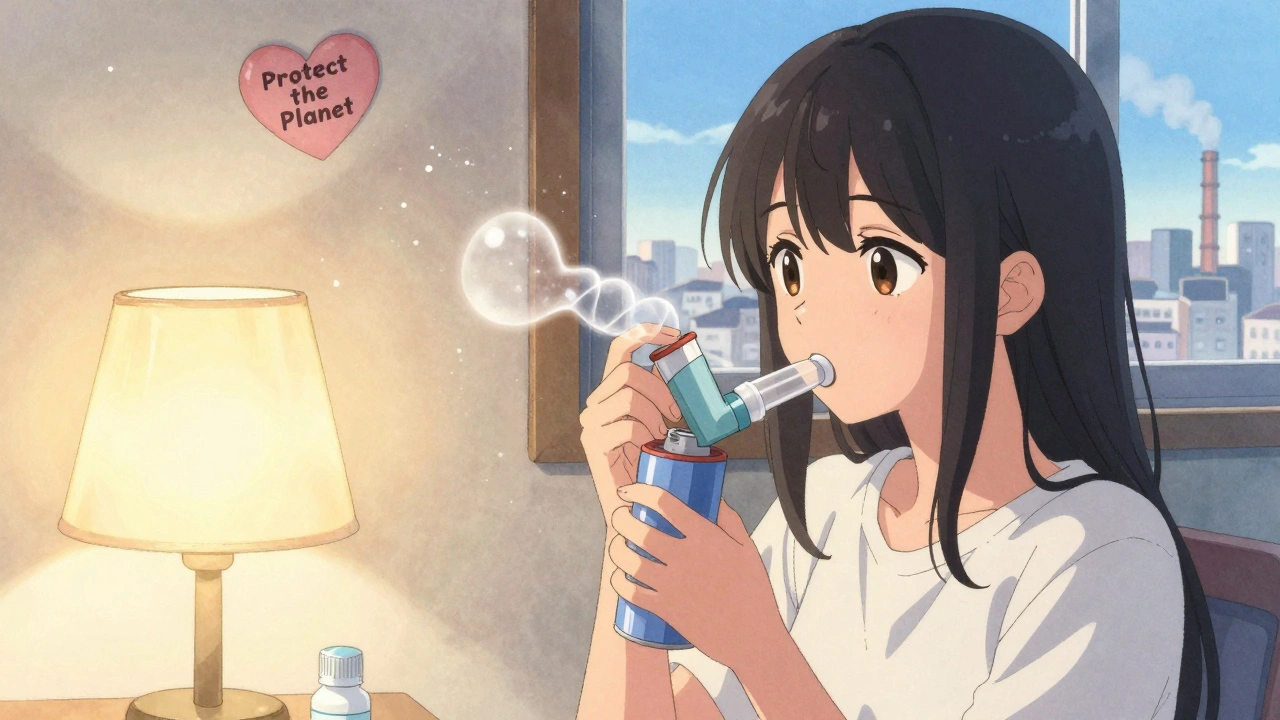
Inhalers are tricky because they’re pressurized. If you toss one in the trash, it can rupture and release propellants like HFA (hydrofluoroalkane), which are greenhouse gases. The EPA estimates that 300 million inhalers are thrown away each year in the U.S. alone. Some of those end up in landfills or incinerators, contributing to air pollution.
The best move? Call your local waste management department. Many cities-like New York City-have special collection sites for aerosols. Some pharmacies, like Walgreens and CVS, accept inhalers, but not all do. A 2022 survey found only 47% of Walgreens locations took them. Don’t assume your local pharmacy will help-call ahead.
If no take-back program is available, remove the metal canister from the plastic mouthpiece. Check the label: if it says "do not puncture," don’t. You can usually recycle the plastic part with other household plastics, but the metal canister needs to go to a hazardous waste facility. Some counties offer drop-off days for aerosols. If you’re unsure, treat the whole thing as hazardous waste until you confirm otherwise.
Disposing of Medicated Patches Correctly
Medicated patches like nicotine, fentanyl, or testosterone patches are designed to stick to your skin and slowly release drugs. That same design makes them deadly if left lying around. Fentanyl patches, even after use, still contain 80% of their original dose. A child or pet licking one can die within minutes.
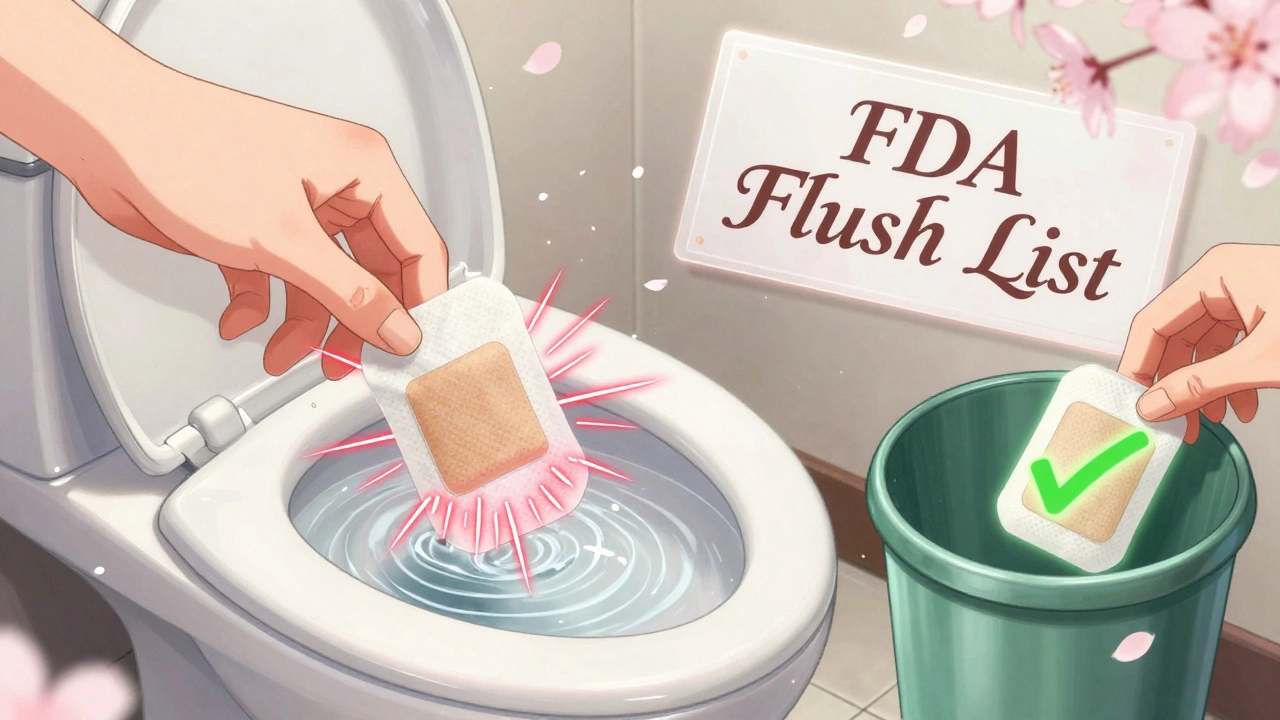
The FDA has a flush list of medications that should be flushed down the toilet immediately if unused. Fentanyl patches are on that list. So if you have an unused or expired fentanyl patch, flush it. Don’t wait. Don’t try to fold it or hide it. Flush it.
For other patches-like nicotine or hormone patches-fold the sticky side in on itself so it sticks to itself. Then throw it in the trash. Do not flush these unless the label says to. Flushing non-essential patches can contaminate waterways. The Environmental Protection Agency found pharmaceuticals in 80% of U.S. water samples. You don’t want to add to that.
There’s also a product called DisposeRx® that turns pills and liquids into a gel when mixed with water. But it doesn’t work for patches. The adhesive surface won’t break down, and the drug can still leak. Stick to folding and trashing-or flushing, if it’s on the FDA’s list.
Use Take-Back Programs When You Can
Drug take-back events, run by the DEA, happen twice a year-usually in April and October. In October 2022, over 985,000 pounds of medications were collected nationwide. That’s more than half a million EpiPens, inhalers, and patches safely removed from homes. These events are free, anonymous, and available at police stations, pharmacies, and community centers.
But here’s the catch: take-back locations aren’t evenly spread. Urban areas have them. Rural ones often don’t. A 2022 study found only 37% of rural counties had permanent drop-off sites, compared to 89% in cities. If you live in a rural area, your best bet is to ask your pharmacist or doctor if they’ll hold onto your expired meds until the next take-back day.
Some states are starting to require drug makers to pay for disposal programs. California’s SB 212, effective January 2024, forces manufacturers to fund take-back systems. That means more options are coming-but for now, you still have to do the legwork.
What Not to Do
- Don’t flush everything. Only flush what’s on the FDA’s flush list-mainly fentanyl patches and certain opioids. Flushing other meds pollutes water.
- Don’t throw loose pills or patches in the trash. Even if you think they’re "empty," they’re not. Children and pets don’t know the difference.
- Don’t put sharps in recyclable containers. Soda bottles, yogurt tubs, and glass jars aren’t strong enough. Use a heavy-duty plastic detergent bottle.
- Don’t assume your pharmacy will take it. Call first. Many only take pills, not auto-injectors or patches.
- Don’t wait until you have a dozen expired items. The longer you keep them, the higher the risk of accidental exposure.
How to Stay Organized
Set a monthly reminder to check your medicine cabinet. Look at expiration dates on EpiPens, inhalers, and patches. Write the date you opened each one on the packaging-many lose potency after 12 months, even before the printed expiration date.
Keep a dedicated sharps container at home. You can buy one at any pharmacy for $5-$15. Label it clearly. When it’s half full, take it to a drop-off location. Don’t wait until it’s full. That’s when accidents happen.
Keep a small list of local disposal options in your phone or wallet: your doctor’s number, the nearest DEA drop-off site, and your city’s hazardous waste hotline. When you’re stressed or in a hurry, you won’t have to search.
What Happens After You Drop It Off?
When you hand over an EpiPen or inhaler at a take-back site, it doesn’t just disappear. These items are collected and shipped to specialized facilities. Sharps are sterilized in high-heat autoclaves. Inhalers are depressurized and separated into metal and plastic parts for recycling. Patches are incinerated under controlled conditions to destroy the drug compounds safely.
The goal isn’t just to get rid of waste-it’s to prevent harm. Every properly disposed EpiPen means one less chance a child will accidentally inject themselves. Every inhaler kept out of landfills means less greenhouse gas. Every patch flushed or incinerated means one less overdose risk.
Where to Find Help
- DEA National Take Back Initiative: Search for drop-off locations at dea.gov/take-back-day
- Safeneedledisposal.org: Find sharps disposal centers by ZIP code
- Your local health department: Call or visit their website-they often list disposal resources
- Pharmacies with take-back programs: CVS, Walgreens, Rite Aid (call ahead)
- State-specific rules: Check your state’s environmental or health agency website
If you’re ever unsure, call your doctor or pharmacist. They’ve seen this before. They’ll tell you what to do. No judgment. No hassle. Just help.
Courtney Blake
December 11, 2025 AT 02:02Jean Claude de La Ronde
December 11, 2025 AT 05:06Katherine Liu-Bevan
December 13, 2025 AT 02:02Eddie Bennett
December 13, 2025 AT 20:21Paul Dixon
December 14, 2025 AT 01:20Vivian Amadi
December 15, 2025 AT 06:32Monica Evan
December 17, 2025 AT 02:05Taylor Dressler
December 18, 2025 AT 03:03Aidan Stacey
December 19, 2025 AT 07:10Jim Irish
December 20, 2025 AT 04:34Mia Kingsley
December 21, 2025 AT 11:26Aman deep
December 21, 2025 AT 16:12Lisa Stringfellow
December 22, 2025 AT 17:33