
How to Protect Your Privacy When Disposing of Medications
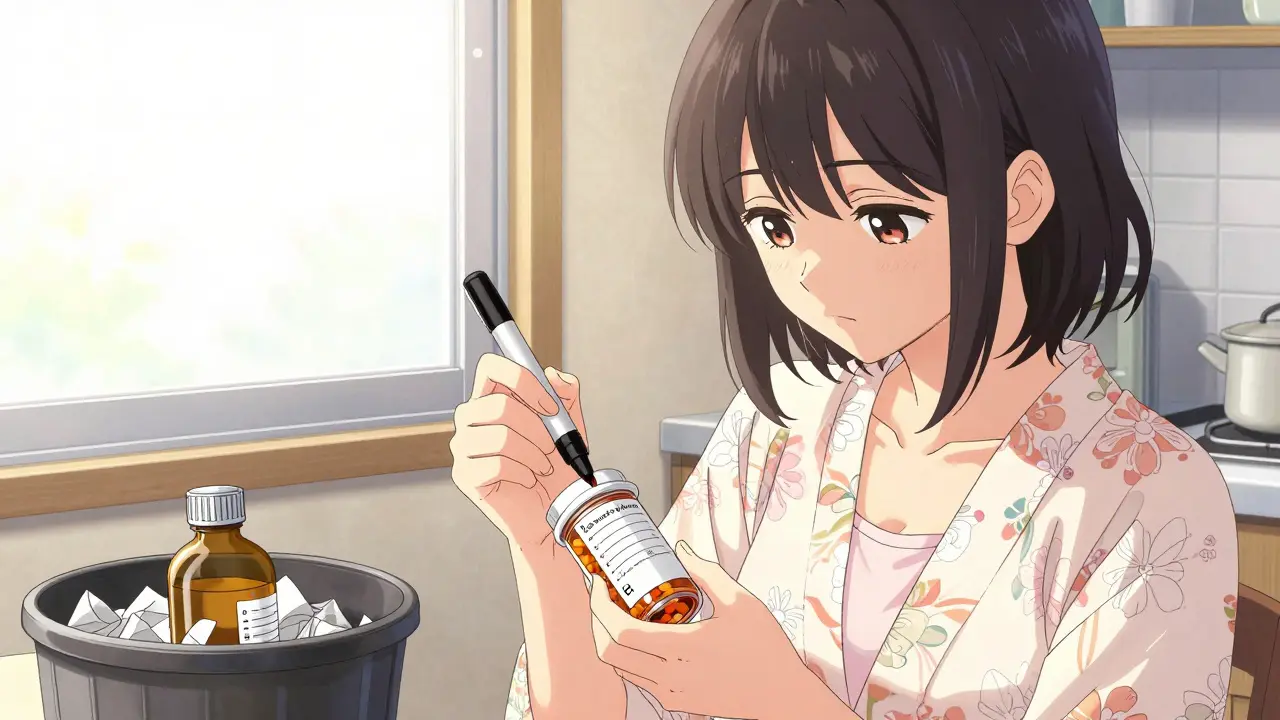
Throwing away old pills might seem like a simple chore, but if you don’t handle the bottles right, you’re risking your identity. Prescription labels hold more than just your name-they include your doctor’s name, diagnosis, dosage, and even your insurance number. That’s enough for someone to steal your identity, fake prescriptions, or scam your insurance. And it’s happening more than you think. A 2021 study found that 42% of prescription bottles tossed in the trash still had readable personal info. That’s not just careless-it’s dangerous.
Why Your Prescription Bottle Is a Target
Your pill bottle isn’t just plastic and paper. It’s a snapshot of your health. The label lists your full name, address, phone number, the medication you take, the dosage, your doctor’s name, and sometimes even your diagnosis-like "Type 2 Diabetes" or "Oxycodone for Chronic Pain." This data is gold to identity thieves. In 2023, the IBM Cost of a Data Breach Report found that healthcare records with prescription details cost $498 per stolen record-nearly double the average. That’s because medical identity theft lets criminals get free drugs, file fake insurance claims, or even get medical treatment under your name. The DEA reports that 9.5 million pounds of prescription drugs were collected through take-back events between 2010 and 2022. But millions more are still ending up in landfills with labels intact.The Law Says You Must Protect This Info
It’s not just common sense-it’s the law. Under HIPAA’s Privacy Rule (45 CFR 164.530(c)), anyone handling protected health information-including patients-is required to take "reasonable safeguards" to prevent unauthorized access. That includes when you throw away a pill bottle. The HHS Office for Civil Rights has made it clear: improper disposal of PHI on prescription containers is one of the top 10 privacy risks in healthcare today. In 2023 alone, 17 healthcare facilities were fined a total of $4.2 million for violating this rule. You’re not a covered entity, but the same principles apply. If you leave your name and medical info on a bottle you toss in the trash, you’re putting yourself at risk-and you’re not following basic safety standards.Best Method: Drug Take-Back Programs
The safest, most private way to dispose of medications is through a take-back program. The DEA runs National Prescription Drug Take Back Days twice a year, and in April 2024, over 6,000 collection sites across all 50 states picked up more than 821,000 pounds of unused drugs. These sites are usually police stations, pharmacies, or hospitals. You don’t need to remove the label. Staff take the whole bottle, and the drugs are destroyed under federal supervision. No one sees your name. No one gets your info. It’s zero-risk disposal. Most chain pharmacies now offer year-round drop-off bins. Walgreens, CVS, and Rite Aid all have them. You can drop off pills, patches, liquids-even needles-without removing labels. This is the gold standard for privacy. According to a 2024 Pharmacy Times poll, 89% of people who used take-back programs felt "very confident" about their privacy. If you’re in Austin, check the DEA’s website for nearby drop-off locations. They’re free, easy, and secure.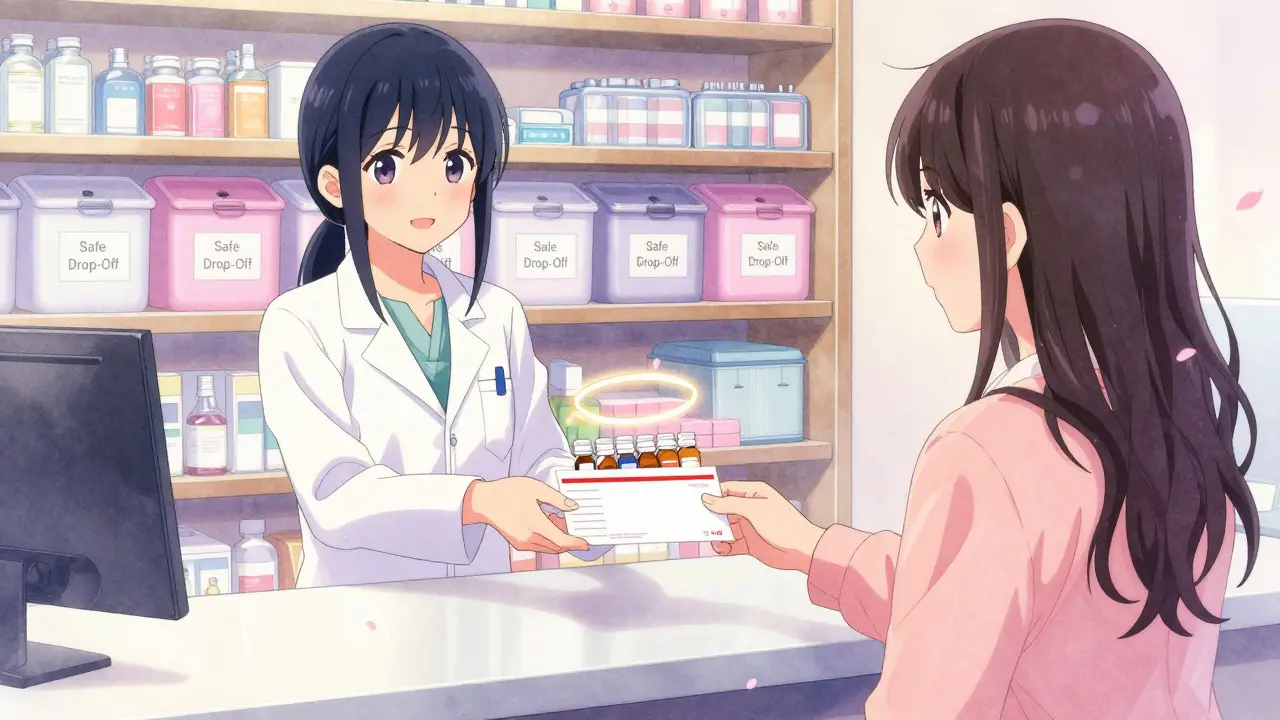
Second Best: Mail-Back Envelopes
If you can’t get to a drop-off site, mail-back envelopes are your next best option. Companies like Walgreens and DisposeRx sell these for $2.99 to $6.99. You put your meds in the envelope, seal it, and mail it to a licensed disposal facility. The envelope is tamper-proof, and your personal info stays on the bottle inside-no one sees it. The facility destroys the meds and the container. No one gets your data. It’s like sending your meds to a secure vault. These are especially useful if you live in a rural area or have mobility issues. They’re not free, but they’re far safer than tossing bottles in the trash. A 2023 EPA report confirmed that mail-back systems reduce privacy risks by over 90% compared to home disposal.At-Home Disposal: Do It Right or Don’t Do It
If you must dispose of meds at home, the FDA has a clear 5-step process:- Take pills out of the original bottle.
- Mix them with something unappealing-used coffee grounds, cat litter, or dirt.
- Pour the mix into a sealable container like a jar or zip-top bag.
- Scratch out or cover every bit of personal info on the empty bottle with a permanent marker or duct tape.
- Throw the sealed container and the blanked-out bottle in the trash.
What About Deactivation Pouches?
Products like DisposeRx pouches are gaining popularity. You pour your pills in, add water, shake, and the pouch neutralizes the drugs with activated carbon. The pills turn into a gel, and you toss the whole pouch in the trash. But here’s the catch: you still need to remove or cover the label. The pouch destroys the medication, not the personal info. So you’re still responsible for protecting your privacy. These cost about $1.50-$3 per pouch and are great for families or people who take multiple meds. But they’re not a magic fix for label privacy.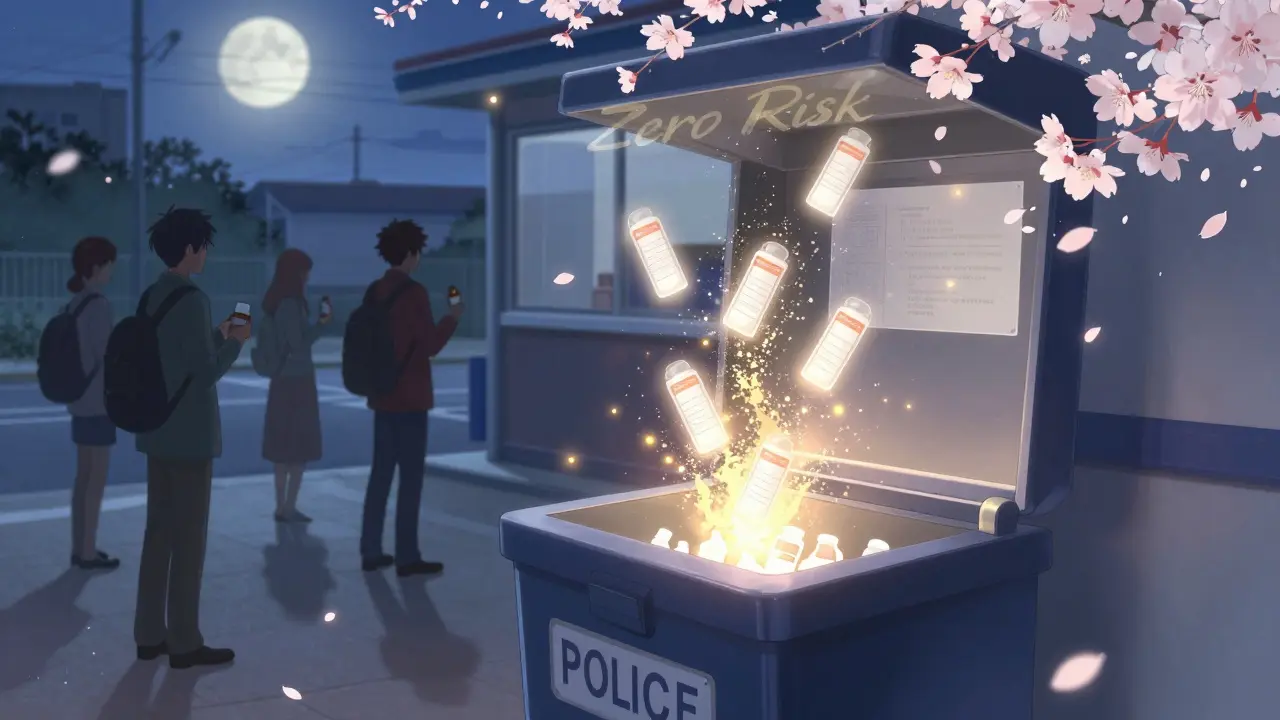
Flush List Medications: The Exception
The FDA maintains a short list of medications that should be flushed immediately-mostly powerful opioids and controlled substances that could be deadly if accidentally ingested by kids or pets. As of May 2024, this list includes 15 drugs, such as fentanyl patches, oxycodone, and naloxone. If your medication is on this list, flush it down the toilet. Don’t wait. Don’t mix it. Don’t worry about the label-your priority is preventing overdose. The FDA updated this list in May 2024, adding three new drugs and removing one. Check the FDA website for the current list.Common Mistakes and How to Avoid Them
Most people mess up in three ways:- Just tossing the bottle. 63% of Reddit users admit they "sometimes forget" to scratch off labels. Don’t be one of them.
- Thinking recycling is safe. Recycling centers don’t remove labels. Your info ends up in a pile with hundreds of other bottles.
- Believing "I don’t care if someone sees it." Even if you think your meds aren’t sensitive, someone else might use your info to steal your identity. It only takes one bottle.
What’s Changing in 2025 and Beyond
Privacy-focused disposal is getting smarter. By 2027, 40% of major pharmacies plan to install smart kiosks that automatically destroy labels and meds in one step. The Safe Drug Disposal Act of 2024, if passed, would fund $50 million annually in community programs with built-in privacy protections. And the HHS is expected to update HIPAA disposal rules in 2025 to include specific technical standards for making PHI unreadable. The message is clear: protecting your privacy when disposing of medications isn’t optional. It’s a basic step, like locking your front door. Every bottle you properly destroy is one less chance for someone to steal your identity.Do I need to remove the label from every pill bottle?
Yes. Even if the bottle is empty, the label still contains your name, address, doctor’s name, and prescription details. This is protected health information under HIPAA. You must make it unreadable by scratching it out with a permanent marker or covering it with duct tape. Don’t just peel it off-plastic often leaves ghosted text behind.
Can I recycle empty pill bottles?
No. Recycling centers don’t remove or destroy personal information. Even if the bottle looks clean, your name and prescription details may still be visible under the plastic. Always remove or cover the label and throw the bottle in the trash. Some pharmacies accept empty bottles for recycling, but only after you’ve destroyed the label.
What if I can’t get to a take-back site?
Use a mail-back envelope. Companies like Walgreens and DisposeRx sell these for under $7. You put your meds in, seal it, and mail it to a licensed disposal facility. Your label stays hidden inside the envelope, and the drugs are destroyed safely. It’s the next best thing to a take-back drop-off.
Is it safe to flush medications down the toilet?
Only if the medication is on the FDA’s Flush List. This includes powerful opioids like fentanyl and oxycodone, which can be deadly if accidentally ingested. For all other medications, flushing is not recommended-it pollutes water systems. The FDA updated this list in May 2024. Check their website before flushing.
How do I know if my medication is on the Flush List?
Visit the FDA’s website and search for "Flush List of Medications." You can also use the free DisposeRx app, which scans your pill bottle and tells you if it’s on the list. If you’re unsure, ask your pharmacist. It’s better to be safe than sorry.
Are there free disposal options?
Yes. DEA’s National Prescription Drug Take Back Days are free and happen twice a year. Many pharmacies, police stations, and hospitals also offer free year-round drop-off bins. Mail-back envelopes cost money, but take-back programs don’t. Check the DEA website for locations near you.
Kuldipsinh Rathod
December 27, 2025 AT 06:00I never thought about how much personal info is on these bottles. Just tossed mine in the trash like it was regular garbage. Yikes. Gonna grab a Sharpie tonight and fix that.
Joanne Smith
December 27, 2025 AT 13:42Oh sweet merciful chaos, we’re living in an era where your diabetes diagnosis is just one dumpster dive away from becoming someone’s new identity. And yet, somehow, we still think ‘just peel the label’ is a real strategy. 🙃
Prasanthi Kontemukkala
December 28, 2025 AT 16:54For anyone feeling overwhelmed-start small. One bottle a week. Use a marker, duct tape, whatever works. You don’t have to be perfect, just consistent. And if you’re helping an older relative? Sit with them. Make it a quiet moment. They’ll appreciate the company more than you know.
christian ebongue
December 29, 2025 AT 02:51take back programs are the only real answer. why are we still talking about duct tape? 🤦♂️
jesse chen
December 29, 2025 AT 16:52I just… I just didn’t realize how much of my medical life was sitting in my trash can. I mean, seriously-my doctor’s name, my dosage, my insurance info… it’s all just… out there. I’m gonna do better. I promise.
Alex Ragen
December 29, 2025 AT 20:58It is, in fact, a metaphysical paradox: we are conditioned to discard the vessel of healing, yet we cling to the ink that defines our vulnerability. The label is not merely information-it is the ghost of our corporeal fragility, haunting the landfill with the echo of our trust in institutional care.
Lori Anne Franklin
December 30, 2025 AT 21:35so i just used a black sharpie on my bottles and it worked great!! i also wrote "no info here" on the side for fun 😊
Bryan Woods
January 1, 2026 AT 14:04The structural integrity of prescription containers is not designed for long-term information concealment. Therefore, proactive redaction is not merely prudent-it is a necessary procedural step in the lifecycle of pharmaceutical waste management.
Ellie Stretshberry
January 2, 2026 AT 04:46i just throw my bottles in the recycle bin and hope for the best lol
Zina Constantin
January 4, 2026 AT 02:14Just did my first mail-back envelope. Felt like a spy sending classified intel. $5.99 for peace of mind? Worth every penny. If you’re reading this-you’re already doing better than most.
Dan Alatepe
January 4, 2026 AT 13:50Bro… I just threw away my dad’s blood pressure pills last week… and now I’m having nightmares about identity thieves using his info to buy 1000 fentanyl patches… 😭💔
Angela Spagnolo
January 6, 2026 AT 03:12Wait-so you’re telling me I shouldn’t recycle them? But… but I thought recycling was good? I feel so guilty now… I’ve been doing this wrong for years…
Sarah Holmes
January 6, 2026 AT 12:50How is it acceptable that the burden of protecting one’s own protected health information falls entirely on the patient? This is not privacy-it is systemic negligence dressed up as personal responsibility. The pharmaceutical-industrial complex profits from your compliance while you scrub ink off plastic like a serf.
Michael Bond
January 7, 2026 AT 09:20Just used a DisposeRx pouch. Easy. No label worries. I’m sold.