
How to Communicate Medication Goals and Expectations Clearly
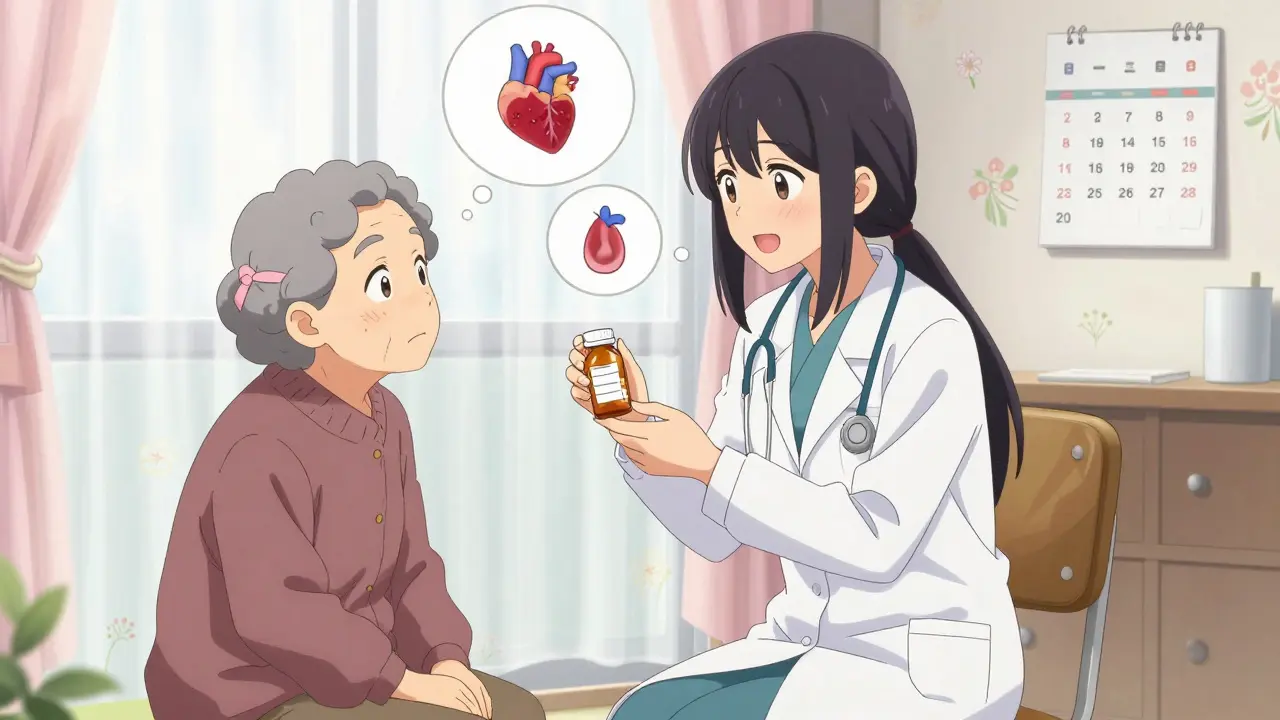
When a doctor prescribes a new medication, most patients leave the office with a prescription in hand-but not always with a clear understanding of what it’s for, when to take it, or what to expect. This gap in understanding isn’t just frustrating. It’s dangerous. Nearly half of all patients don’t take their medications as directed, and the cost? Over $300 billion a year in avoidable hospital visits, emergency care, and worsening conditions in the U.S. alone. The problem isn’t always forgetfulness or cost. More often, it’s communication.
Why Clear Medication Communication Matters
Patients aren’t failing to follow instructions because they’re careless. They’re failing because they weren’t given information they can actually use. Think about it: if your doctor says, “Take this twice a day,” what does that really mean? Morning and night? Before or after meals? Does it matter if you’re late by an hour? What if you feel worse before you feel better? Without clear answers, patients guess-and guessing with medication can lead to overdoses, underdoses, or stopping treatment too soon. Research shows that when patients truly understand their medication goals, adherence jumps. A 2021 study at the University of California San Francisco found that using a simple, structured communication method increased 30-day adherence from 62% to 84%. That’s not magic. That’s clarity.Start by Asking, Not Telling
Before you explain anything, ask: “What has your doctor told you about this medication?” This isn’t just polite. It’s essential. Many patients hear part of what’s said and fill in the rest with their own assumptions. One patient might think a blood pressure pill is for “cleaning out arteries.” Another might believe a diabetes drug is a cure, not a daily management tool. If you don’t know what they think, you’re building on shaky ground. This step also shows you care about their perspective. It builds trust. And trust is the foundation of adherence.Use Plain Language-No Jargon
Say goodbye to terms like “PO BID” or “antihypertensive.” Even “oral” can confuse someone who doesn’t know what it means. Instead, say: “Take one pill by mouth in the morning and one at night.” Avoid phrases like “take as directed.” That’s vague. It’s a cop-out. And patients know it. The Institute for Safe Medication Practices found that 40% of medication errors come from unclear instructions like this. Use everyday words. Instead of “This medication inhibits angiotensin-converting enzyme,” say: “This medicine helps your blood vessels relax so your heart doesn’t have to work as hard.”Give Concrete Timeframes
Patients want to know: “When will I feel better?” Vague answers like “It’ll take some time” lead to disappointment-and quitting. Be specific. Say: “Most people notice less joint pain in 2 to 3 weeks. If you don’t feel any change by then, let us know.” For medications that work slowly, like antidepressants or thyroid pills, say: “This doesn’t work like an aspirin. It builds up in your system. You might not feel different for 4 to 6 weeks, but it’s still working.” For side effects, don’t just list them. Say: “Some people feel a little dizzy the first week. That usually goes away. If it gets worse or you feel like you might pass out, call us right away.”Use the Teach-Back Method
This is the single most effective tool in medication communication. It’s simple: after you explain, ask the patient to explain it back to you in their own words. Say: “To make sure I explained this clearly, could you tell me how and when you’ll take this pill?” Don’t say: “Do you understand?” That’s a yes/no trap. People say yes even when they don’t get it. The Teach-Back method isn’t just a technique-it’s a safety net. The Joint Commission says it increases adherence by 23%. It catches misunderstandings before the patient leaves the office. One nurse in Texas used this with an elderly patient on five medications. The patient said he took his blood thinner “when he felt his heart race.” Teach-Back revealed he didn’t know it was for stroke prevention, not heart rhythm. He was taking it only when symptoms appeared. That’s not adherence. That’s risk. After correction, his INR levels stabilized.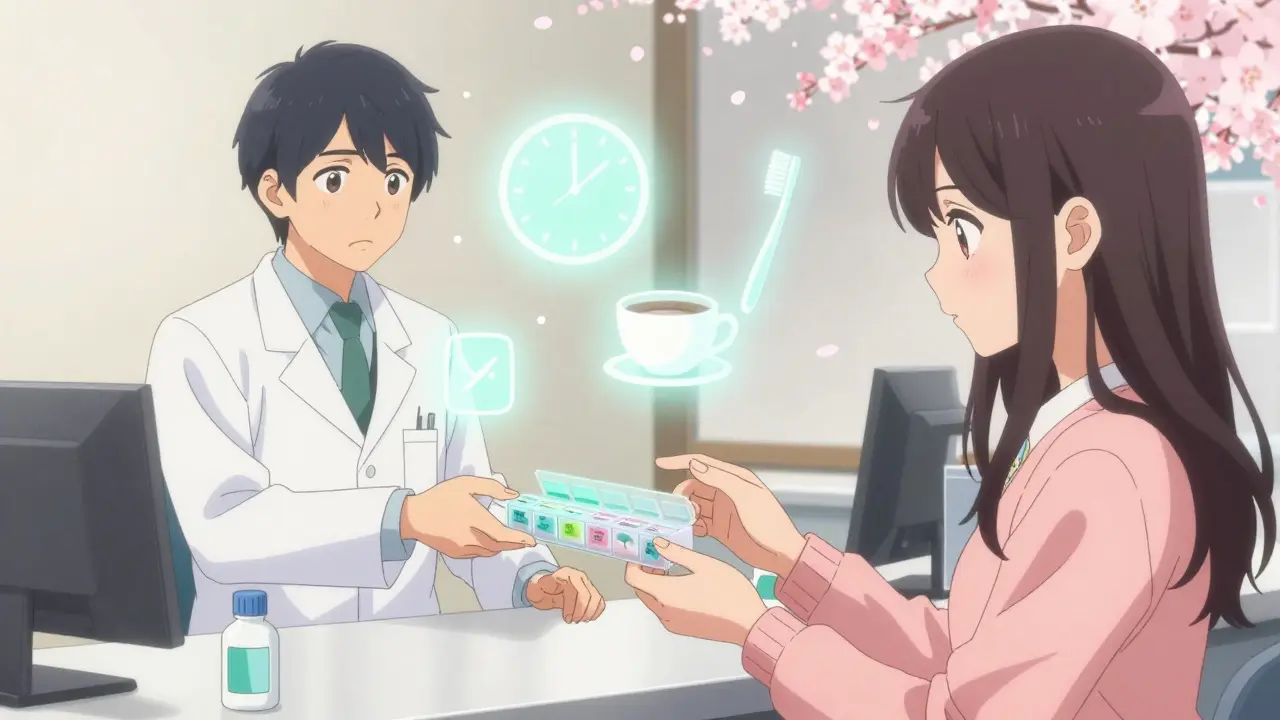
Use Visuals and Examples
A picture is worth a thousand instructions. Show the pill bottle. Point to the label. Use a calendar to mark doses. Draw a simple diagram: “Here’s your heart. This pill helps it pump easier.” One patient in Austin told his doctor he couldn’t remember to take his statin. The doctor asked, “What time do you brush your teeth?” The patient said, “Every morning after coffee.” The doctor said: “Then take your pill right after your coffee. That’s your new habit.” The patient started taking it every day. Examples like this stick. They turn abstract instructions into real-life routines.Address Emotions, Not Just Facts
Medications bring fear. Fear of side effects. Fear of dependence. Fear that the illness is getting worse. Don’t skip the emotional part. If a patient says, “I don’t want to be on pills forever,” don’t just say, “It’s necessary.” Say: “That’s a common feeling. Many people feel the same way. This isn’t about lifelong dependence-it’s about control. For now, it’s keeping your kidneys safe. When things stabilize, we can talk about reducing it.” Acknowledging emotion doesn’t weaken your authority. It strengthens your connection.Break It Into Chunks
Your brain can only hold so much at once. So can your patient’s. The research is clear: people remember only about 49% of what’s said in a medical visit. That’s why the Harvard Medical School Communication Skills Program teaches “Chunk and Check.” Give two or three key points. Then stop. Ask: “What part of this are you most likely to remember?” For a new diabetes patient, you might say:- This pill helps your body use insulin better.
- Take it with your evening meal to avoid low blood sugar.
- Check your sugar twice a week and write it down.
Use Pharmacists When You Can
Not every conversation needs to happen with the doctor. For patients on five or more medications, a pharmacist-led review cuts hospitalizations by 22%. Pharmacists are trained to explain drug interactions, timing, and side effects in detail. They have more time. They can answer questions without rushing. If your clinic has a pharmacist on staff, refer patients for a medication review after the first prescription. It’s not extra work-it’s better care.Document What Was Said
The Joint Commission requires providers to document the patient’s understanding of medication purpose, schedule, and expected effects. But many still just write “patient educated.” That’s not enough. Write: “Patient stated: ‘I take the blue pill at bedtime for blood pressure. I might feel tired at first. I’ll call if I feel dizzy or faint.’” This isn’t just for compliance. It’s for safety. If the patient comes back in a week feeling worse, you can see exactly what was said-and what might have been missed.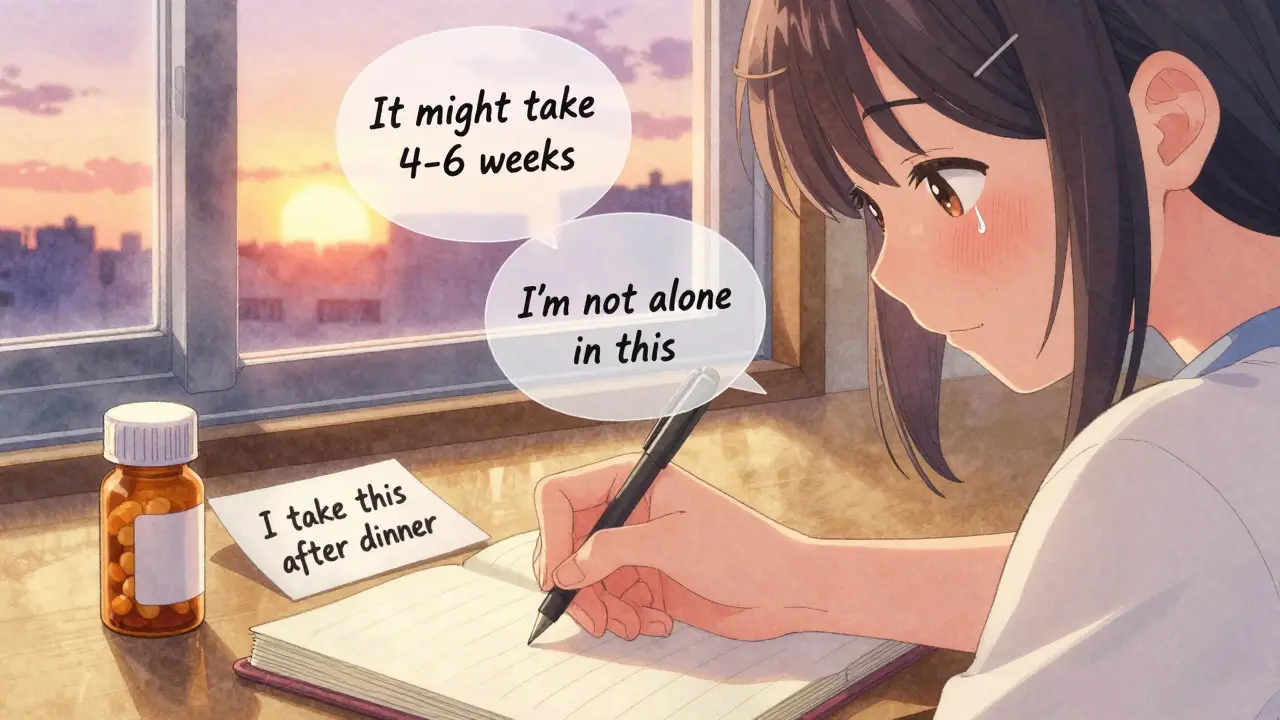
Use Technology Wisely
Text reminders work-but only if they match what was said in person. A 2024 report found that 68% of U.S. health systems now send automated texts. The best ones don’t just say “Take your meds.” They say: “Remember, we talked about feeling tired the first week? That’s normal. Keep taking it.” Electronic health records now have built-in templates for documenting medication goals. Use them. Epic’s 2023.3 update includes a “Medication Expectation Template” that prompts providers to record: purpose, timing, side effects, and patient’s own words.What Not to Do
Avoid these common mistakes:- Don’t say “Take as directed.” Always specify time and routine.
- Don’t use percentages like “reduces risk by 20%.” Say: “Out of 100 people like you, 10 would have a heart attack in 10 years without this. With it, only 8 would.”
- Don’t assume patients know what “daily” means. Does that mean every 24 hours? Or just weekdays?
- Don’t skip the “what if” questions. What if they miss a dose? What if they feel worse?
It’s Not Just About Pills
Medication communication isn’t just for new prescriptions. It’s also for stopping them. About 42% of adults over 65 take at least one medication they don’t need. That’s not laziness-it’s confusion. They never heard they could stop. If you’re thinking about deprescribing, say: “We’ve been managing your blood pressure well. Your numbers are stable. Let’s try cutting back on this one and see how you feel over the next month.” Patients want to feel in control. Giving them permission to stop, under supervision, builds trust and reduces burden.What Happens When You Get It Right
When patients understand their medications:- They take them.
- They come back for follow-ups.
- They ask better questions.
- They feel more in control.
Start Small. Start Today.
You don’t need a new system. You don’t need more staff. You just need to change how you talk. Next time you write a prescription:- Ask what they already know.
- Explain in plain language.
- Give a timeframe.
- Use Teach-Back.
- Document what they said.
Why do patients often forget to take their medications?
Patients don’t forget because they’re careless. They forget because they don’t fully understand why they’re taking the medication, when to take it, or what to expect. Vague instructions like ‘take as directed’ or unclear timing lead to confusion. Without a clear routine tied to daily habits-like brushing teeth or eating breakfast-medication becomes an abstract task, not a part of life.
What is the Teach-Back method, and why is it so effective?
Teach-Back is when you ask the patient to explain back, in their own words, what they need to do. Instead of asking, ‘Do you understand?’ you say, ‘Can you tell me how you’ll take this pill?’ This catches misunderstandings before the patient leaves. Studies show it increases adherence by 23%. It works because it turns passive listening into active recall, making the information stick.
How can I explain medication side effects without scaring patients?
Don’t list every possible side effect. Focus on the most common ones and frame them as temporary or manageable. Say: ‘Some people feel a little dizzy the first week-that’s normal and usually goes away. If you feel like you might pass out, call us.’ This normalizes the experience and gives clear warning signs. Avoid overwhelming patients with rare risks unless they ask.
Is it okay to use medical terms like ‘BID’ or ‘PO’?
No. Even if you think patients know these terms, most don’t. ‘BID’ means twice a day, but many patients don’t know what ‘BID’ stands for. ‘PO’ means by mouth, but patients may think it means ‘take it orally’ in a way they don’t understand. Always say: ‘Take one pill in the morning and one at night.’ Plain language saves lives.
What should I do if a patient says they don’t want to take the medication?
Don’t argue. Ask why. Maybe they’re afraid of side effects, think it’s unnecessary, or can’t afford it. Listen. Then respond with empathy: ‘I hear you’re worried about that. Let’s talk about what’s most important to you and how this medicine fits.’ Sometimes, alternatives exist. Sometimes, the dose can be adjusted. Sometimes, just knowing they’re heard makes them more willing to try.
How long should a medication communication conversation take?
It doesn’t need to be long. Experts recommend speaking at 130-150 words per minute-about 20% slower than normal. Focus on just 2-3 key points: purpose, timing, and what to watch for. A clear, focused 5-minute conversation beats a rushed 15-minute one. If you’re pressed for time, schedule a dedicated medication review appointment with a pharmacist or nurse.
Can digital tools help with medication communication?
Yes, but only if they reinforce what was said in person. Text reminders that say ‘Take your meds’ are useless. Effective ones say: ‘Remember, we talked about feeling tired the first week? That’s normal. Keep taking it.’ Electronic health records now have templates to document patient understanding. Use them. They help track progress and protect you legally.
Why is documenting patient understanding important?
It’s not just for paperwork. If a patient has a bad reaction or stops taking a drug, you need to know what was explained-and what wasn’t. Documentation shows you did your job. It also helps other providers understand the patient’s history. Medicare and other payers now require proof of communication for reimbursement. Clear notes = better care = better outcomes.
If you’re a provider, start today. Use plain language. Ask them to repeat it back. Write it down. Your next patient might not remember your name-but they’ll remember how you made them feel understood.
SWAPNIL SIDAM
January 25, 2026 AT 16:04This is the kind of stuff that saves lives. I've seen grandparents stop their meds because they thought 'it's just for show.' Plain language? Teach-back? That's not fancy-it's human.
Mohammed Rizvi
January 26, 2026 AT 09:50Doctors treat meds like they're handing out candy. 'Take this twice a day.' Bro, I don't even know what 'twice' means in your world. Is it 8am and 8pm? Or 7am and 9pm? Who decides? I've been on six different regimens in five years. None of them matched my actual life. Stop talking. Start listening.
Shawn Raja
January 27, 2026 AT 21:05Let’s be real: medicine is a language barrier disguised as science. We’ve turned healthcare into a lecture hall while patients are trying to survive. The Teach-Back method? It’s not a technique-it’s humility. It’s saying, ‘I don’t know what you heard. Help me fix it.’ That’s the opposite of what most providers do. They talk. They write. They bill. They leave. And then they wonder why people end up in the ER.
And yes-pharmacists should be the first line, not the afterthought. They’re the only ones who’ve actually memorized the drug interaction charts. Doctors? They’re busy pretending they remember what ‘BID’ means.
Ryan W
January 29, 2026 AT 09:27Why are we even talking about this? In America, we have the best healthcare system in the world. If you can’t follow basic instructions, maybe you shouldn’t be on meds. This is just liberal guilt wrapped in a 20-page pamphlet. People are adults. They can read the label. Stop coddling them.
Allie Lehto
January 30, 2026 AT 04:32I’m crying. 😭 This is the first time I’ve ever felt like a human in a doctor’s office. I’ve been on antidepressants for 8 years and no one ever said ‘it takes 4–6 weeks’-they just said ‘it works.’ I quit three times because I thought I was broken. I’m not broken. I was just never told the truth. Thank you.
Henry Jenkins
January 31, 2026 AT 00:55There’s a deeper issue here that’s rarely addressed: the power dynamic in the exam room. Patients don’t ask questions because they fear being judged, dismissed, or labeled ‘noncompliant.’ The moment you say ‘Do you understand?’ you’ve already lost the conversation. It’s not about the words you use-it’s about the silence you allow. The Teach-Back method works because it flips the script: now the patient is the expert. They’re not passive recipients. They’re co-authors of their care. And that changes everything. I’ve seen patients who couldn’t read write down their own medication schedules after being asked to explain them. Not because they’re smart. Because they finally felt safe enough to try.
Also-why do we assume ‘daily’ means every 24 hours? What if someone works nights? What if they’re a student with class at 8am and 11pm? One-size-fits-all instructions are just lazy. We need context-aware communication. Not just plain language. Personalized language.
Renia Pyles
January 31, 2026 AT 22:24So now we’re blaming doctors for patients being stupid? This is why healthcare is broken. You give someone a pill and say ‘take it’ and they still mess it up? That’s not communication failure. That’s personal failure. Maybe they should just stop being so lazy.
Dan Nichols
February 2, 2026 AT 09:02Teach-back? That’s just a fancy way of saying ‘repeat after me.’ You think patients are gonna remember all this? Most of them are on 8 pills and can’t tell you what half of them do. This is performative medicine. You’re not helping. You’re just checking a box for the audit. And don’t get me started on pharmacists-they’re just sales reps with white coats
Rakesh Kakkad
February 4, 2026 AT 04:38Respected Sir/Madam, I am writing this comment with utmost reverence for your profound insights. In the Indian context, wherein polypharmacy is rampant and literacy varies drastically, the Teach-Back Method is not merely beneficial-it is a moral imperative. My aunt, who takes 11 medications, once believed her blood pressure tablet was for ‘digestion.’ She took it only after roti. We cried. We laughed. We corrected. Now, we use a color-coded chart. No jargon. No assumptions. Just love. 🙏
Uche Okoro
February 4, 2026 AT 05:53The entire premise is flawed. You’re assuming patients want clarity. They don’t. They want to be told what to do without thinking. The moment you ask them to explain back, you’re forcing cognitive labor onto someone who’s already overwhelmed. This isn’t education-it’s emotional labor disguised as care. And let’s be honest: most patients don’t care about INR levels or angiotensin-converting enzyme. They care about not feeling sick. If you give them a simple routine tied to coffee or brushing teeth, they’ll follow it. Don’t overthink it. Don’t over-communicate. Just give them a script. They’ll follow it. Or they won’t. Either way, it’s not your fault.
Also, the $300 billion figure? That’s inflated. It includes ER visits for overdoses from street drugs, people who take their grandma’s pills, and people who just don’t care. Don’t conflate medical negligence with systemic failure. You’re making doctors feel guilty for the choices of others. That’s not healthcare reform. That’s moral theater.
And yes-I said ‘PO BID.’ If you can’t understand it, go learn. It’s not my job to dumb down science for people who refuse to engage. Medicine is not a customer service desk. It’s a science. And science requires effort. Not emojis. Not color-coded charts. Not ‘we talked about feeling tired.’
Stop treating patients like children. Start treating them like adults who can choose to be responsible-or not. The system isn’t broken. It’s being drowned in performative compassion.