
Five Medication Safety Tips for Seniors and Caregivers
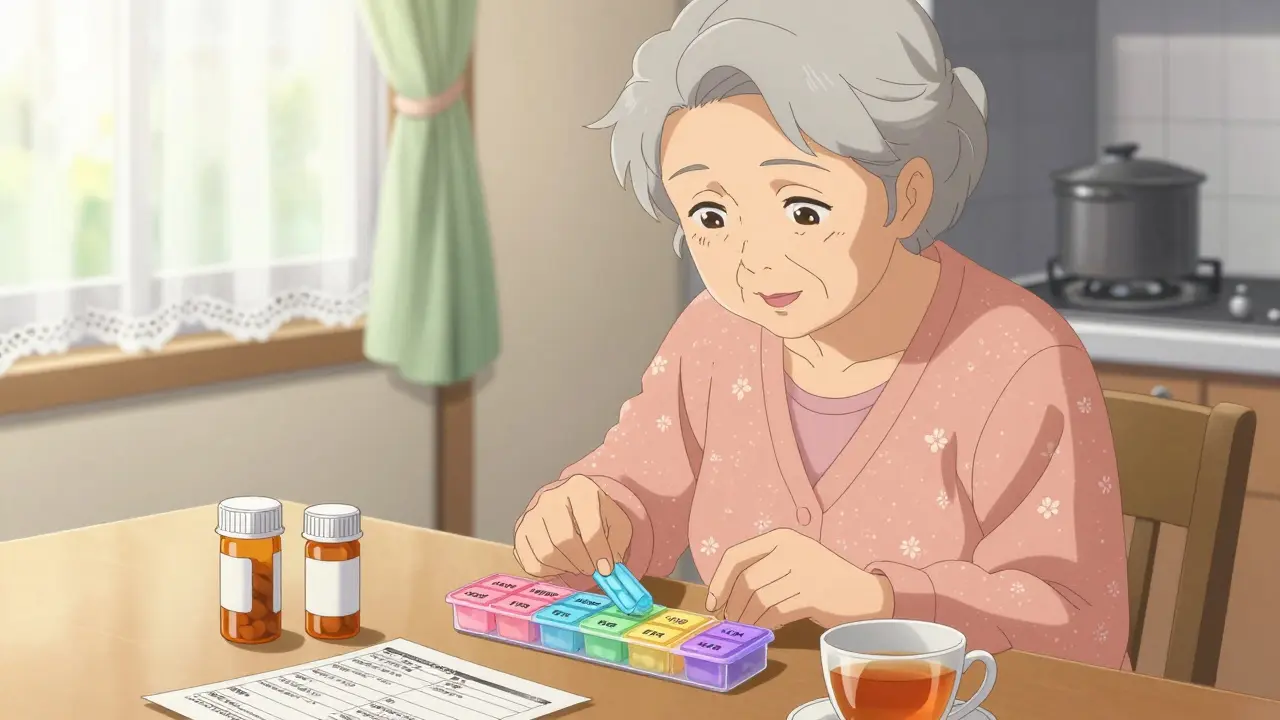
Medication mistakes are one of the leading causes of hospital visits for seniors
Every year, over 350,000 older adults end up in the hospital because of problems with their medications. Many of these cases are preventable. Seniors take more prescriptions than any other age group - 40% of them are on five or more medications daily. Add in over-the-counter drugs, vitamins, and supplements, and it’s easy to lose track. One wrong dose, one missed reminder, one interaction you didn’t know about - and it can turn dangerous fast. The good news? Simple, practical steps can cut these risks dramatically.
Keep a complete, up-to-date medication list
Start with a list that includes every single thing you or your loved one takes. Not just prescriptions. Include aspirin, ibuprofen, fish oil, melatonin, herbal teas, and even cough syrup. Write down the name, dose, how often it’s taken, why it’s prescribed, the doctor’s name, and the pharmacy’s phone number. The Health in Aging Foundation says this list needs 10 key details to be useful.
Update this list within 24 hours of any change - whether a new pill is added, an old one is stopped, or the dose changes. Bring it to every doctor’s appointment, even if you think they already know. Pharmacists say 92% of dangerous drug interactions are caught just by having this list in hand. Don’t rely on memory. Don’t write it on a napkin. Use a printed sheet or a digital note you can show clearly on your phone.
Use a pill organizer - but choose the right one
Pill organizers aren’t just for memory problems. They’re for everyone who takes more than one pill a day. Look for one with separate compartments for morning, afternoon, evening, and night. Color-coded lids help too - blue for morning, red for night, for example. A 2021 study from the National Institute on Aging showed that seniors with mild memory issues improved adherence by 47% using these simple tools.
Start simple. If your loved one struggles with tiny lids or too many slots, begin with a single-day organizer. Gradually move to a 7-day version as confidence grows. For those with dementia or confusion, choose a locked version to prevent double-dosing. Some caregivers have made their own visual aids: laminated cards with photos of each pill next to its name and purpose. One man in Texas reduced his father’s anxiety about taking pills by 80% just by adding pictures.
Technology can help, but it’s not perfect. Apps like Medisafe send reminders and track doses. Devices like Hero automatically dispense pills and alert caregivers if a dose is skipped. But if someone keeps dismissing alerts without taking the pill, the system fails. AARP’s 2023 survey found that 55% of seniors over 75 prefer paper schedules over apps. Choose what works for the person - not what seems fancy.

Check for dangerous interactions
It’s not just about what’s in the pill - it’s what’s in the glass, the plate, or the room. Grapefruit juice interferes with over 85 common medications, including statins for cholesterol and blood pressure drugs. Alcohol mixes dangerously with sleep aids, painkillers, and diabetes meds. Even some herbal teas can clash with heart medications.
The American Geriatrics Society updates the Beers Criteria® every two years - it’s the go-to list of medications that are risky for seniors. The 2023 version flags 138 drugs that should be avoided or used with extreme caution. These include certain antihistamines, sleeping pills, and NSAIDs like ibuprofen. If a new prescription comes in, ask: “Is this on the Beers list?” Your pharmacist can check it in seconds.
Don’t assume your doctor knows everything. Many seniors take supplements from health stores without telling their doctor. A 2022 study found that 68% of seniors didn’t mention their herbal products to their provider - even though 34% of them use CBD, which can interfere with blood thinners and seizure meds.
Store medications safely - and throw out the old ones
That medicine cabinet above the sink? It’s the worst place in the house. Heat and steam from showers degrade pills and liquids. A University of Florida study found that 37% of common medications lose potency when stored in bathrooms. The ideal spot? A cool, dry drawer - not the kitchen, not the bathroom, not the car. Keep the temperature between 68 and 77°F.
Always keep pills in their original bottles. That’s where you’ll find the expiration date, dosage info, and warning labels. If you transfer pills to a pillbox, keep the original bottle in a safe place as backup.
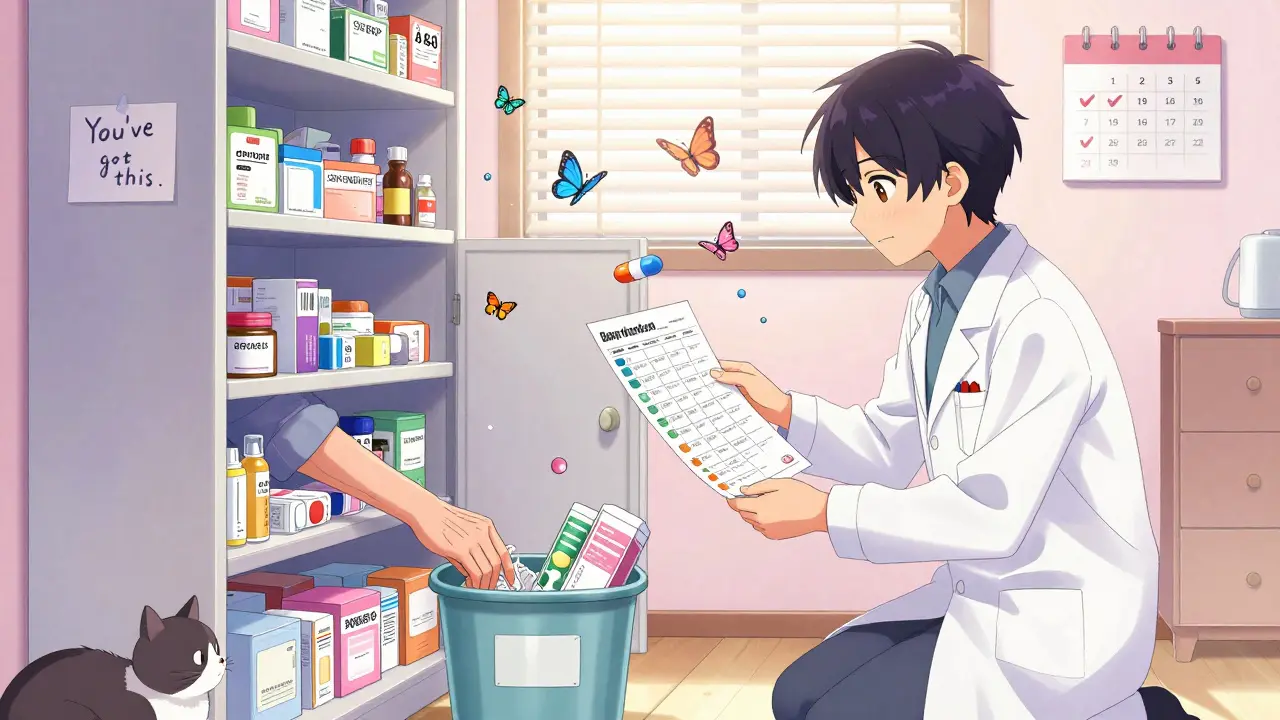
And don’t hoard old meds. The average senior home holds $317 worth of unused or expired drugs. That’s not just wasted money - it’s a risk. Kids, pets, or confused seniors might grab the wrong bottle. The Poison Control Center reports 60,000 accidental poisonings each year in children under 6 because of unsecured medications. If you live with grandchildren, lock your meds in a cabinet with a childproof latch. Use drug take-back programs at pharmacies or local police stations to dispose of old pills safely. Never flush them down the toilet.
Ask the right questions at every appointment
Doctors are busy. They don’t always know what else you’re taking unless you tell them. Don’t wait for them to ask. Come prepared with your list and three key questions:
- Is this medication still necessary? Many seniors stay on pills long after they’re needed. A 2023 JAMA study showed that simplifying regimens - like switching from four times a day to once a day - boosts adherence from 50% to 90%.
- What interactions should I watch for? Don’t just ask about side effects. Ask what to avoid: foods, drinks, other meds, even activities.
- Are there cheaper or safer alternatives? Medicare Part D covers medication therapy management for those on 8+ drugs. Ask your pharmacist if you qualify. Many generics cost under $5 a month.
The Alzheimer’s Association found that using this structured approach cuts medication errors by 63% in dementia patients. Write down the answers. Repeat them back. If something doesn’t make sense, ask again. You’re not being difficult - you’re protecting your health.
Build a routine - and stick to it
Medication safety isn’t about one big fix. It’s about daily habits. Tie pill-taking to something you already do: after brushing your teeth, with breakfast, before bed. Use visual cues - a sticky note on the mirror, a clock set to remind you, a bell that rings at 8 a.m. Studies show people who use visual triggers improve adherence by 65%.
Set up a “medication buddy” system. Have a family member or neighbor check in once a week to make sure pills are being taken as scheduled. A WesleyLife study showed that with a consistent buddy, adherence jumped from 52% to 85% in just six weeks.
And remember: if you’re unsure about anything - the color of a pill, the time to take it, why it was prescribed - call your pharmacist. They’re trained for this. They don’t charge for the call. And they’ve seen it all before.
What’s changing in 2025?
The FDA now requires all prescription labels to include QR codes that link to easy-to-read instructions. By the end of 2025, every bottle will have one. Just scan it with your phone to hear or watch a video explanation.
Medicare Advantage plans are starting to cover smart pill dispensers like Hero. Over 30 plans now include them as a benefit - no extra cost if your doctor prescribes it.
And the National Institute on Aging now offers free in-home medication reviews through 11,000 Area Agencies on Aging. Just call 211 or visit your local senior center. A pharmacist will come to your home, check your list, and help you clean up any duplicates or outdated meds.
Bottom line: Small steps save lives
You don’t need to be perfect. You just need to be consistent. Keep the list updated. Use the organizer. Check for interactions. Store meds right. Ask the questions. These five habits don’t require technology, money, or a degree in medicine. They just require attention. And that’s something every caregiver and senior already has.
What should I do if my senior parent skips a dose?
Don’t panic, but don’t ignore it either. First, check the medication’s instructions - some pills can be taken late, others shouldn’t be doubled. Call the pharmacist or doctor for advice. If it’s a daily medication like blood pressure or diabetes, keep a log of missed doses and bring it to the next appointment. For high-risk meds, consider switching to a smart dispenser that alerts caregivers when a dose is skipped.
Can I crush pills to make them easier to swallow?
Never crush a pill unless the doctor or pharmacist says it’s safe. Many medications are time-release or enteric-coated - crushing them can cause dangerous spikes in dosage or make the drug useless. If swallowing is hard, ask for a liquid form, a patch, or a different pill. There are often alternatives.
How do I know if a medication is expired?
Look at the expiration date on the bottle or box. That’s the last day the manufacturer guarantees it’s fully effective. Some pills may still be safe after that date, but their strength can drop. For critical meds like insulin, heart drugs, or epinephrine, never use expired ones. When in doubt, throw it out. Most pharmacies will dispose of old meds for free.
Are over-the-counter drugs really dangerous for seniors?
Yes. Many OTC meds contain anticholinergics or NSAIDs, which can cause confusion, dizziness, falls, or kidney damage in older adults. Common culprits include Benadryl, NyQuil, Aleve, and some sleep aids. The Beers Criteria® lists over 20 OTC drugs that seniors should avoid. Always check with a pharmacist before buying anything - even if it’s “just a sleep aid.”
Can Medicare help with medication costs or safety?
Yes. If someone takes 8 or more medications for chronic conditions, they may qualify for Medicare Part D’s Medication Therapy Management (MTM) program. This is free - a pharmacist reviews all their meds, checks for interactions, and helps lower costs. You can also get free large-print labels from participating pharmacies. Ask your pharmacist if you’re eligible.
Johnnie R. Bailey
December 22, 2025 AT 14:05Nader Bsyouni
December 23, 2025 AT 13:22Julie Chavassieux
December 24, 2025 AT 09:41Candy Cotton
December 25, 2025 AT 17:04Tarun Sharma
December 25, 2025 AT 17:53Jim Brown
December 27, 2025 AT 01:53Cara Hritz
December 27, 2025 AT 17:24Jamison Kissh
December 29, 2025 AT 09:34