
Chemotherapy Hypersensitivity Reactions: Signs, Risks, and What to Do Immediately
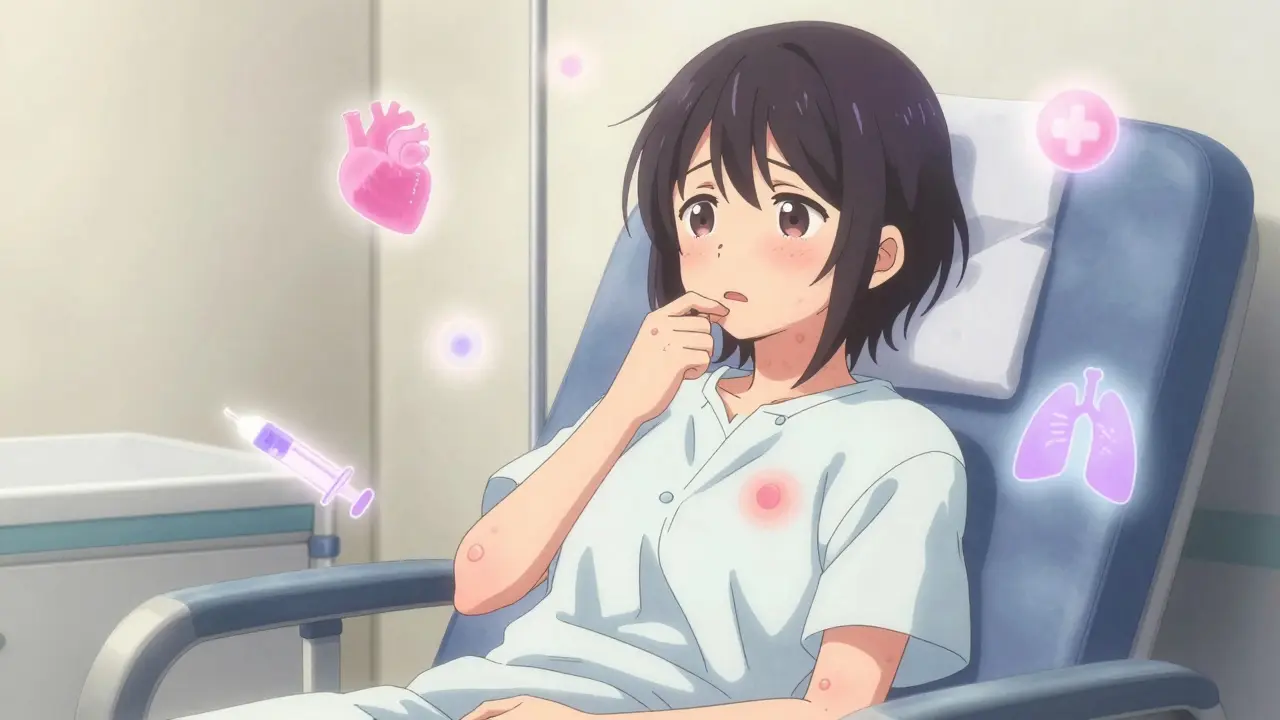
What Chemotherapy Hypersensitivity Reactions Really Look Like
When you hear "chemotherapy side effects," you probably think of nausea, hair loss, or fatigue. But there’s another kind of reaction-one that can start with a tingling lip or a sudden flush, then turn deadly in minutes. Chemotherapy hypersensitivity reactions aren’t rare. About 5% of people getting chemo will have one. And for some, it’s not just uncomfortable-it’s life-threatening.
These aren’t just "allergies" like peanut or bee stings. They’re immune responses triggered by the drugs themselves. Platinum-based drugs like carboplatin and cisplatin, taxanes like paclitaxel and docetaxel, and even monoclonal antibodies like trastuzumab can set off these reactions. The risk goes up with each cycle. After six infusions of carboplatin, your chance of a reaction jumps from less than 1% to over 6%. By the eighth cycle, it’s nearly 30%.
The Signs: From Mild to Life-Threatening
These reactions don’t always scream "emergency." Sometimes, they whisper. A patient might feel a strange metallic taste. Or their eyes start itching. Their nose gets stuffy. These are early red flags.
Here’s what to watch for, broken down by body system:
- Head and neck: Itchy eyes (32% of mild cases), swelling around the eyes, nasal congestion, tingling or swelling of the lips, tongue, or mouth.
- Respiratory: Shortness of breath (45% in moderate cases), wheezing, coughing, chest tightness. This is where things get dangerous fast.
- Cardiovascular: Dizziness (27%), fainting (18%), rapid heartbeat (HR >100 bpm in 35%), low blood pressure (systolic under 90 mmHg in 22% of anaphylaxis cases), chest or back pain.
- Skin: Flushing (58% of reactions), hives (48%), itching (72%), rashes. These are the most common visible signs.
- Gastrointestinal: Nausea (35%), vomiting (28%), cramps (42%), diarrhea (19%). These can be mistaken for chemo side effects-until they’re paired with other symptoms.
- Neurological: Anxiety (63%), feeling like something terrible is about to happen (48% in anaphylaxis), confusion, even seizures (rare, but possible).
- Systemic: Fever (31%), chills (27%), rigors, sweating (29%). These aren’t infections-they’re your body’s immune system going into overdrive.
One of the most dangerous signs? A sense of impending doom. It’s not anxiety. It’s your body screaming that something is very, very wrong. And if you ignore it, you could lose minutes-or your life.
When Do These Reactions Happen?
Timing matters. Most reactions happen during or right after the infusion. But some show up hours later. A few even appear a day or two after treatment. That’s why patients need to know: if you feel unusual after chemo-even if you’re home-call your care team.
For most drugs, the first reaction happens early-often during the first or second cycle. But carboplatin is different. It’s sneaky. The more cycles you get, the higher your risk. After seven infusions, nearly one in four patients will react. That’s why doctors watch closely during later cycles. They don’t just assume you’re "used to it."
How Doctors Diagnose It
It’s not always easy. Many symptoms look like other problems: asthma attacks, septic shock, or even just chemo nausea. So how do they know it’s a hypersensitivity reaction?
Doctors look at three things:
- Symptoms: Did they start during or right after the infusion? Are they multi-system (skin + breathing + blood pressure)? That’s a big clue.
- Timing: Did the reaction happen before, during, or after the drug was given? If it’s linked to the drug, it’s likely immune-related.
- Lab tests: Elevated tryptase (above 11.4 ng/mL), high eosinophils (over 500 cells/μL), or positive IgE tests for the drug can confirm it. Basophil activation tests are used in specialized centers.
But here’s the catch: you don’t need all the tests to act. If someone has low blood pressure, trouble breathing, and hives after chemo? That’s anaphylaxis. Treat it-don’t wait for lab results.
What to Do During a Reaction
There’s no time for hesitation. The protocol depends on severity.
Mild Reaction (Grade 1)
Itching, mild rash, flushing, slight nasal congestion. No breathing or blood pressure issues.
- Stop the infusion immediately.
- Give diphenhydramine (Benadryl) 25-50 mg IV.
- Give dexamethasone 10-20 mg IV.
- Monitor vitals every 5 minutes.
- Once symptoms clear, you may restart the infusion slowly, at half the original rate.
Moderate Reaction (Grade 2)
Widespread hives, facial swelling, mild wheezing, nausea, dizziness.
- Stop the infusion.
- Give antihistamine and steroid as above.
- Start oxygen via nasal cannula (4-6 L/min).
- Keep patient lying flat, legs elevated if blood pressure is dropping.
- Do not restart the same drug that day.
Severe Reaction (Grade 3-4 or Anaphylaxis)
Low blood pressure, wheezing, throat swelling, loss of consciousness, cardiac arrest.
- STOP THE INFUSION. NOW.
- Call for emergency help.
- Give epinephrine 0.3-0.5 mg IM in the thigh. Repeat every 5-15 minutes if needed.
- Start IV fluids rapidly.
- Give oxygen. Prepare for intubation if airway is swelling.
- Give steroids and antihistamines as backup.
Epinephrine is the only drug that can reverse anaphylaxis. Antihistamines and steroids help with symptoms-but they won’t save your airway or your blood pressure. Delaying epinephrine is the #1 reason people die from these reactions.
How to Prevent Reactions Before They Start
For high-risk drugs, prevention isn’t optional-it’s standard.
For taxanes (paclitaxel, docetaxel), the standard premedication is:
- Dexamethasone 20 mg IV-12 hours and 6 hours before infusion
- Diphenhydramine 50 mg IV-30 minutes before
- Famotidine 20 mg IV-30 minutes before
This combo cuts the reaction rate by more than half. For carboplatin, some centers use the same approach. Slower infusion rates also help. Instead of rushing through the bag, they drip it over 60-90 minutes.
And here’s something patients often don’t know: if you’ve had a severe reaction to one drug, you may not be able to get it again. But that doesn’t mean you can’t get treated. Desensitization protocols exist. They involve giving tiny, increasing doses of the drug over 4 to 12 hours under constant monitoring. It’s risky-but for some, it’s the only way to keep fighting cancer.
What Patients Need to Know
If you’re getting chemo, here’s your checklist:
- Report every single weird feeling during treatment-even if you think it’s "nothing."
- Know your drug. Ask your nurse: "Is this one known to cause reactions?"
- Wear a medical alert bracelet if you’ve had a reaction before.
- Don’t assume "it won’t happen again." With carboplatin, it gets worse with each cycle.
- Keep a list of all your chemo drugs and any reactions you’ve had. Bring it to every appointment.
Your care team can’t help if you don’t speak up. That tingling tongue? The sudden chill? The feeling that something’s about to go wrong? Say it. Even if you’re embarrassed. Even if you’re not sure. It could save your life.
What Hospitals Must Have Ready
Every unit giving chemo needs an anaphylaxis kit within arm’s reach. Not in the supply closet. Not down the hall. Right there.
It must include:
- Epinephrine (1:1,000 solution) in auto-injectors and vials
- Diphenhydramine and dexamethasone IV
- IV fluids and tubing
- Oxygen and nasal cannula
- Airway management tools (bag-valve mask, suction)
Staff must be trained-not just once, but regularly. Anaphylaxis doesn’t wait for shift changes. It doesn’t care if it’s 2 a.m. If you’re giving chemo, you’re responsible for knowing how to stop it from killing someone.
Final Thought: This Isn’t Just a Side Effect. It’s a Medical Emergency.
Chemotherapy hypersensitivity reactions are unpredictable. They can start small and explode fast. But they’re not mysterious. We know the signs. We know the drugs. We know how to treat them.
The problem isn’t lack of knowledge. It’s lack of action. Ignoring a flush. Delaying epinephrine. Assuming it’s "just nausea."
Can chemotherapy hypersensitivity reactions happen after treatment is done?
Yes. While most reactions occur during or right after the infusion, some can appear 1 to 2 days later. Symptoms like rash, fever, or joint pain may show up later and still be linked to the drug. Patients should report any new symptoms within 48 hours of chemo, even if they’re at home.
Are all chemo drugs equally likely to cause allergic reactions?
No. Platinum drugs (carboplatin, cisplatin), taxanes (paclitaxel, docetaxel), and monoclonal antibodies (trastuzumab, rituximab) are the most common culprits. L-asparaginase and procarbazine also have high rates. Drugs like 5-FU or methotrexate rarely cause true allergic reactions. Risk depends on the drug, dose, and how many cycles you’ve had.
If I had a reaction once, will I have it again?
For mild reactions, you might be able to continue with premedication and slower infusions. But if you had a severe reaction-like low blood pressure, trouble breathing, or swelling-you’ll likely stop that drug permanently. Your oncologist will switch to a different drug or use a desensitization protocol under strict supervision.
Can I take allergy medicine before chemo to prevent a reaction?
Yes-but only under medical supervision. Standard premeds for high-risk drugs include dexamethasone, diphenhydramine, and famotidine. These are given at specific times before the infusion. Self-medicating with over-the-counter antihistamines won’t work and could mask early warning signs.
Is epinephrine safe to use if I’m not sure it’s an allergic reaction?
Yes. Epinephrine is safe even if you’re wrong. The risks of not giving it when it’s needed far outweigh any side effects. A rapid heartbeat or nervousness from epinephrine is temporary. Delaying it can lead to cardiac arrest or death. If in doubt-give it.
Can chemotherapy hypersensitivity be tested for before treatment?
For some drugs, like monoclonal antibodies, skin testing or IgE blood tests can be done before the first dose. But for most chemo drugs, including carboplatin and taxanes, there’s no reliable pre-test. The only way to know is to give the drug slowly and watch closely. That’s why monitoring during the first infusion is critical.
What’s the difference between an infusion reaction and a hypersensitivity reaction?
Infusion reactions are often not immune-mediated-they’re caused by the drug irritating the body, releasing cytokines. Symptoms include fever, chills, and muscle aches. Hypersensitivity reactions are true immune responses, involving IgE and histamine, and can cause hives, swelling, and anaphylaxis. The symptoms overlap, but the treatment differs. Anaphylaxis needs epinephrine; cytokine release reactions may respond to steroids and antihistamines alone.
Can I ever get the same chemo drug again after a reaction?
It’s possible, but only under controlled conditions. Desensitization protocols gradually reintroduce the drug over several hours while monitoring closely. This is done in specialized units with emergency equipment ready. It’s not done lightly, but for patients with limited treatment options, it can be life-saving.
Donna Packard
December 16, 2025 AT 09:14Patrick A. Ck. Trip
December 18, 2025 AT 00:39Sam Clark
December 19, 2025 AT 14:26Jessica Salgado
December 19, 2025 AT 21:22Chris Van Horn
December 20, 2025 AT 18:08Virginia Seitz
December 21, 2025 AT 12:10Michael Whitaker
December 22, 2025 AT 10:31Brooks Beveridge
December 23, 2025 AT 23:45Anu radha
December 24, 2025 AT 02:52Jigar shah
December 25, 2025 AT 21:55Nishant Desae
December 27, 2025 AT 06:06Radhika M
December 27, 2025 AT 09:52Philippa Skiadopoulou
December 28, 2025 AT 05:30Pawan Chaudhary
December 28, 2025 AT 10:18Jonathan Morris
December 28, 2025 AT 19:23