
Audiometry Testing: Understanding Hearing Assessment and Decibel Levels

Have you ever been in a noisy room and struggled to catch what someone said, even though they were speaking clearly? Or do you keep turning up the TV volume until it’s too loud for everyone else? These aren’t just annoyances-they could be early signs of hearing loss. And the most reliable way to find out what’s really going on with your hearing is through audiometry testing.
Audiometry isn’t just a quick check. It’s a detailed, science-backed process that measures exactly how well you hear sounds across different pitches and volumes. It tells your audiologist not just whether you have hearing loss, but what kind, where it’s happening in your ear, and how severe it is. The numbers they use? Decibels (dB). And those numbers don’t lie.
What Exactly Is Audiometry Testing?
Audiometry testing is the gold standard for measuring hearing sensitivity. It’s not guessing. It’s not a phone app. It’s a clinical procedure performed by licensed audiologists using calibrated equipment that follows strict national standards. The goal? To find the quietest sound you can hear at each frequency-from low rumbles to high-pitched whistles.
Most people think hearing tests are just about listening to beeps. But there’s more to it. The test is broken into two main parts: pure-tone audiometry and speech audiometry. Pure-tone tests use tones at specific frequencies (250 Hz to 8000 Hz), while speech tests use real words to see how well you understand conversation. Together, they give a full picture of your hearing ability.
The results are plotted on a graph called an audiogram. This isn’t just a chart-it’s your hearing fingerprint. It shows which sounds you miss, and which ones you still hear clearly. If your audiogram dips below 25 dB at any frequency, that’s considered hearing loss. For reference, normal hearing means you can hear a whisper (around 20 dB) or leaves rustling (10-20 dB).
How Does Pure-Tone Audiometry Work?
This is the core of any hearing evaluation. You wear headphones, and tones play at different pitches and volumes. You signal when you hear them-usually by pressing a button or raising your hand. The audiologist starts with a tone you can easily hear, then lowers the volume in 10 dB steps until you no longer respond. Then they go back up in 5 dB steps to confirm the exact point where you start hearing it again. This is called the modified Hughson-Westlake method, and it’s been the standard since the 1940s.
There are two ways sound reaches your inner ear: through the air and through your bones. That’s why two types of testing are done:
- Air conduction: Sound travels through the ear canal, eardrum, and middle ear bones to the cochlea. This tests your entire hearing system.
- Bone conduction: A small oscillator is placed behind your ear on the mastoid bone. It sends vibrations straight to the cochlea, skipping the outer and middle ear. If your bone conduction thresholds are normal but air conduction is worse, you have a conductive hearing loss-likely due to earwax, fluid, or eardrum damage.
An air-bone gap of 15 dB or more at two or more frequencies means conductive loss. If both air and bone conduction are equally poor, you have sensorineural hearing loss, which usually points to damage in the inner ear or auditory nerve. This is the most common type, often caused by aging or noise exposure.
Why Speech Testing Matters
Here’s where many people get confused. You might pass a tone test but still struggle to understand people talking. That’s because hearing and understanding are different. Speech audiometry fixes that gap.
Two key parts:
- Speech Reception Threshold (SRT): You repeat words like "baseball," "hotdog," or "pencil" as they get quieter. The goal is to find the softest level at which you get half of them right. This should match your average pure-tone hearing at 500, 1000, and 2000 Hz-within ±10 dB. If it doesn’t, something’s off.
- Word Recognition Score (WRS): At a comfortable volume, you repeat a list of words. A normal score is 90-100%. Below 70% suggests trouble processing speech, even if you can hear the sounds. This often happens with nerve damage, cochlear issues, or even early signs of auditory processing disorders.
For example, someone with a 45 dB hearing loss at 2000 Hz might hear you fine in quiet, but if their word recognition is only 50%, they’re missing half the words you say. That’s why hearing aids don’t always fix the problem-sometimes, the issue isn’t volume, it’s clarity.
What About Tympanometry and ABR?
These aren’t always done in a basic test, but they’re critical when something’s wrong.
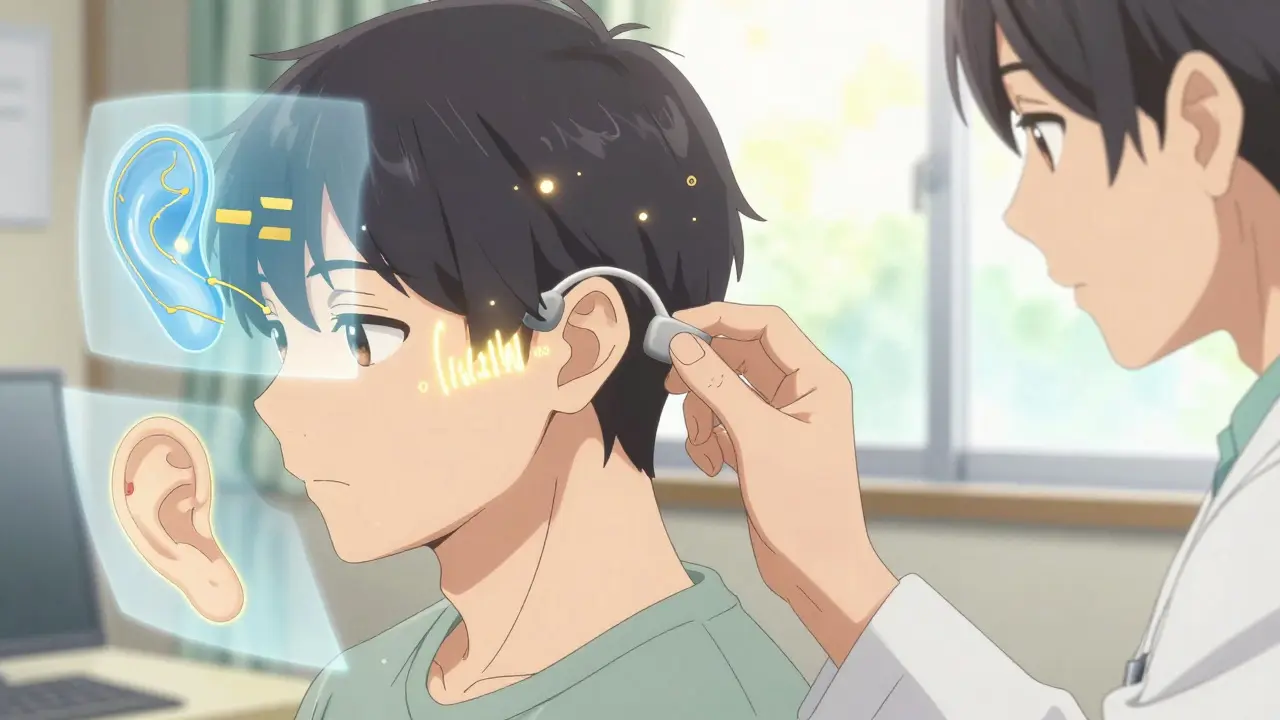
Tympanometry checks your eardrum and middle ear function. A small probe seals your ear canal and changes the air pressure. It measures how much your eardrum moves. A flat line (Type B tympanogram) means fluid is trapped behind the eardrum-common in kids with ear infections or adults with Eustachian tube dysfunction. It takes seconds, but it tells you whether your hearing loss is mechanical or neurological.
Auditory Brainstem Response (ABR) is used for babies, non-verbal adults, or people who can’t reliably respond to sounds. Electrodes on the scalp record electrical signals from the hearing nerve when sound is played. It doesn’t need your cooperation-it’s objective. This is how newborns get screened before leaving the hospital. The CDC recommends all babies be tested before one month old, with diagnosis by three months if they fail.
What Do the Decibel Levels Mean?
Decibels (dB HL) are the universal language of hearing. Here’s what the numbers actually mean:
| Decibel Range | Hearing Level | What It Means |
|---|---|---|
| 0-25 dB | Normal | You hear whispers, rustling leaves, and soft speech clearly. |
| 26-40 dB | Mild | You miss soft speech, especially in noise. Might think people are mumbling. |
| 41-55 dB | Moderate | You struggle with normal conversation. Often ask for repeats. |
| 56-70 dB | Moderately Severe | You need speech to be loud. TV volume is too high for others. |
| 71-90 dB | Severe | You hear only loud sounds. Hearing aids are essential. |
| 91+ dB | Profound | You may not hear even shouting. Cochlear implants often needed. |
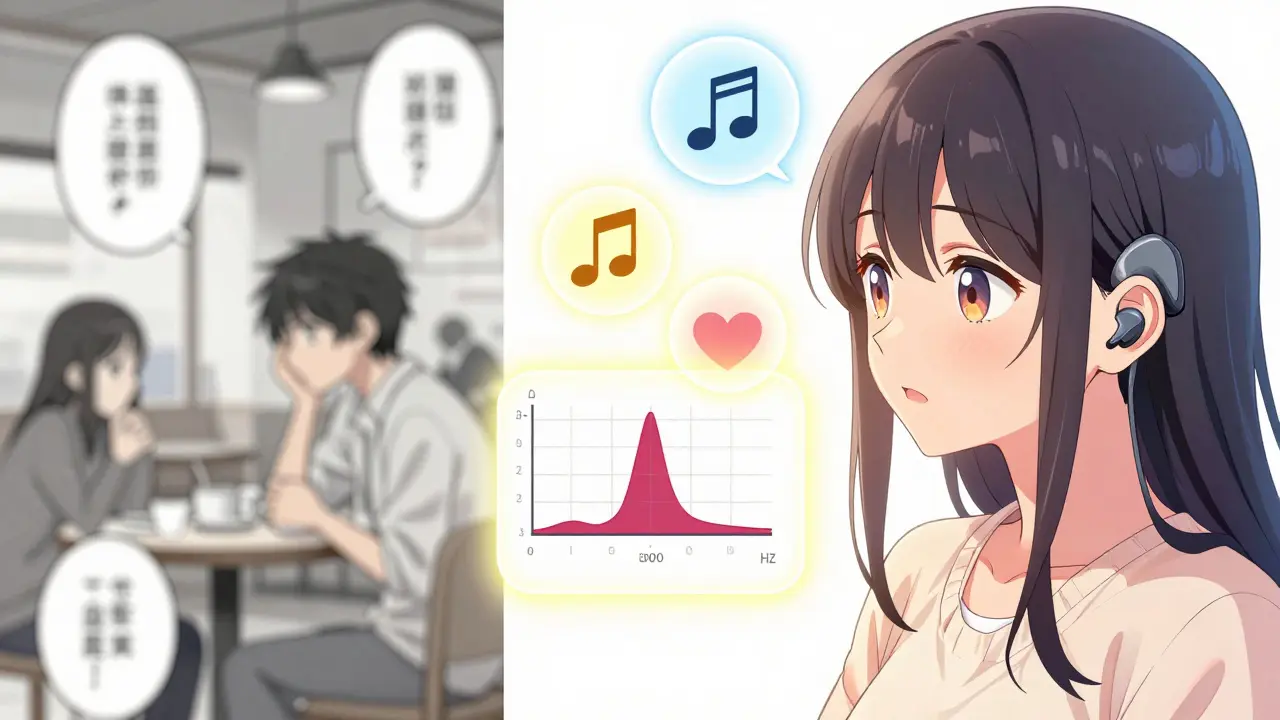
Most adults with hearing loss fall into the mild to moderate range. But here’s the catch: hearing loss often starts in the high frequencies first-around 3000-6000 Hz. That’s where consonants like "s," "t," and "k" live. So you might hear "I saw the cat" but miss the "t" and think it’s "I saw the ca." That’s why people say you sound like you’re mumbling-even though you’re speaking perfectly.
What to Expect During Your Test
Most full audiometry tests take 20-40 minutes. You’ll sit in a soundproof booth, wear headphones, and respond to tones. You’ll also repeat words. The audiologist might place a probe in your ear for tympanometry. If you’re being tested for children, they might use visual reinforcement-like a toy that lights up when you turn toward a sound.
It’s not painful. Bone conduction might feel weird if you wear glasses-some people say the oscillator presses uncomfortably on the mastoid bone. But it’s brief. The real challenge? Staying focused. Fatigue can make you miss quieter tones. That’s why tests are kept under 45 minutes.
Afterward, your audiologist should explain your audiogram. They should show you where your hearing dips, what that means for daily life, and whether hearing aids, medical treatment, or monitoring is needed. If they hand you a paper and say "call us if you have questions," that’s not enough.
Who Needs Audiometry Testing?
You don’t have to be old to need this test. Here’s who should get checked:
- Anyone over 50-annual testing is recommended
- People exposed to loud noise (construction, music, firearms)
- Those with ringing in the ears (tinnitus)
- People who frequently ask others to repeat themselves
- Anyone with a family history of hearing loss
- Children who don’t respond to their name or seem to ignore speech
- Patients on ototoxic medications (like certain chemo drugs)
Even if you think your hearing is fine, a baseline test at age 50 gives you a reference point. Hearing loss is progressive. Catching it early means better outcomes with hearing aids or other interventions.
Common Misconceptions
Many people believe:
- "I can’t have hearing loss-I hear fine in quiet." But noise masks hearing loss. You might be fine at home but lost in a restaurant.
- "Hearing aids fix everything." Not true. If your word recognition is poor, hearing aids amplify noise, not clarity.
- "It’s just aging." While age-related hearing loss is common, it’s not inevitable. Noise exposure, genetics, and health conditions play bigger roles.
- "Tele-audiology is just as good." Remote testing is useful for screening, but diagnostic accuracy drops below 25 dB. You need a calibrated booth and trained professional for true diagnosis.
And here’s a sobering stat: Only 1 in 5 people with hearing loss get tested. That’s partly because it’s not part of routine checkups. But it should be-just like vision screening.
What Happens After the Test?
Results guide next steps:
- Normal hearing: Re-test every 2-3 years, or sooner if symptoms change.
- Mild to moderate loss: Hearing aids are often recommended. Modern devices can filter background noise and enhance speech.
- Conductive loss: May be treatable with surgery, earwax removal, or antibiotics.
- Severe to profound loss: Hearing aids may not help. Cochlear implants or assistive devices become options.
- Word recognition below 70%: Auditory training or communication strategies may be needed alongside hearing aids.
Follow-up is key. Hearing changes over time. Re-testing every year after diagnosis helps track progression and adjust devices.
Is audiometry testing painful or invasive?
No. Audiometry testing is completely non-invasive. You wear headphones or a small probe in your ear. Bone conduction involves a gentle vibration on the bone behind your ear. No needles, no radiation, no discomfort. The only "pain" is the boredom of sitting still for 30 minutes.
Can I do audiometry testing at home?
Home screening apps and devices can give you a rough idea, but they’re not diagnostic. They lack calibration, soundproofing, and professional oversight. A 2023 FDA advisory warned that remote tests often miss mild hearing loss and can’t accurately measure bone conduction or speech discrimination. For accurate results, see a licensed audiologist in a certified testing environment.
How often should I get my hearing tested?
If you’re under 50 and have no symptoms, every 5-10 years is fine. After 50, get tested every 2-3 years. If you’re exposed to loud noise, have tinnitus, or notice hearing changes, get tested yearly. People with diabetes, heart disease, or who take ototoxic medications should also test annually.
What if my audiogram shows hearing loss but I don’t want hearing aids?
Hearing loss isn’t just about volume-it’s about communication, safety, and brain health. Untreated hearing loss increases risk of social isolation, depression, and even dementia. If you refuse hearing aids, ask about assistive listening devices, captioned phones, or communication strategies. But don’t ignore it. The longer you wait, the harder it is for your brain to catch up.
Are there any risks with audiometry testing?
No. Audiometry is one of the safest medical tests available. The sound levels used are far below those that could damage hearing. The equipment is calibrated annually to meet ANSI standards, ensuring safety and accuracy. The only "risk" is not finding out about your hearing loss early enough to help yourself.
If you’ve ever felt like people are mumbling, or you’re tired after conversations, don’t brush it off. Your hearing matters more than you think. Audiometry testing gives you the facts-not guesses. And with those facts, you can take real steps to protect your communication, your relationships, and your quality of life.
Random Guy
February 7, 2026 AT 06:43John Sonnenberg
February 7, 2026 AT 19:58Joshua Smith
February 9, 2026 AT 07:17Elan Ricarte
February 10, 2026 AT 06:20Camille Hall
February 12, 2026 AT 01:32Jonah Mann
February 12, 2026 AT 07:10THANGAVEL PARASAKTHI
February 13, 2026 AT 13:38Frank Baumann
February 14, 2026 AT 14:09Chelsea Deflyss
February 14, 2026 AT 22:43