
Athlete Anti-Doping Rules: What You Need to Know About Prescription Medications and Side Effects
Medication Doping Checker
Check if your medication is permitted under WADA anti-doping rules. Enter a medication name to see:
Enter a medication name above to check compliance with WADA rules.
Every year, thousands of athletes get caught in a dangerous gray area-not because they’re trying to cheat, but because they took a prescription they thought was safe. A common cold medicine. An asthma inhaler. A steroid cream for eczema. These aren’t performance-enhancing drugs in the traditional sense. But under anti-doping rules, they can still trigger a violation. And the consequences? A suspension, loss of medals, or even a four-year ban. The truth is, if you’re an athlete-competitive, recreational, or just starting out-you need to treat every medication like a potential landmine.
Strict Liability: You’re Responsible, No Excuses
WADA’s rules don’t care if you didn’t know. They don’t care if your doctor prescribed it. They don’t care if you’ve taken it for years without issue. Under the principle of strict liability, you are 100% responsible for anything found in your body. This isn’t a suggestion. It’s the core of the World Anti-Doping Code. A 2023 British Journal of Sports Medicine study found that 42% of athletes who tested positive claimed they didn’t realize their medication contained a banned substance. That’s not ignorance-it’s a systemic failure. And it’s preventable.
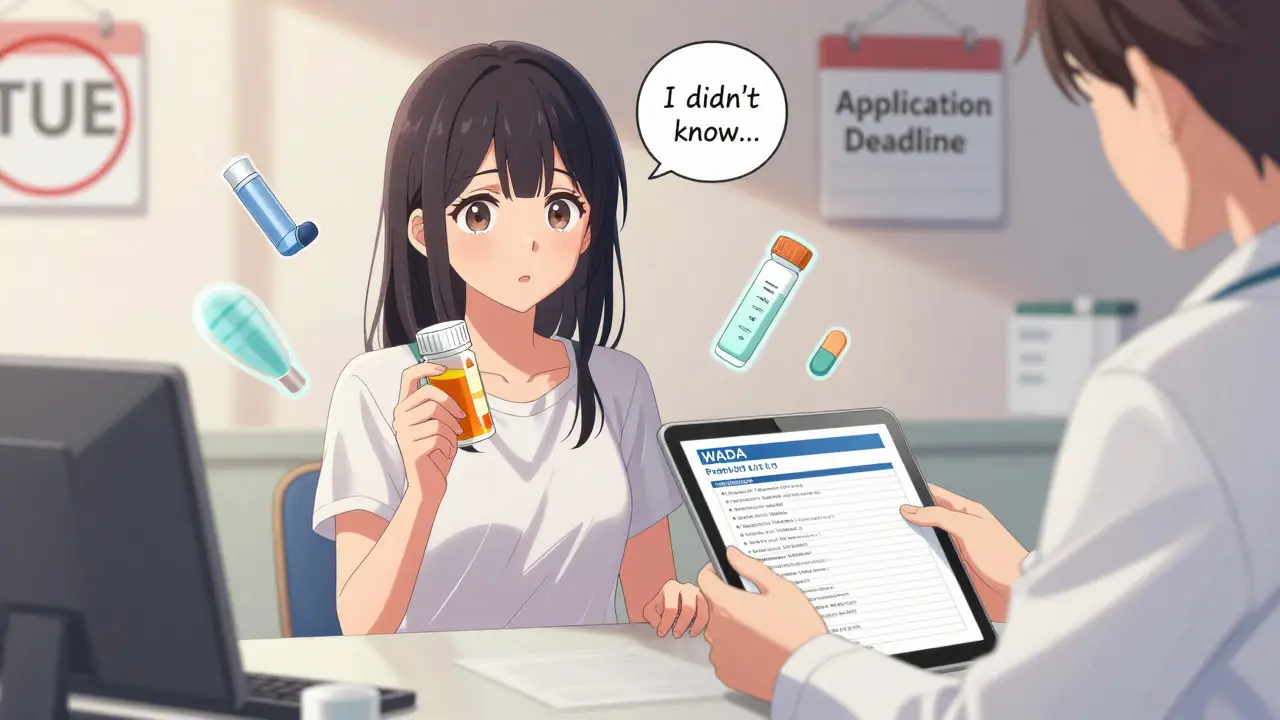
Think about it: if you’re on Adderall for ADHD, you might assume it’s fine because it’s legal with a prescription. But in sport, it’s a banned stimulant unless you have a Therapeutic Use Exemption (TUE). Same with prednisone for allergies, albuterol for asthma, or even insulin for diabetes. None of these are “doping drugs.” But they’re still on the Prohibited List. And if you use them without clearance, you’re breaking the rules.
The Prohibited List: What’s Banned and Why
The World Anti-Doping Agency updates its Prohibited List every year. The 2024 version includes over 250 specific substances, grouped into categories like anabolic agents, peptide hormones, beta-2 agonists, and hormone modulators. Not all of them are banned all the time. Some are only forbidden during competition. Others are banned 24/7.
- Beta-2 agonists like salbutamol (albuterol) are allowed by inhalation-but only up to 1,600 micrograms in 24 hours. Go over that, and you’re in violation. Oral forms? Always banned.
- Corticosteroids like prednisone or dexamethasone are prohibited in-competition unless you have a TUE. Even topical creams can be flagged if used on large areas of skin or near joints.
- Stimulants like methylphenidate (Ritalin) and modafinil are banned in-competition. Some athletes take them for focus or fatigue. But without a TUE? It’s a violation.
- Insulin and other diabetes medications are not banned, but their use must be documented. If you’re using insulin and you’re tested, you need proof of diagnosis and treatment plan.
Side effects matter, too. Using high doses of beta-2 agonists to get a performance boost can cause heart palpitations, tremors, or even cardiac arrhythmias. Corticosteroids, if misused, can lead to adrenal suppression, bone loss, or mood swings. Athletes aren’t just risking their careers-they’re risking their health.
Therapeutic Use Exemptions (TUE): Your Legal Path Forward
So what do you do if you need a banned medication? Apply for a TUE. It’s not a loophole. It’s a formal, documented exception. To qualify, you must meet four criteria:
- You have a diagnosed medical condition that requires treatment with the prohibited substance.
- The medication won’t give you an unfair performance advantage-it only restores you to normal health.
- No reasonable permitted alternative exists.
- You applied before using it (unless it was an emergency).
The process varies by level. International athletes apply through their sport’s federation. National-level athletes in the U.S. go through USADA. The approval rate? Around 94% for initial applications. But here’s the catch: you can’t wait until the day before a meet. USADA reports an average processing time of 18.7 days. Some cases take months. One NCAA athlete spent 11 months getting approval for Adderall-after three failed applications and specialist consultations.
Documentation is everything. USADA requires full medical records: lab results, diagnosis letters, treatment history. In 2022, 78% of denied TUEs were turned down because the paperwork was incomplete. If your doctor hasn’t dealt with anti-doping rules before, they might not know what to provide. That’s why you need to bring WADA’s resources to them.
Global DRO: Your First Line of Defense
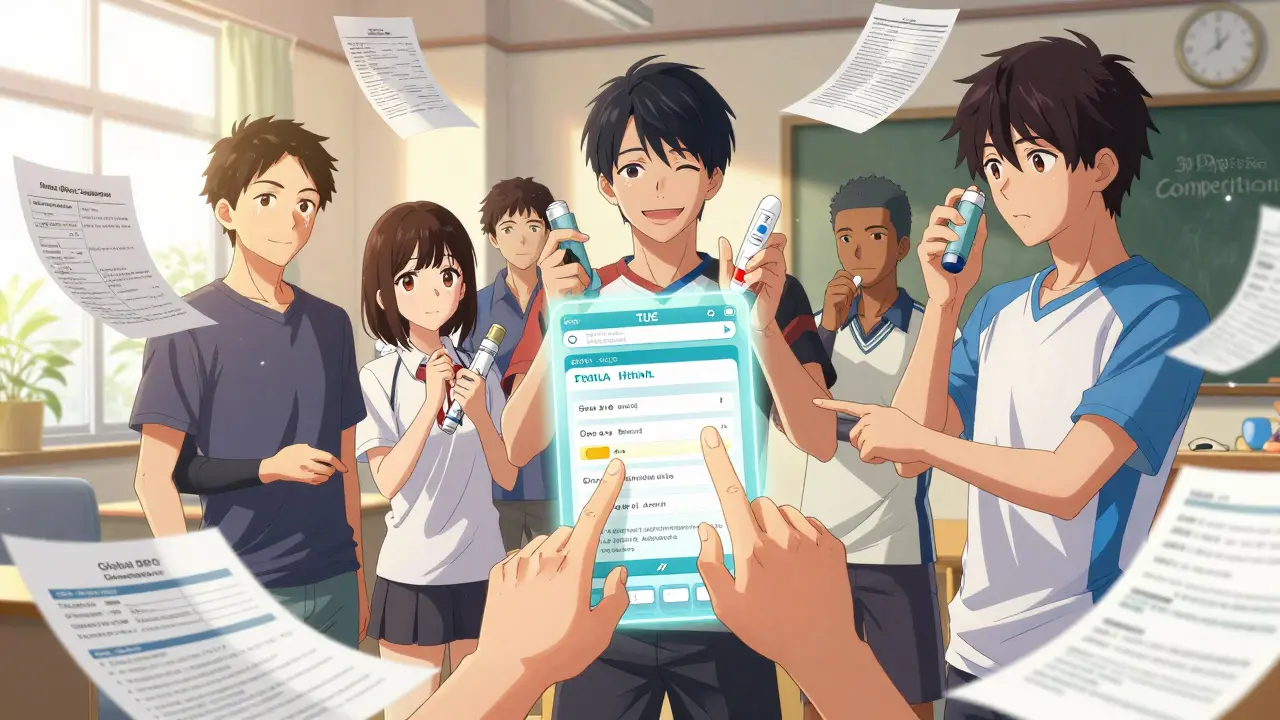
Before you take any pill, spray, or injection-check Global DRO. It’s free, online, and updated daily. Run by USADA, UKAD, and other national agencies, it lets you search over 1,200 medications by brand name, generic name, or country of purchase. Just select your sport, your country, and your athlete status. The system tells you exactly what’s allowed, what’s not, and what dosage limits apply.
For example: In the U.S., you can use an albuterol inhaler up to 1,600 mcg/day. In Canada? Same. But if you buy it in Mexico, the formulation might be different. Global DRO accounts for that. And it’s not just for inhalers. It covers cold medicines, painkillers, supplements, even eye drops. One swimmer tested positive for pseudoephedrine because he took a “natural” cold remedy. Global DRO would’ve flagged it.
Doctors Don’t Always Know the Rules
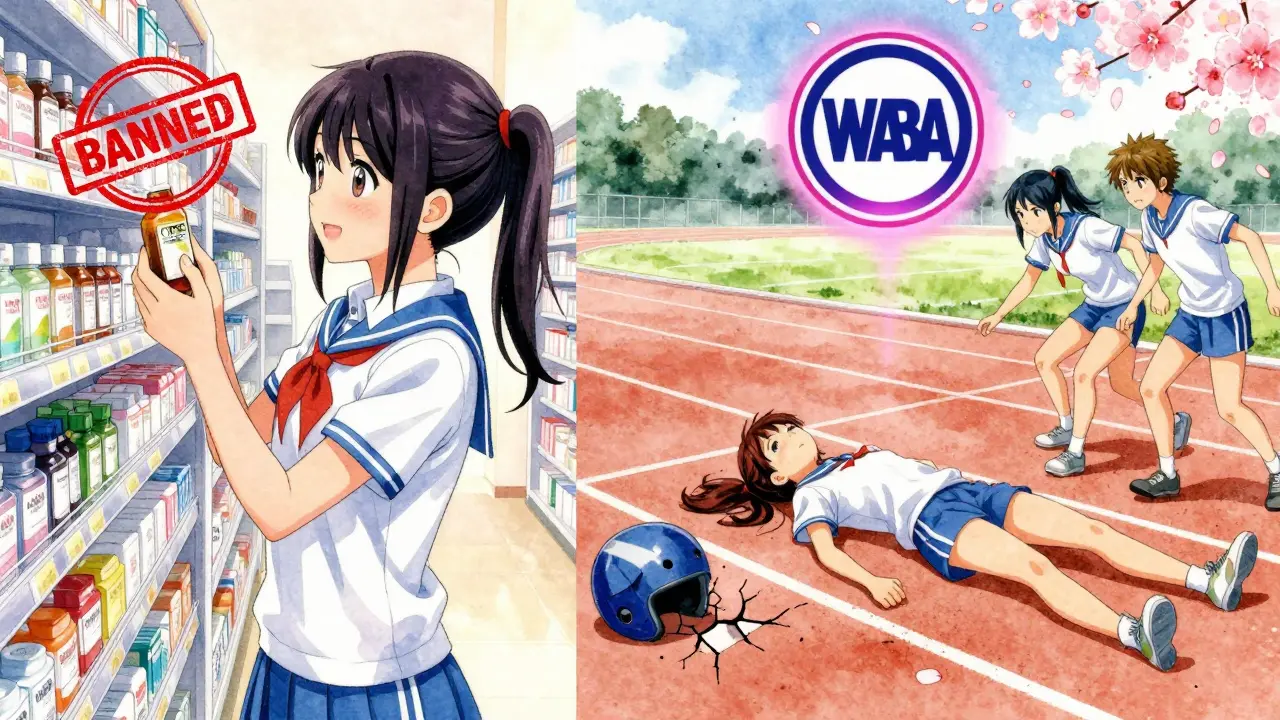
Here’s the scary part: most doctors don’t know anti-doping rules. A 2022 study found that 68% of athletes said their physicians had little to no knowledge of WADA’s Prohibited List. Even worse-63% of physicians treating athletes had never even looked at it. They’re prescribing based on medical need, not sport regulations. And that’s how clean athletes get caught.
That’s why you need to educate your doctor. Print out WADA’s “Check Your Medication” toolkit. Bring the Global DRO results with you. Say: “I’m an athlete. This medication might be banned. Can you confirm it’s safe?” Some clinics now have anti-doping coordinators. Others don’t. If your doctor shrugs, find one who doesn’t.
Side Effects and Health Risks You Can’t Ignore
Let’s say you get your TUE approved. That doesn’t mean you’re in the clear. Many medications carry hidden risks when used by athletes.
- Corticosteroids can suppress your adrenal glands. If you get injured or stressed, your body might not respond. That’s dangerous during competition.
- Beta-2 agonists can raise your heart rate dangerously high. Athletes with undiagnosed arrhythmias have collapsed on the track.
- Stimulants can mask fatigue. You might push past your limits, leading to overtraining or injury.
- Insulin requires precise timing. Misuse can cause hypoglycemia during training or competition.
Dr. Richard Budgett, WADA’s Medical Director, says glucocorticoids, asthma meds, and growth hormone make up over 60% of all TUE applications. That’s not because athletes are gaming the system. It’s because these are common, necessary treatments. But they’re not harmless. Your health comes first. But so does your career. You need both.
What Happens If You Skip the Process?
Skipping a TUE? That’s an Anti-Doping Rule Violation. Penalties range from warnings to four-year bans. And it’s not just your competition that’s affected. Sponsorships vanish. Scholarships get revoked. College teams drop you. Your name might appear in public databases.
And it’s not just elite athletes. Even high schoolers in NCAA-eligible sports, or adults in local triathlons, are subject to testing. If your sport is governed by a National Governing Body that follows WADA rules-which most are-you’re covered. No exceptions.
Real Stories: The Cost of Not Knowing
A 17-year-old swimmer in Florida stopped her insulin because she was scared of testing positive. Her blood sugar crashed during training. She passed out. She didn’t need a TUE-insulin isn’t banned-but she didn’t know that. Her coach didn’t know either.
A college runner took a OTC cough syrup for a cold. It contained pseudoephedrine. He tested positive. He lost his season. He sued the pharmacy. They had no warning on the label.
These aren’t rare. A 2023 USADA survey found that 28% of youth athletes stopped taking necessary medications out of fear. That’s not discipline. That’s a public health crisis.
What You Need to Do Right Now
If you’re an athlete, here’s your action plan:
- Check every medication on Global DRO before taking it-even if you’ve used it before.
- Talk to your doctor using WADA’s resources. Don’t assume they know.
- Apply for a TUE at least 30 days before competition. Don’t wait.
- Track clearance times. Some substances take days to leave your system. Don’t guess.
- Keep copies of all prescriptions, TUE approvals, and lab results.
There’s no excuse for ignorance anymore. Tools exist. Resources are free. The system isn’t perfect-but it’s workable. The only thing that can get you in trouble now is not doing the work.
What’s Changing in 2025
WADA is pushing harder for change. In 2024, they started requiring pharmaceutical companies to label drugs with anti-doping status. Pilot programs in Europe cut inadvertent violations by 45%. By 2027, they aim to reduce medication-related violations by 30% through better doctor education. That’s progress. But it won’t help you tomorrow.
Until then, you’re on your own. And the rules aren’t going away. They’re getting stricter.
Sophia Nelson
February 12, 2026 AT 15:02This whole system is a joke. Athletes get banned for taking NyQuil, but guys on steroids in the backrooms of gyms? Nothing. It’s not about fairness-it’s about control. They don’t care if you’re healthy, they care if you’re compliant.
And don’t even get me started on how they treat athletes from developing countries who can’t afford TUE lawyers. This is class warfare with a doping badge.
Annie Joyce
February 14, 2026 AT 10:23I’m a physical therapist who works with high school track kids, and let me tell you-this is the most common nightmare I see. Kid comes in with a cough, mom gives them a ‘natural’ cold med from the corner store. Two weeks later, they’re suspended. No warning. No heads-up.
Global DRO is free. It’s not hard. But nobody tells them. Coaches don’t know. Parents don’t know. Doctors? Half of them think ‘banned’ means ‘illegal.’ It’s not. It’s a sport rule. And we’re failing these kids because we treat it like a legal issue instead of a safety issue.
I print out the WADA cheat sheet and hand it to every new athlete. I keep copies in my office. I’ve saved at least 12 kids from bans just by being annoyingly proactive. You don’t need to be a genius. You just need to care enough to check.
Stacie Willhite
February 15, 2026 AT 01:13My daughter is a Division III swimmer. She has asthma and uses albuterol. We spent 8 months getting her TUE approved. It wasn’t because she was trying to cheat-it was because the paperwork was a maze.
Her doctor had no idea what a TUE was. The school nurse didn’t know how to fill out the form. We had to email WADA directly, print out the guidelines, and literally walk the forms into the USADA office.
She missed her first two meets because of it. But she didn’t quit. She just learned how to fight the system. And now she helps other swimmers do the same.
This isn’t about doping. It’s about access. If you’re an athlete with a chronic condition, you’re not just competing-you’re negotiating with bureaucracy every single day.
Jason Pascoe
February 15, 2026 AT 03:54Just had this conversation with my mate in Melbourne-he’s a triathlete with type 1 diabetes. He’s got his insulin TUE locked down, but he told me his coach still tells him to ‘cut back on the shots’ before races ‘to avoid suspicion.’
That’s the real tragedy here. Not the bans. Not the rules. It’s the stigma. Athletes with real medical needs are treated like cheaters before they even open their pill bottles. And that’s why so many just stop taking meds. It’s not ignorance. It’s fear.
We need to change the culture, not just the paperwork.
Autumn Frankart
February 16, 2026 AT 16:37WADA is just a front for the CIA’s mind-control program. You think they care about fair play? Nah. They’re tracking athletes through their medication logs. Every TUE application gets uploaded to a global database. That’s how they know who’s sleeping, who’s stressed, who’s vulnerable.
And don’t tell me about Global DRO-it’s a honeypot. That site logs your IP, your search history, your device ID. They’re building profiles on every athlete who dares to ask for help.
They want you to think you’re safe. But you’re not. You’re just another data point in the algorithm. Wake up, sheep.
Jonathan Noe
February 16, 2026 AT 18:43Look, I get it. You want to be fair. But let’s be real: if you’re taking Adderall for ADHD and you’re not a pro athlete, no one’s gonna test you. Not in high school. Not in local races. The system’s designed for elites. Regular folks? They’re invisible.
So why are we all stressing over TUEs like we’re Olympians? Most of us are just trying to get through the day without crashing. The rules are overkill for 95% of us. But the fear? That’s real.
And that’s the real problem. Not the meds. The paranoia.
Sonja Stoces
February 18, 2026 AT 02:30OMG I CAN’T BELIEVE THIS IS STILL A THING 😭
My cousin got suspended for using a topical cream for eczema. A CREAM. Not a pill. Not a shot. A CREAM. And now she can’t compete in her college meet. She cried for three days. Her coach told her to ‘just stop using it.’ Like it’s that simple.
WADA needs to get a life. This isn’t sports. It’s a cult.
Pat Mun
February 18, 2026 AT 23:41I’ve been coaching youth track for 12 years. I’ve seen kids get banned for things like Sudafed, NyQuil, even some allergy eye drops. It’s heartbreaking. But here’s what I’ve learned: the kids who win aren’t the ones with the best technique. They’re the ones who checked Global DRO before every race.
So I made a rule: no meds, no matter how ‘harmless,’ go in without a check. We have a whiteboard in the locker room. Every kid writes down every pill, spray, or patch they take. We look it up together. It takes 90 seconds.
It’s not perfect. But it’s saved 23 kids from bans so far. And honestly? It’s made them more responsible. They don’t see it as a trap anymore. They see it as part of the game. And that’s the shift we need.
Knowledge isn’t power-it’s protection.
Luke Trouten
February 20, 2026 AT 22:56The concept of strict liability is logically consistent within the framework of anti-doping governance, but ethically, it operates on a presumption of culpability rather than intent. This is a jurisprudential anomaly in a system that otherwise purports to value fairness.
One might argue that the burden of proof should be on the governing bodies to demonstrate intent or negligence, rather than placing the entire weight of regulatory compliance on the individual athlete-many of whom are minors or lack access to specialized medical advisors.
Furthermore, the asymmetry between the resources available to elite athletes (legal teams, TUE specialists) and those at the grassroots level creates a structural inequity that undermines the very notion of ‘clean sport.’
We must ask: is the goal to protect integrity, or to enforce conformity?
Rob Turner
February 21, 2026 AT 06:20Yeh mate, I’ve been there. Got flagged in a UK test for taking a nasal spray I didn’t even know was banned. Turns out the UK version had a different active ingredient than the one I used in Australia.
Had to fly back to London, submit 17 pages of docs, get my GP to write a letter explaining why I needed it. Took 5 weeks. Missed a national qualifier.
Global DRO saved me in the end, but only because I stumbled on it by accident. If I hadn’t, I’d still be banned.
Point is: the system’s broken. But it’s not the athletes’ fault. It’s the lack of clear, accessible info. We need a ‘Medication Safety Net’-like a 1-800 hotline for athletes. Not a website. A person. Someone who answers the phone and says, ‘Yeah, that’s banned. Try this instead.’
Simple. Human. Needed.
Skilken Awe
February 22, 2026 AT 16:06Oh wow. So now we’re treating athletes like lab rats with a prescription pad? ‘Check your meds’? Bro. If you’re taking insulin or prednisone, you’re already compromised. Why are we pretending this is about fairness?
Let’s be honest: the only reason these rules exist is because rich people don’t want poor people to have access to the same meds they use to win.
It’s not about doping. It’s about class. And the TUE system? That’s just the velvet rope.
Also-did you know WADA gets funding from pharmaceutical companies? Coincidence? I think not.
Steve DESTIVELLE
February 24, 2026 AT 06:15When one considers the essence of athletic competition it becomes evident that the notion of purity is a myth constructed by institutions seeking control over the human body
Every athlete is a vessel of chemical possibility
The body does not distinguish between natural and synthetic
It responds to stimulus
Period
Therefore the prohibition of certain substances is not about fairness but about hierarchy
Who decides what is therapeutic and what is enhancement?
The same people who decide who gets to be an athlete
And who gets to be a criminal
So I ask you
Are you competing against others
Or are you competing against the system itself
And if so
What is your strategy
For survival
For dignity
For truth
andres az
February 24, 2026 AT 07:13They say ‘check Global DRO’ like it’s that easy. But what if you’re in a rural town with no internet? What if your phone data cuts out? What if you’re overseas and the site doesn’t have your country’s meds?
And who’s gonna check it for a 14-year-old who just got diagnosed with asthma?
Parents? Coaches? They’re clueless.
This isn’t a system. It’s a trap. And it’s designed to catch the vulnerable.
They don’t want you to compete. They want you to quit.
Gabriella Adams
February 25, 2026 AT 20:29As an athlete with a chronic autoimmune condition, I have been on corticosteroids for over a decade. I hold a valid TUE. I have submitted over 200 pages of medical documentation. I have undergone multiple audits. I have never missed a test.
Yet, I still receive emails from strangers asking if I’m ‘really sick’ or if I’m just ‘gaming the system.’
It’s not the rules that are broken. It’s the perception.
So I do this: I carry a laminated card in my wallet. It says: ‘I have lupus. I take prednisone under a valid TUE. Here is my TUE number.’
I show it to officials. I show it to journalists. I show it to doubters.
Because if I don’t, someone else’s child will grow up thinking that needing medicine makes them a cheater.
And that? That’s the real doping.