
Antiretroviral Therapy and Common Medications: High-Risk Interactions You Can't Ignore
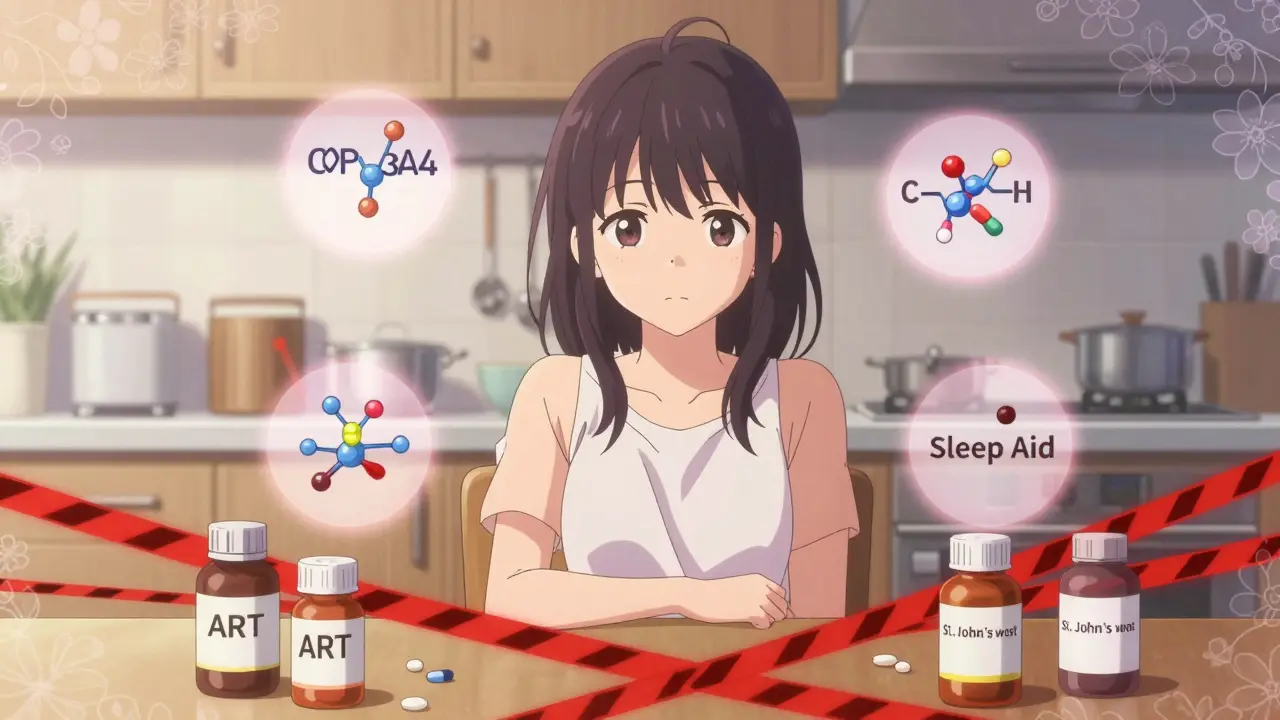
When you're taking antiretroviral therapy (ART) to manage HIV, you're not just managing one condition-you're managing a complex web of medications that can clash dangerously with everyday drugs. It's not just about popping pills. It's about knowing which ones could stop your HIV treatment from working-or worse, send you to the hospital.
Why ART Interactions Are a Silent Threat
Most people don’t realize how many medications they’re taking until they sit down and list them all. For someone over 50 with HIV, that list often includes blood pressure pills, cholesterol drugs, pain relievers, sleep aids, and even herbal supplements. About 40-60% of older adults with HIV take five or more medications at once. That’s called polypharmacy. And with that comes a growing risk: drug interactions that can be deadly. The real danger isn’t just between two prescription drugs. It’s between your HIV meds and something you bought over the counter-like ibuprofen, a sleep aid, or even St. John’s Wort. These aren’t rare edge cases. A 2022 study found that antiretroviral drugs were involved in 37% of the most common dangerous drug interactions among people with HIV. Statins came in second at 19%. And many of these interactions happen because of how your body breaks down drugs-specifically, through a system called the cytochrome P450 (CYP) enzyme pathway.Not All ART Is the Same: The Interaction Risk Spectrum
Think of antiretrovirals like a group of coworkers with different personalities. Some are quiet and easy to get along with. Others? They boss everyone around and cause chaos. Protease inhibitors (PIs), especially when boosted with ritonavir or cobicistat, are the bullies of the group. They block the CYP3A4 enzyme-your body’s main drug-processing system. That means other drugs pile up in your bloodstream because they can’t be broken down. Ritonavir alone has over 200 known interactions. That’s more than any other HIV drug. When you combine it with simvastatin or lovastatin, you’re looking at a 20- to 30-fold spike in statin levels. That’s not just risky-it’s life-threatening. Rhabdomyolysis, a condition where muscle tissue breaks down and can cause kidney failure, has killed people because of this combo. Non-nucleoside reverse transcriptase inhibitors (NNRTIs) like efavirenz are the opposite. They don’t block enzymes-they speed them up. That means other drugs get broken down too fast. Efavirenz can slash the levels of birth control pills, antidepressants, and even some antifungals by up to 75%. If you’re on efavirenz and take a common antifungal like ketoconazole, it might not work at all. And if you’re using St. John’s Wort, it can drop efavirenz levels by half-putting your HIV treatment at risk of failure. Integrase strand transfer inhibitors (INSTIs) like dolutegravir and bictegravir are the calm ones. They barely touch the CYP system. Bictegravir has only seven major interactions. Dolutegravir has fewer than 10. That’s why they’re now the first-line choice for most people starting HIV treatment. But don’t assume they’re completely safe. Dolutegravir can lower metformin levels by 33%, which matters if you have diabetes. And if you’re on rifampin (a TB drug), bictegravir’s levels can drop by 71%. That’s enough to let HIV replicate again.High-Risk Interactions You Must Avoid
Some combinations aren’t just risky-they’re absolute no-go zones. Here’s what you need to know:- Statins: Simvastatin and lovastatin are banned with ritonavir or cobicistat. Pitavastatin and fluvastatin are the only safe options. Atorvastatin is okay at low doses, but you’ll need close monitoring.
- Erectile dysfunction drugs: Avanafil is completely off-limits with boosted PIs. Sildenafil (Viagra) can still be used-but only at 25mg every 48 hours, not the usual 50-100mg. Tadalafil is safer, but still needs a lower dose.
- Inhaled steroids: Fluticasone and budesonide nasal sprays can cause adrenal insufficiency or Cushing’s syndrome when used with boosted PIs. One study found 17% of patients on these combos ended up hospitalized. Switch to beclomethasone or mometasone instead.
- Immunosuppressants: Tacrolimus, cyclosporine, and sirolimus can spike to toxic levels with ritonavir. If you switch from a boosted PI to dolutegravir, your tacrolimus dose usually needs to drop by 75%.
- Antidepressants: Fluoxetine and sertraline can build up dangerously with ritonavir, raising the risk of serotonin syndrome-a condition that causes fever, confusion, rapid heartbeat, and muscle rigidity. Dose reductions are often needed.
- Herbal supplements: St. John’s Wort is a known enemy of efavirenz and rilpivirine. It’s not just a mild interaction-it can make your HIV treatment useless.
What About Newer Drugs? Lenacapavir and Long-Acting Injections
The HIV treatment landscape is changing. Long-acting injectables like cabotegravir and rilpivirine are now available. You get them once a month or every two months. Sounds convenient, right? But here’s the catch: these drugs stay in your body for months. Cabotegravir’s half-life is 40 days. Rilpivirine’s is 55 days. That means if you take a risky drug like a statin or an opioid while on these injections, the interaction doesn’t go away when you stop the other drug. It lingers. And now there’s lenacapavir, injected just twice a year. It’s a game-changer for adherence-but it also blocks CYP3A. That means you can’t take colchicine (used for gout) or certain anti-nausea drugs like aprepitant. If you’re on lenacapavir, your doctor needs to review every medication you take, even if you’ve been on it for years.How to Protect Yourself: A Practical Checklist
You don’t need to be a pharmacist to stay safe. Here’s what you can do:- Make a full list of everything you take: Prescription, over-the-counter, vitamins, herbal supplements, and even recreational drugs. Include dosages and how often you take them.
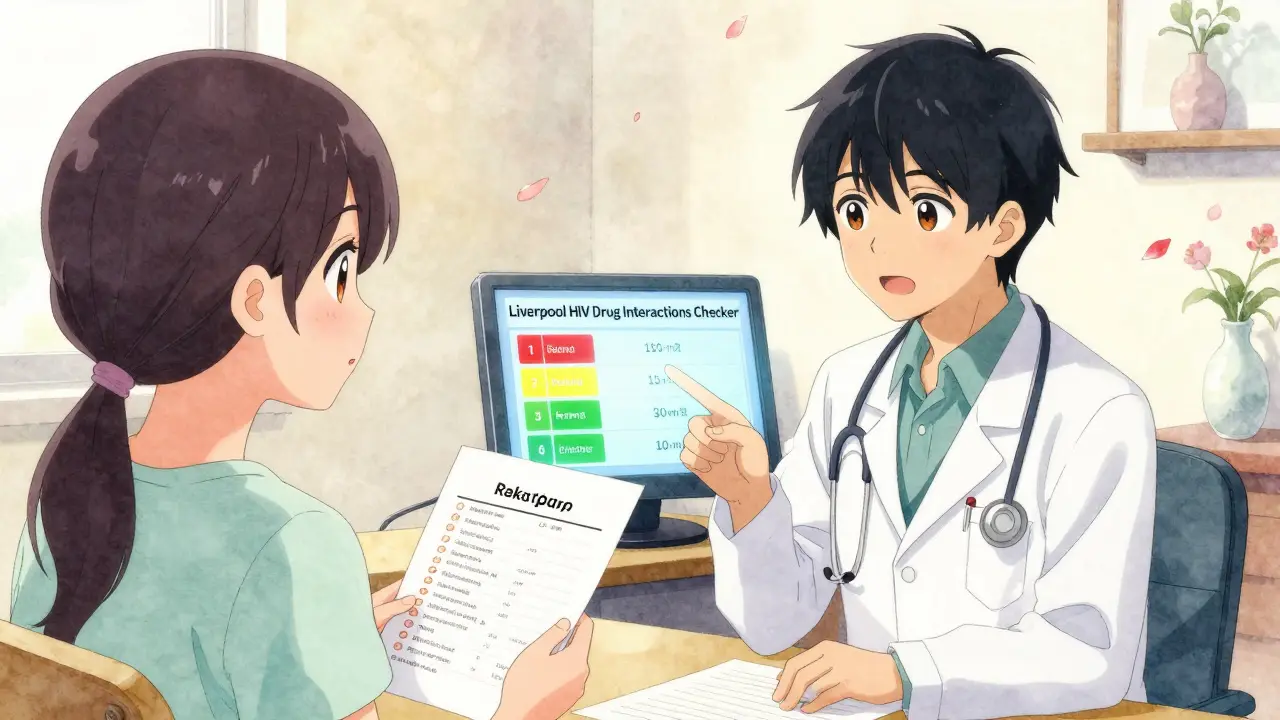
- Use the Liverpool HIV Drug Interactions Checker: It’s free, updated monthly, and trusted worldwide. Type in your HIV meds and any other drug-you’ll get a clear risk rating: safe, caution, or contraindicated.
- Bring your list to every doctor’s visit: Even if it’s not an HIV specialist. Your cardiologist, rheumatologist, or primary care provider may not know your ART regimen. Don’t assume they’ll ask.
- Don’t start new meds without checking: That includes OTC painkillers, sleep aids, or allergy meds. Even something as simple as omeprazole (Prilosec) can interfere with dolutegravir if taken at the same time.
- Ask about alternatives: If your doctor prescribes a statin, ask: “Is there a version that won’t interact with my HIV meds?” The answer is almost always yes.
What Happens When You Stop a Booster?
Switching from a ritonavir-boosted regimen to an INSTI-based one sounds like a win. Fewer interactions, fewer side effects. But here’s the trap: when you stop ritonavir, your body suddenly starts processing other drugs again. That means drugs you were safely taking before might now build up to toxic levels. For example, if you were on ritonavir with tacrolimus (for a transplant), your tacrolimus level was kept low. When you switch off ritonavir, your body starts breaking down tacrolimus slower. If you don’t reduce the dose, you could get kidney damage or seizures. This isn’t theoretical. It’s happened. Always adjust doses under medical supervision when changing ART regimens.Why This Matters More Than Ever
In 2005, only 12% of people with HIV were over 50. Today, it’s 52%. That means more people are living longer with HIV-and managing more chronic conditions. Heart disease, diabetes, high blood pressure, depression, arthritis. All of these need medications. And all of them can interact with ART. The Department of Veterans Affairs found that veterans with HIV over 65 take an average of 9.2 medications. Two-thirds of them have at least one dangerous interaction. And it’s not just older adults. People with HIV are now more likely to have metabolic syndrome than the general population. That means more statins, more metformin, more blood pressure drugs-all of which can clash with ART. The good news? The future is getting safer. New drugs like lenacapavir and other next-generation antiretrovirals are being designed to avoid CYP interactions. By 2030, experts predict new ART regimens will have 80% fewer dangerous interactions than today’s boosted PIs. But until then, you can’t afford to guess.Can I take ibuprofen with my HIV meds?
Yes, ibuprofen is generally safe with most antiretrovirals. But if you’re on a boosted PI like ritonavir or cobicistat, long-term or high-dose use may slightly increase the risk of kidney stress. Stick to the lowest effective dose for the shortest time. Always check with your doctor if you’re taking other kidney-affecting drugs like tenofovir.
Is it safe to use CBD oil with ART?
CBD can interfere with CYP3A4 and CYP2C19 enzymes, which are used by many HIV drugs. It can raise levels of boosted PIs and some NNRTIs, increasing side effects. It can also lower levels of dolutegravir. There’s not enough data to say it’s safe. Most experts recommend avoiding CBD unless under close medical supervision.
Why can’t I take St. John’s Wort with HIV meds?
St. John’s Wort strongly activates the CYP3A4 enzyme. This causes drugs like efavirenz, rilpivirine, and even some INSTIs to break down too fast. Studies show it can drop efavirenz levels by 50-60%, which can lead to treatment failure and drug resistance. Even small amounts can cause this. Avoid it completely.
Do I need to stop my cholesterol meds if I start a new HIV regimen?
Not necessarily. But you’ll likely need to switch. Simvastatin and lovastatin are banned with boosted PIs. Pitavastatin and fluvastatin are safe. Atorvastatin can be used at low doses. Your doctor will check your lipid levels and adjust your statin based on your ART. Never stop a statin on your own-high cholesterol is a major risk for heart disease in people with HIV.
What should I do if I’m on a long-acting HIV injection?
Your interaction risk doesn’t end after your last shot. Cabotegravir and rilpivirine stay in your body for months. If you start a new medication-like a steroid, painkiller, or antidepressant-it could interact with the drug still in your system. Always tell your provider you’re on long-acting ART before starting anything new. Keep using the Liverpool HIV Drug Interactions Checker even between injections.
Melissa Taylor
December 16, 2025 AT 09:29Thank you for laying this out so clearly. I’ve been on ART for 12 years and never realized how many OTC meds could mess with my regimen. I just started taking melatonin for sleep and now I’m scared to even take Advil. This post saved me from a potential disaster.
John Brown
December 18, 2025 AT 07:19Man, I wish my doctor had told me this before I started on that boosted PI. I was on simvastatin for years and never knew it was a ticking time bomb. Now I’m on pitavastatin and my muscle pain is gone. Also, ditched St. John’s Wort after reading this-no more weird mood swings. Big ups for the Liverpool tool link.
Benjamin Glover
December 18, 2025 AT 10:26Amateur hour. If you can’t manage polypharmacy, you shouldn’t be on ART. This isn’t a parenting blog-it’s medicine. Stop treating HIV like a lifestyle choice.
Raj Kumar
December 19, 2025 AT 03:17Bro, this is legit. I’m from Delhi and we get so many people here on ART who buy random herbs from the market-St. John’s Wort, ashwagandha, turmeric pills. No one checks interactions. My cousin almost went into kidney failure from mixing ritonavir with a ‘natural’ immune booster. Please share this with more folks.
Jocelyn Lachapelle
December 19, 2025 AT 13:46So many people think if it’s natural it’s safe. St. John’s Wort isn’t tea. It’s a drug. And it’s not just about HIV-it’s about your whole system. I’m glad someone finally said this out loud. This should be mandatory reading for every HIV clinic.
Michelle M
December 21, 2025 AT 01:08It’s wild how we treat HIV like it’s just another chronic illness when in reality it’s a whole new layer of complexity. We’re not just managing a virus-we’re managing a biological ecosystem where every pill has a voice. And most of us don’t even know how to listen.
Lisa Davies
December 21, 2025 AT 13:47THIS. 🙌 I’m on dolutegravir and just started taking CBD for anxiety. Now I’m terrified. I’m calling my pharmacist tomorrow. Thank you for the checklist. I printed it out and taped it to my fridge.
Nupur Vimal
December 22, 2025 AT 14:17Why do people still take ibuprofen with tenofovir they think it's fine? It's not. You're just being lazy. Your kidneys don't care if you're 'just' taking it for a headache. You think you're being smart but you're just one step away from dialysis. And CBD? Don't even get me started. You think you're healing yourself but you're just poisoning your meds.
Jake Sinatra
December 23, 2025 AT 12:34As a clinical pharmacist with over 15 years in infectious disease, I can confirm every point in this post. The Liverpool tool is gold. I use it daily. I also recommend patients keep a physical med list in their wallet. Many ER staff don’t ask about ART. They assume you’re just ‘on pills.’ This saves lives.
RONALD Randolph
December 25, 2025 AT 00:16Who let this post go live? This is why America is falling apart. People think they can just Google their meds and survive. You need a doctor. A real one. Not some blogger with a checklist. And why are we even talking about CBD? That’s a federal offense in 37 states. Wake up.
Christina Bischof
December 26, 2025 AT 03:57I’ve been on cabotegravir for a year. I just started a new antidepressant last month. I used the Liverpool tool before taking it-thank god I did. It flagged a moderate interaction. My doctor lowered the dose. I didn’t panic. I just checked. That’s all it takes.
Cassie Henriques
December 27, 2025 AT 04:47Can we talk about the CYP3A4 pathway? It’s the reason everything goes sideways. PIs are like a wall. NNRTIs are like a vacuum. INSTIs? They just chill. But even then, dolutegravir + metformin? That’s a sneaky one. Most docs miss it. I had to bring a paper to my endo to get them to adjust my dose. Knowledge is power, but you gotta fight for it.
Mike Nordby
December 28, 2025 AT 22:39When I switched from a boosted PI to bictegravir, my tacrolimus levels spiked. I didn’t know until I started having tremors. Now I’m on a new regimen and my transplant team checks my levels every two weeks. This isn’t optional. It’s survival. Thank you for the clarity.
John Samuel
December 30, 2025 AT 19:07This isn’t just a post-it’s a manifesto. The future of HIV care isn’t in fancy labs or billion-dollar drugs. It’s in the quiet, disciplined act of checking interactions, keeping lists, and refusing to assume. We are not patients. We are architects of our own survival. And this? This is the blueprint.