
Anaphylaxis: Recognizing Severe Allergic Reactions and When to Use Epinephrine
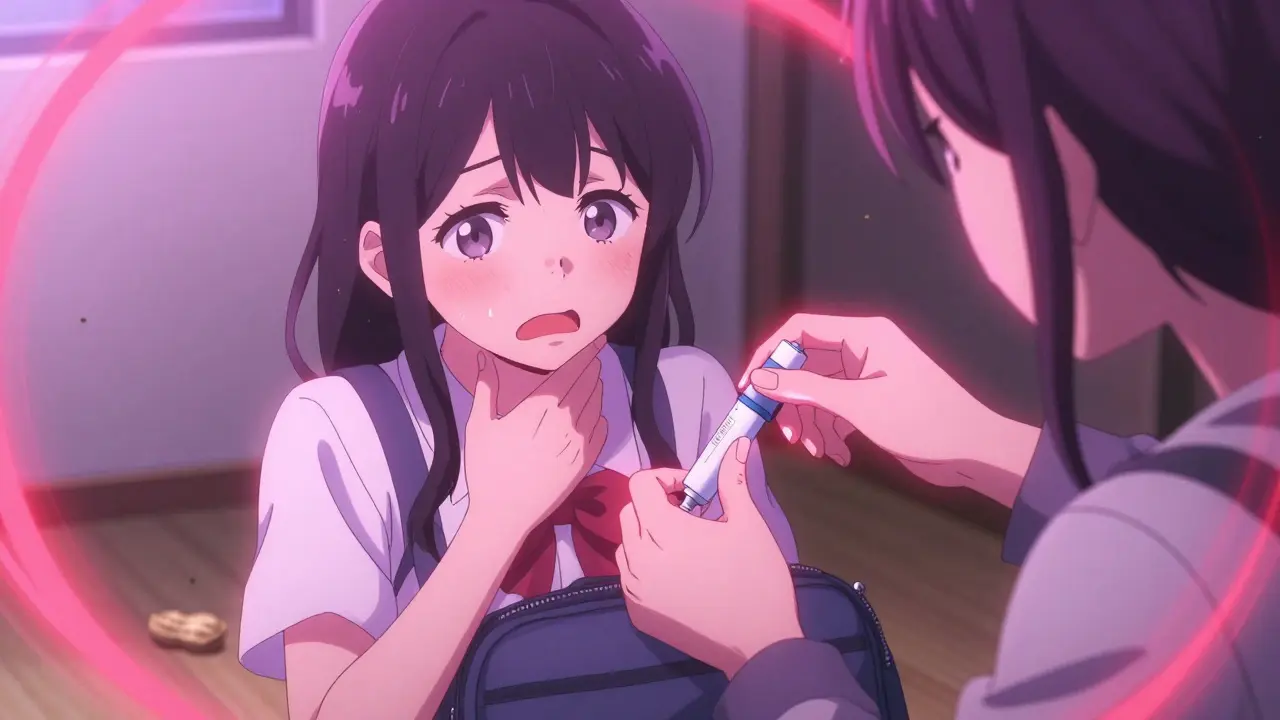
When your body overreacts to something harmless-like peanuts, a bee sting, or even a medication-it can trigger a life-threatening response called anaphylaxis. This isn’t just a bad rash or a stuffy nose. Anaphylaxis shuts down your airways, drops your blood pressure, and can kill you in minutes if you don’t act fast. The good news? There’s a treatment that works-epinephrine. And knowing when and how to use it can save a life.
What Exactly Is Anaphylaxis?
Anaphylaxis is a sudden, full-body allergic reaction that hits hard and fast. It doesn’t sneak up. It crashes in-sometimes within seconds of exposure to an allergen. The body releases chemicals that cause blood vessels to leak, muscles to tighten, and airways to swell. This isn’t just discomfort. It’s a medical emergency.The signs aren’t always obvious at first. You might see hives or swelling around the lips or eyes. But then comes the real danger: trouble breathing, wheezing, a feeling of your throat closing, dizziness, or a sudden drop in blood pressure. Some people get nausea, vomiting, or diarrhea. Others feel like they’re going to pass out. These symptoms don’t wait. They escalate.
According to the Resuscitation Council UK’s 2021 guidelines, you’re likely having anaphylaxis if you develop skin symptoms (like hives or swelling) plus trouble breathing or low blood pressure-or if you have two or more of these symptoms after exposure to a likely allergen. That’s the rule doctors use to diagnose it in the ER. And it’s the same rule you should use to decide when to act.
What Triggers Anaphylaxis?
Not all allergies lead to anaphylaxis. But some triggers are far more dangerous than others.Food is the number one cause. Peanuts, tree nuts, shellfish, milk, and eggs account for about 90% of food-related anaphylactic reactions in the U.S. The rise in peanut allergies alone-tripling in children between 1997 and 2008-has made this a growing public health issue.
Insect stings are another major culprit. Bees, wasps, hornets, and fire ants can send someone into anaphylaxis with a single sting. About 9.5% of all anaphylaxis cases in U.S. emergency rooms come from insect venom.
Medications like penicillin and other antibiotics cause about 75% of drug-induced anaphylaxis. Latex, found in gloves and medical equipment, can trigger reactions in healthcare workers and patients alike. Even exercise, cold, or certain foods combined with physical activity can cause rare but serious reactions.
The key isn’t just knowing your triggers-it’s knowing that even if you’ve had a mild reaction before, the next one could be deadly. Anaphylaxis doesn’t care about your history. It only cares about what’s happening right now.
Why Epinephrine Is the Only Treatment That Matters
You’ve probably heard people say, “Take an antihistamine like Benadryl.” Don’t. Not if you suspect anaphylaxis.Antihistamines do nothing to stop airway swelling or low blood pressure. A 2012 Cochrane review found they have zero effectiveness as the only treatment for anaphylaxis. Steroids? They might help prevent a second wave of symptoms hours later, but they don’t help in the first 10 minutes-when you need help the most.
Epinephrine is the only thing that reverses the deadly effects of anaphylaxis. It works by tightening blood vessels (raising blood pressure), opening airways (helping you breathe), and stopping the flood of harmful chemicals your body is releasing.
Studies show that when epinephrine is given right away, 85% of patients improve within five minutes. If you wait more than 30 minutes? Your chance of dying goes up dramatically. In fact, delaying epinephrine is the single biggest predictor of poor outcomes, according to experts at UCLA and Johns Hopkins.
There’s no substitute. No pill. No spray. No home remedy. Just epinephrine.
How to Use an Epinephrine Auto-Injector
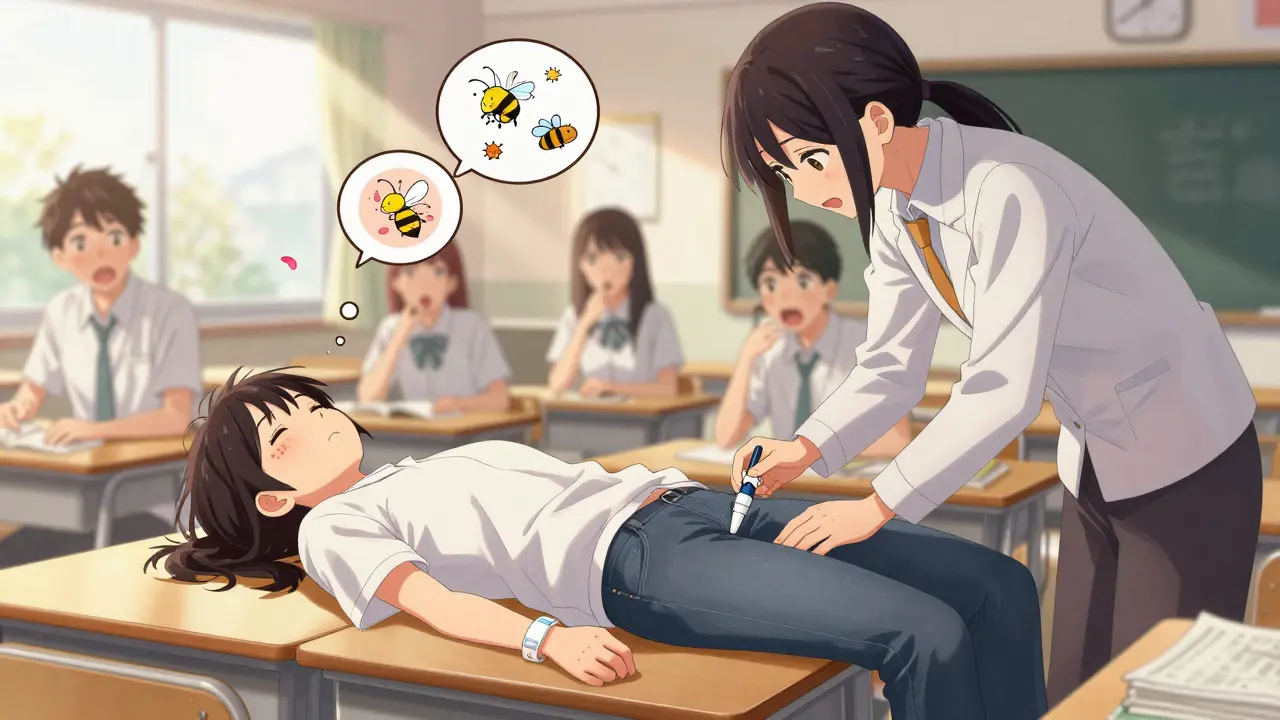
Epinephrine auto-injectors-like EpiPen, Auvi-Q, or Adrenaclick-are designed to be simple. But most people don’t use them correctly.Here’s how to do it right:
- Remove the safety cap.
- Place the injector against the outer thigh-through clothing if needed.
- Push hard until you hear a click. Hold it there for 3 seconds.
- Remove and massage the area for 10 seconds.
It goes into the thigh because that’s where the muscle is thickest, and the drug gets absorbed fastest-within 8 minutes. Injecting into the arm or buttocks? Slower. Less effective.
Adults and teens over 30 kg (about 66 pounds) get 0.3 mg. Kids between 15 and 30 kg get 0.15 mg. Don’t guess. Use the right dose.
And here’s the most important rule: Always call 911 after using epinephrine-even if you feel better. Symptoms can come back hours later in what’s called a biphasic reaction. You need to be monitored for at least 12 hours if you’ve had a severe reaction.
What About the Cost and Access?
Epinephrine auto-injectors cost between $375 and $650 for a two-pack in the U.S. That’s a lot. But here’s the truth: generic versions now make up 70% of prescriptions. Many insurance plans cover them. And some pharmacies offer discount programs-GoodRx coupons can bring the price down to under $150.Still, 30% of people who are prescribed an auto-injector can’t afford to fill it. Low-income patients are 45% less likely to have a current prescription. That’s not just a financial problem-it’s a life-or-death gap.
Thankfully, schools across all 50 states now keep stock epinephrine on hand. That means if a child has a reaction at school, even without their own injector, help is available. Employers and public places are starting to follow.
Common Mistakes and How to Avoid Them
People delay epinephrine for a lot of reasons:- They think it’s just a rash.
- They’re afraid of the needle.
- They wait to see if it gets worse.
- They don’t know how to use the device.
Here’s what you need to do:
- Practice with a trainer device every month. They’re free from manufacturers.
- Store your injector at room temperature. Don’t leave it in a hot car or freezing glove compartment.
- Check the expiration date. Most last 12-18 months. Replace them on time.
- Teach family, friends, coworkers-anyone who might be around you-how to use it.
- Wear a medical alert bracelet.
One study found that 43% of people wait too long because they don’t recognize early symptoms. If you have hives and feel dizzy? That’s not “just bad allergies.” That’s anaphylaxis. Act now.
New Developments: What’s Changing?
The field is evolving. In August 2023, the FDA approved Neffy-a nasal spray version of epinephrine. It’s needle-free and works just as fast. For people terrified of needles, this is a game-changer.Smart injectors are coming too. One prototype connects to your phone via Bluetooth and alerts emergency contacts if it’s used. Others are being designed to track expiration dates and send reminders.
Long-term, drugs like Xolair (omalizumab) are showing promise for people with severe food allergies. In trials, patients needed 67% fewer epinephrine doses after taking it regularly. But it’s not a replacement. It’s a shield. Epinephrine is still the emergency weapon.
Final Reality Check
Anaphylaxis kills about 0.3% to 1% of people who experience it. Most of those deaths happen because epinephrine wasn’t given in time. In emergency rooms, more than half of patients who meet the criteria for anaphylaxis still don’t get it-because staff hesitate, or because they think antihistamines are enough.That’s why education matters. Only 37% of patients discharged after an anaphylaxis episode get a written action plan. And 58% of adults can’t even name the symptoms.
If you or someone you love has a known allergy, get the injector. Know how to use it. Carry it everywhere. Teach others. Don’t wait for a perfect moment. The moment you realize something’s wrong-that’s the moment to act.
Epinephrine doesn’t cure allergies. But it buys you time. And time is the one thing you can’t afford to lose.
Alisa Silvia Bila
December 20, 2025 AT 13:53I had my first anaphylactic reaction at 19-peanut butter on a toast I didn’t even know was contaminated. I thought I was just having a panic attack until my tongue swelled shut. Epinephrine saved me. Now I carry two, always.
Never wait to see if it gets worse. It won’t. It’ll kill you.
And yes, I still hate the thought of using it. But I’d rather be alive and embarrassed than dead and silent.
Marsha Jentzsch
December 20, 2025 AT 16:00Ugh, I HATE when people say ‘just take Benadryl’!! Like, nooo, that’s like putting a bandaid on a grenade!! I had a friend who did that and ended up in the ICU for 3 days!!
And why is epinephrine so expensive?? It’s LIFE-SAVING, not a luxury perfume!!
Also, I swear, if I see one more person storing their EpiPen in their car, I’m going to scream. IT’S NOT A COOLER, PEOPLE!!
Carolyn Benson
December 22, 2025 AT 02:40Epinephrine isn’t a cure-it’s a pause button on death. We treat it like a medical tool, but it’s really a metaphysical intervention: a single injection that forces the body to choose between survival and surrender.
Our society’s obsession with ‘mild reactions’ and ‘waiting it out’ reveals a deeper fear: we don’t want to accept that life is fragile, that a peanut can outmaneuver our entire medical infrastructure.
The real tragedy isn’t the lack of access-it’s that we’ve normalized the idea that death by allergy is somehow ‘predictable,’ and therefore acceptable.
We don’t need more studies. We need more courage.
And maybe, just maybe, we need to stop calling it ‘allergy’ and start calling it what it is: a biological betrayal.
Chris porto
December 23, 2025 AT 07:04I’ve been a paramedic for 15 years. Seen a lot of bad reactions.
Most people panic when they see hives. But the real red flag? When someone says, ‘I’m fine, just a little dizzy.’
That’s the moment you know they’re already losing ground.
Epinephrine isn’t scary-it’s the quietest hero in the room.
And if you’re worried about the needle? Think about the alternative.
One shot. One chance. No second tries.
Aadil Munshi
December 24, 2025 AT 12:26Let’s be real-this whole epinephrine thing is just capitalism playing dress-up as medicine.
Why is a 1950s drug still the gold standard? Why no real innovation? Why do we still rely on a manual injection when we have smart tech?
And don’t get me started on the ‘stock epinephrine’ nonsense. Schools keep it? Cool. But how many teachers actually know how to use it? Probably fewer than those who can recite the lyrics to ‘Despacito’.
Also, Neffy? Cute. But if you’re scared of needles, maybe you shouldn’t be near food at all.
Just saying.
Also, why do Americans pay $600 for this? In India, we get generic epinephrine for $8. No joke.
Erica Vest
December 25, 2025 AT 05:52Per the 2021 Resuscitation Council UK guidelines, the diagnostic criteria for anaphylaxis require acute onset of symptoms involving the skin/mucosal tissue AND either respiratory compromise or reduced blood pressure, OR two or more systemic manifestations after allergen exposure.
It is critical to distinguish this from mild urticaria or vasovagal syncope, which may mimic symptoms but require different interventions.
Epinephrine remains the only first-line, evidence-based treatment with proven mortality reduction.
Delay beyond 30 minutes correlates strongly with increased risk of biphasic reaction and death.
Administer intramuscularly into the lateral thigh, not subcutaneously or in the arm.
Always activate EMS post-administration, regardless of symptom resolution.
These are not opinions. They are clinical standards.
Kinnaird Lynsey
December 26, 2025 AT 09:31I used to roll my eyes at people who carried EpiPens everywhere.
Then my niece went into anaphylaxis at a birthday party-ate a cupcake with trace almond flour.
She was fine. Because her mom had the injector. And the teacher knew how to use it.
So yeah. I get it now.
It’s not paranoia. It’s preparedness.
And honestly? If you’re not carrying one and you’re allergic-you’re playing Russian roulette with your life.
And I’m not judging. I’m just saying.
Glen Arreglo
December 26, 2025 AT 21:39As someone who’s traveled to 47 countries, I’ve seen how different cultures handle this.
In Japan, schools train kids to use auto-injectors like they’re video game controllers.
In Germany, pharmacies give free training with every prescription.
Here? We treat it like a horror movie-people avoid talking about it until it’s too late.
We need to normalize this. Not just for kids. For adults. For coworkers. For strangers on the bus.
Because death doesn’t care about your privacy.
And neither should we.
shivam seo
December 26, 2025 AT 23:09Ugh, this post is so American. Why are you all so obsessed with epinephrine?
In Australia, we just tell people to avoid the allergen. Simple.
Why do you need a $600 needle to live? Why not just… not eat peanuts?
Also, ‘stock epinephrine’? That’s just liability insurance wrapped in a moral crusade.
And Neffy? A nasal spray? Sounds like a gimmick for people who can’t handle needles.
Maybe if you all stopped being so allergic, you wouldn’t need so much medicine.
Just saying. We don’t have this problem here.
benchidelle rivera
December 28, 2025 AT 18:01Let me be clear: if you have a known severe allergy and you do not carry an epinephrine auto-injector, you are not just risking your life-you are putting others in an impossible position.
It is not fair to ask a stranger to make a life-or-death decision under panic.
It is not fair to your family to make them clean up the aftermath.
It is not fair to your school, your workplace, your airline.
Carry the device. Know how to use it. Teach those around you.
This is not optional. It is responsibility.
And if you can’t afford it? There are programs. There are coupons. There are people who will help you.
Don’t choose fear over survival.
That’s not bravery. That’s negligence.
Anna Sedervay
December 29, 2025 AT 05:28Have you ever considered that the entire anaphylaxis narrative is a corporate construct designed to sell epinephrine auto-injectors?
Think about it: the rise in ‘peanut allergies’ coincides perfectly with the patent expiration of generic epinephrine and the marketing blitz of EpiPen.
And yet, no one questions why this reaction is so rare in developing nations-unless you believe the ‘hygiene hypothesis’… which is also a corporate myth.
What if we’re being manipulated into believing that every sneeze is a death sentence?
What if the real danger is the fear itself?
And why is it that only in the West do we have ‘epinephrine anxiety’?
Just… think about it.
Matt Davies
December 30, 2025 AT 09:27Man, I used to think allergies were just a nuisance-until my cousin’s kid had a reaction at a BBQ and his dad didn’t have the injector.
They got there just in time. But it was close.
Now I carry a spare in my backpack, my car, my gym bag.
And I’ve taught every friend, neighbor, and coworker how to use one.
It’s not about being dramatic.
It’s about being human.
One shot. One chance. One life.
Let’s not waste it.
Meenakshi Jaiswal
December 30, 2025 AT 20:13I’m a nurse in Delhi, and we don’t have EpiPens everywhere-but we do have epinephrine vials and syringes in every emergency room.
Yes, it’s less convenient. But we train nurses to give it fast.
Cost? Under $2 per dose.
And we don’t have the same panic culture.
Maybe the problem isn’t the medicine-it’s how we’ve turned it into a status symbol.
Carry it. Use it. Teach it.
But don’t turn it into a drama.
It’s a tool. Not a trophy.
bhushan telavane
December 31, 2025 AT 04:43Bro, I used to think this was all hype.
Then my cousin ate a cookie with cashew dust and turned blue.
We didn’t have an EpiPen.
He’s fine now, but it took 20 minutes to get to the hospital.
Now I carry two. Everywhere.
And I told my whole family how to use them.
Don’t wait until it’s too late.
It’s not about being scared.
It’s about being smart.