
Anaphylaxis Action Plan: School and Workplace Readiness
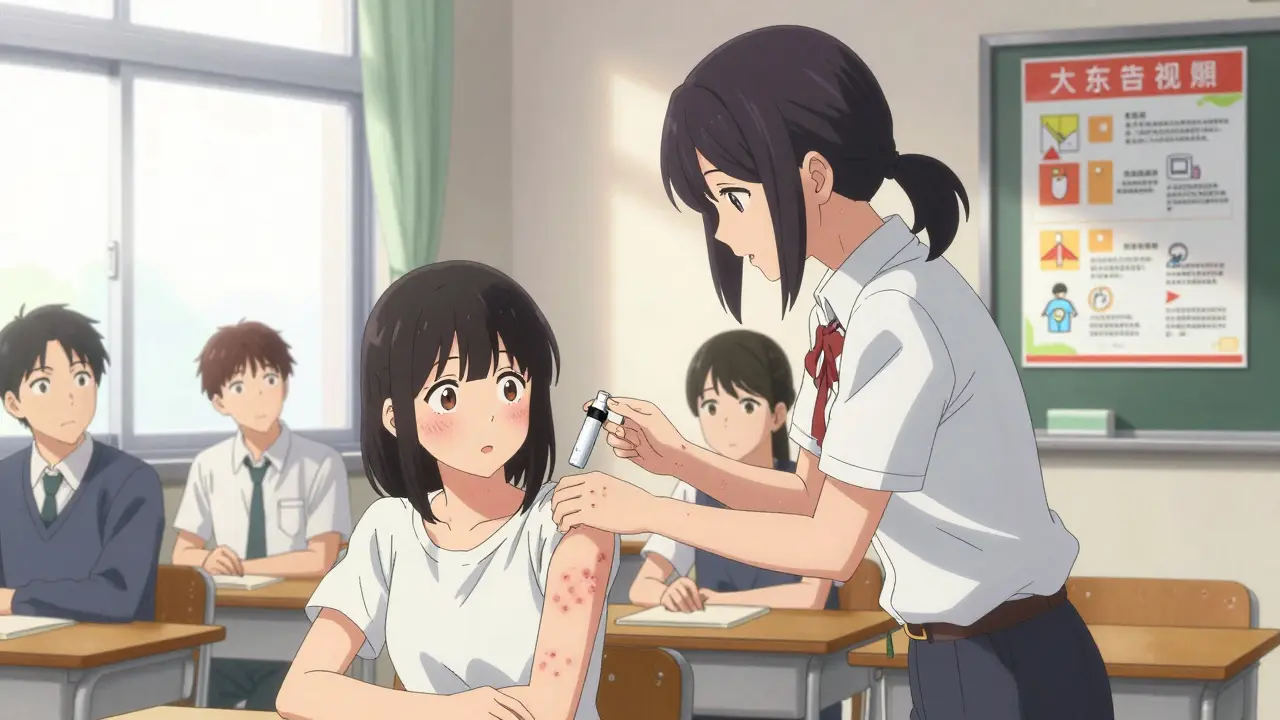
When a child breaks out in hives after eating a peanut butter sandwich at lunch, or an employee starts struggling to breathe after a shrimp stir-fry in the office cafeteria, seconds matter. An anaphylaxis action plan isn’t just paperwork-it’s the difference between life and death. These plans are clear, step-by-step instructions that tell exactly what to do when someone has a severe allergic reaction. And they’re not optional in schools or workplaces where allergies are common. They’re mandatory safety tools, like fire extinguishers or first aid kits.
What’s in an Anaphylaxis Action Plan?
An anaphylaxis action plan isn’t a generic form. It’s a personalized medical document signed by a doctor, with specific details about the person’s allergies and how to respond. Every plan includes five non-negotiable elements:- A clear photo of the person at risk
- A list of confirmed allergens (peanuts, shellfish, latex, etc.)
- Exact symptoms that signal an emergency-mild vs. severe
- Step-by-step instructions to give epinephrine immediately
- Emergency contact numbers for parents or guardians
The American Academy of Allergy, Asthma & Immunology says vague language like "if symptoms get worse" kills people. The plan must say: "Give epinephrine NOW if breathing is hard, throat is closing, or skin is swollen and stomach is upset." That’s it. No waiting. No second opinions.
Epinephrine is the only treatment that stops anaphylaxis. Antihistamines like Benadryl? They help with itching or a runny nose-but they won’t save a life. Delaying epinephrine increases the chance of death by 83%, according to a 2020 study in American Family Physician. That’s why the CDC and FARE both stress: epinephrine first, always.
Schools: Where the System Works-Mostly
In U.S. schools, anaphylaxis action plans are backed by law. All 50 states have rules requiring schools to have plans for students with severe allergies. Forty-nine states allow schools to keep extra epinephrine auto-injectors on hand-called "stock epinephrine"-so even if a student forgets theirs, help is still available.The CDC’s 2024 guidelines say every school should:
- Have a written emergency plan for every allergic student
- Train at least two staff members per classroom to use epinephrine
- Keep epinephrine unlocked, at room temperature, and reachable within 60 seconds
- Review and update plans every year
- Train all staff annually-not just the nurse
But here’s the problem: only 37% of schools give annual training. And 22% still lock epinephrine in cabinets, making it impossible to grab in a crisis. New York State’s 2024 guidelines are the strictest: epinephrine must be accessible at all times, and only registered nurses or trained staff can administer it. Even so, compliance isn’t perfect.
When schools get it right, lives are saved. A parent in Ohio told her story: her daughter had a reaction to a peanut-contaminated snack. The teacher pulled out the epinephrine pen, followed the plan, and called 911 within 90 seconds. The girl was fine. No hospital stay. No long-term damage. That’s because the school used FARE’s official template-clear, simple, and tested.

Workplaces: The Wild West of Allergy Safety
In offices, restaurants, factories, and warehouses, the rules are messy. There’s no federal law requiring employers to have anaphylaxis plans. Only 28 states have any kind of workplace allergy policy. And only 34% of U.S. employers have formal protocols.Under the Americans with Disabilities Act (ADA), employers must make "reasonable accommodations" for employees with severe allergies. That means letting someone keep their epinephrine nearby, adjusting workspaces to avoid allergens, or allowing remote work if needed. But "reasonable" is vague. Many employers don’t know what that means.
A server in Texas with a shellfish allergy had to inject herself in the bathroom because her manager refused to let her keep her epinephrine unlocked behind the counter. "It’s against policy," he said. The policy? No one could find it. No one had trained anyone. No one knew what to do.
FARE’s 2022 survey found that 57% of employees with severe allergies had at least one reaction where coworkers hesitated to help. Why? Fear of legal trouble. Fear of doing it wrong. Fear of touching someone’s medicine. That’s not a medical problem-it’s a training failure.
Why Training Is the Missing Link
You can have the best plan in the world, but if no one knows how to use it, it’s useless. Schools and workplaces both fail here-not because people are cruel, but because they’re unprepared.Training should take 90 minutes the first time. Not a 10-minute PowerPoint. Not a handout tucked in a binder. Real practice. People need to hold a trainer epinephrine pen, press it against a dummy, hear the click, feel the resistance. They need to practice calling 911 while someone is turning blue.
And it’s not a one-time thing. Staff turnover is high in schools and workplaces alike. New teachers. New cashiers. New managers. Every new person needs training. Annual refreshers aren’t optional-they’re essential.
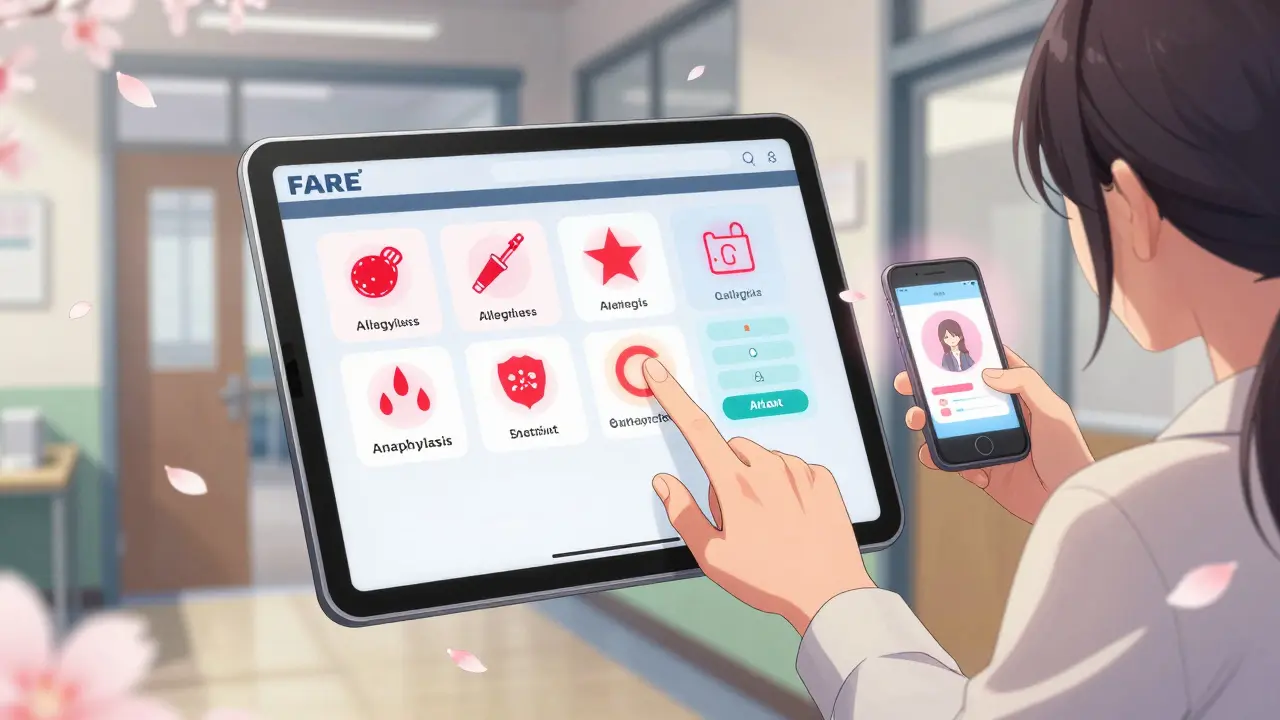
Some schools are using digital tools now. FARE launched a digital action plan platform in March 2024. Parents can update allergens and contacts in real time. Teachers get alerts when a plan changes. It’s not perfect, but it’s a step forward. Only 22% of U.S. schools use it yet-but adoption is growing.
What to Do If Your School or Workplace Doesn’t Have a Plan
If you’re a parent, employee, or advocate, here’s what to do:- Get the official FARE or AAFA action plan template. Don’t use your school’s generic form-they’re often outdated or unclear.
- Ask your doctor to sign it. Make sure it includes the photo and exact allergens.
- Give a copy to the school nurse, principal, or HR manager. Keep one at home.
- Request a training session. Ask for at least two trained staff members per classroom or shift.
- Ask where the epinephrine is kept. If it’s locked, ask why. Push for it to be unlocked and visible.
- Follow up every year. Plans expire. People forget. Training fades.
Don’t wait for a crisis. If your child has a peanut allergy and the school says, "We’ve never had a problem," say: "We’re not waiting for the first one."
What’s Changing in 2025 and Beyond
The future of anaphylaxis safety is getting smarter. The FDA is reviewing new epinephrine devices with voice prompts-think of it like a defibrillator that says, "Press here now." That could make it easier for untrained people to act quickly, especially in workplaces.Grand View Research predicts the school allergy market will grow nearly 7% a year through 2030. Why? Because more kids have allergies. Because parents demand safety. Because lawsuits are rising.
Dr. Robert Wood from Johns Hopkins says anaphylaxis plans are now as essential as AEDs in gyms. You wouldn’t let a school have a pool without lifeguards. You shouldn’t let them have peanut butter without epinephrine.
It’s not about being perfect. It’s about being ready. One person, one plan, one pen, one second-can change everything.
What should I do if someone is having an anaphylactic reaction?
Administer epinephrine immediately if the person has trouble breathing, swelling of the throat or tongue, dizziness, or a combination of symptoms like hives and stomach pain. Call 911 right after giving the shot. Do not wait to see if symptoms get worse. Do not give antihistamines instead. Epinephrine is the only treatment that can stop a life-threatening reaction.
Can anyone use an epinephrine auto-injector?
Yes. Epinephrine pens are designed to be used by anyone-even without medical training. They have simple instructions printed on the side and make a loud click when activated. Many schools and workplaces now train janitors, cafeteria workers, and office staff to use them. The key is practice. If you’ve seen someone use one before, you can use it in an emergency.
Why is epinephrine kept unlocked in schools?
Because during a reaction, every second counts. If epinephrine is locked in a cabinet, a teacher might waste 30 to 60 seconds trying to find a key or call someone for access. New York State’s 2024 guidelines require epinephrine to be accessible within 60 seconds. That means it should be in a clearly labeled, unlocked container-like a wall-mounted box near the classroom door or in the nurse’s office with a key everyone knows.
Do workplaces have to keep epinephrine on hand?
No federal law requires it, but the ADA says employers must make reasonable accommodations for employees with severe allergies. That means allowing them to keep their own epinephrine nearby and training staff to help in an emergency. Some employers choose to stock epinephrine as a safety measure, especially in places like kitchens, labs, or outdoor work sites. It’s not legally required everywhere-but it’s the right thing to do.
How often should an anaphylaxis action plan be updated?
At least once a year-or sooner if the person’s allergies change, a new medication is prescribed, or their emergency contacts change. Many schools and workplaces update plans during annual health screenings. Outdated plans are dangerous. A 2023 study found 41% of schools were using forms older than one year. Always check the signature date. If it’s more than 12 months old, ask for a new one.
Nicole Rutherford
December 19, 2025 AT 07:28My kid’s school still locks the epinephrine in the nurse’s office behind two keys. One’s with the principal who’s never in. The other’s with the nurse who takes two-hour lunches. We’re lucky if anyone finds it before the kid turns purple. This isn’t safety-it’s a waiting game.
Mark Able
December 21, 2025 AT 00:06OMG I just told my boss we need epinephrine in the break room and he laughed. Said if I’m gonna eat shrimp at my desk I should just quit. Like I’m the problem? I’m not the one who’s gonna die because he thinks allergies are a ‘personal inconvenience.’
Dorine Anthony
December 22, 2025 AT 07:34My daughter’s school uses FARE’s template. Teacher training’s every August. Epinephrine’s in a bright red box by the door. No keys. No excuses. And guess what? Nothing’s happened yet. That’s the point. Prevention works.
William Storrs
December 23, 2025 AT 06:07You don’t need to be a nurse to save a life. Just know the steps. Hold it. Bang it. Hold for 10 seconds. Click means it worked. That’s it. Practice with a trainer pen once. Then you’ll never forget. Schools need to stop treating this like a liability and start treating it like a skill. Like CPR.
James Stearns
December 23, 2025 AT 17:13It is imperative to underscore the non-negotiable nature of epinephrine administration protocols. The regulatory architecture governing anaphylaxis response in educational and occupational environments remains fragmented, inconsistent, and, in many instances, egregiously deficient. One must not conflate administrative convenience with clinical necessity. The failure to institutionalize universal, unobstructed access to life-saving epinephrine constitutes a dereliction of institutional duty.
Dominic Suyo
December 25, 2025 AT 15:38Look, this whole anaphylaxis thing is just corporate fear-mongering dressed up as public health. They got you scared of peanut butter now. Next thing you know, they’ll ban bread because someone’s ‘gluten sensitive.’ Epinephrine pens are for people who can’t control their diets. Stop making the rest of us pay for your food allergies.
Janelle Moore
December 26, 2025 AT 18:11They’re lying about the 83% stat. I read it on a forum. It’s actually 27%. And the FDA’s new voice-activated pens? Totally a Big Pharma plot. They want you dependent on $600 pens so you keep buying them every year. Your school’s not ignoring you-they’re being manipulated by the epinephrine industrial complex.
Carolyn Benson
December 28, 2025 AT 11:50It’s not about the pen. It’s about the silence. The way people look away when someone says they’re allergic. The way HR says ‘we’ll look into it’ and then ghosts you. We treat allergies like a nuisance, not a biological reality. The real crisis isn’t the reaction-it’s the culture that lets people die quietly because no one wants to be the one who ‘overreacts.’
Chris porto
December 30, 2025 AT 08:57I used to think this was overblown. Then my coworker went into anaphylaxis from a trace of dairy in the coffee creamer. We had the pen. We used it. Called 911. She’s fine. No one panicked because we’d practiced. That’s all it takes. A minute of training. A shared understanding. We’re not heroes. We’re just prepared.
jessica .
December 31, 2025 AT 12:54why do they make kids with allergies sit at a special table? its like a target. the school knows who to blame when something happens. its all staged. they want you to think its safe but its just a distraction. the real plan is to get you to buy more pens and pay more for ‘allergy-friendly’ lunches.
Ryan van Leent
December 31, 2025 AT 20:38My son’s school has a plan. It’s in a binder. No one’s read it. The nurse says she’s too busy. The teachers say they don’t have time. So what? We’re all just supposed to hope for the best? This isn’t a checklist. It’s a death sentence waiting for a signature.